Daily Summary of Science & Space · Live edition, updated continuouslyMonday 9 November 2026 · UTC
Latest Science & Space News Today: 9 November 2026
ESCAPADE heads to Mars as 2026 set to be hottest year
NASA's ESCAPADE pair completed powered Earth flybys and are on course for Mars in September 2027. Scientists say 2026 is on course to be the hottest year on record as COP31 opens in Turkey. Starfish Space lost its first Otter servicing spacecraft during commissioning.
Starfish Space loses contact with first Otter servicing craft
Starfish Space said on Nov. 3 that its first Otter, Otter 24C, is not recoverable after a fault protection error on the Astro Digital satellite bus turned off its radio. The spacecraft was still in commissioning for NASA's SSPICY mission, which aimed to inspect up to four inoperable U.S. objects. The loss ends the company's first Otter spaceflight debut and a NASA technology demonstration.
NASA's two ESCAPADE spacecraft completed powered Earth flybys, using gravity and engine burns to slingshot toward Mars. The first fired at 5 a.m. EST on Nov. 7, the second at 6 a.m. EST on Nov. 9, after a loiter orbit near Lagrange point 2. The maneuver is a first for NASA and puts the pair on track for Mars in September 2027.
NASA opened applications on Nov. 7 for a new astronaut class, with a Dec. 3 deadline and final selections planned for late 2027. The 25th astronaut class is intended to support Moon base work and eventual Mars missions, agency chief Jared Isaacman said. NASA currently has 32 active astronauts and has recruited 370 people to fly in space since 1959.
Astronomers find millisecond pulsar with young white dwarf companion
Researchers from Italy and Germany identified a millisecond pulsar paired with a very young white dwarf companion. The paper, with first author Greta Ettorre of the University of Bologna, was published in Astronomy and Astrophysics. The system offers a look at how rapidly spinning neutron stars form with binary partners.
SpaceX targets Nov. 13 for first double catch Starship flight
SpaceX plans to launch Starship Flight 15 on Nov. 13 from Starbase during a 75-minute window opening at 5:45 p.m. EST. The mission will attempt the first recovery of both the Super Heavy booster and Starship spacecraft by the launch tower's chopstick arms. If successful, it would be the first full recovery of an orbital launch system, and Starship will also deploy 26 Starlink V3 satellites.
Cape Cod meteor was a lone wolf from the outer solar system
Scientists say a bright daytime meteor that fell over Cape Cod Bay on May 30, 2026 came from a small asteroid perturbed by Jupiter. Using radar, infrasound and camera footage, a team led by Juha Vierinen of the Arctic University of Norway traced its orbit and found no link to a known meteor shower. The finding shows how Jupiter can send small bodies on comet-like paths toward Earth.
NASA Administrator Isaacman skydives at MAX POWER air show
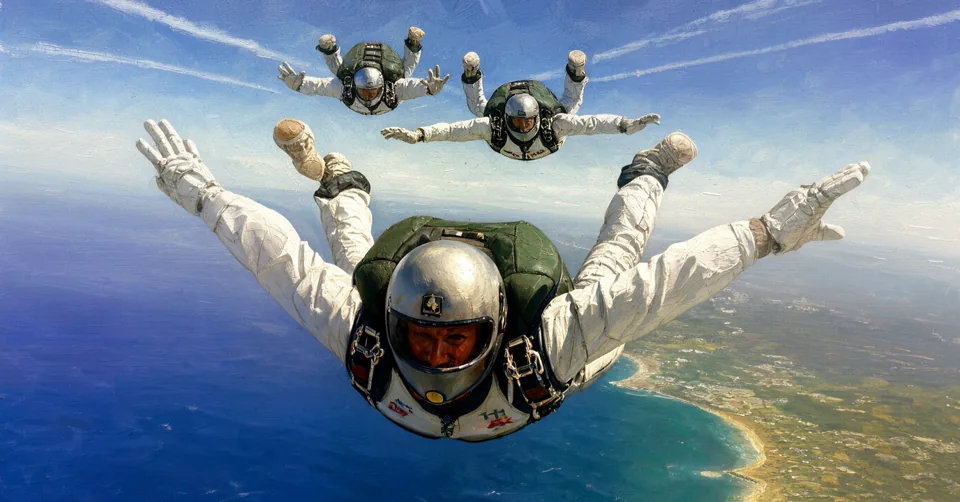
NASA Administrator Jared Isaacman skydived above Kennedy Space Center during MAX POWER, the agency's first major public air show. He jumped with Skydive Chicago, Montana senator Tim Sheehy, and former Thunderbird pilot Shawn Gustoson. Isaacman said the event marked the nation's 250th birthday and the year astronauts returned to the lunar environment.
NASA unveils $10 billion Moon base contracts and rover
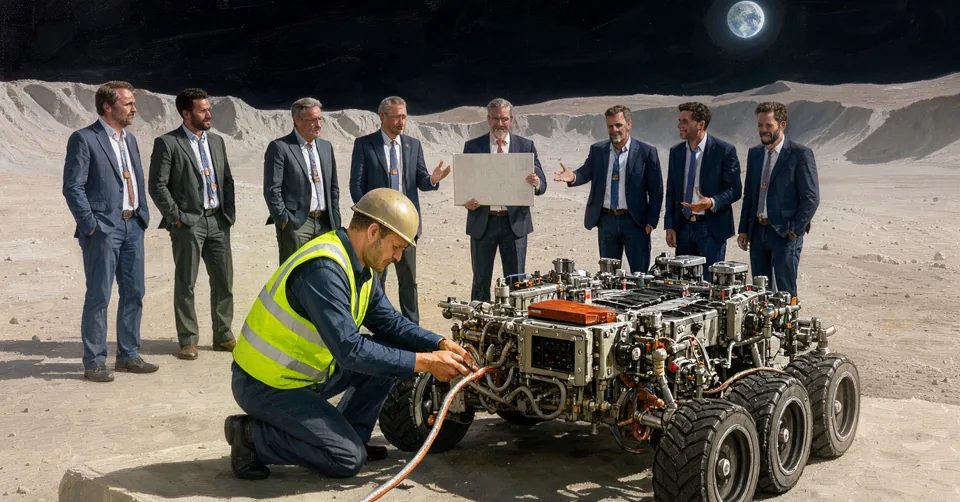
NASA announced up to $10 billion in contracts under a new CLPS 2 framework to launch and deliver cargo to the Moon, along with $1.3 billion for its VADR program. Eight companies were selected to compete for CLPS 2 missions. NASA also outlined a nuclear powered PROMISE rover to explore the lunar south pole beginning in late 2028.
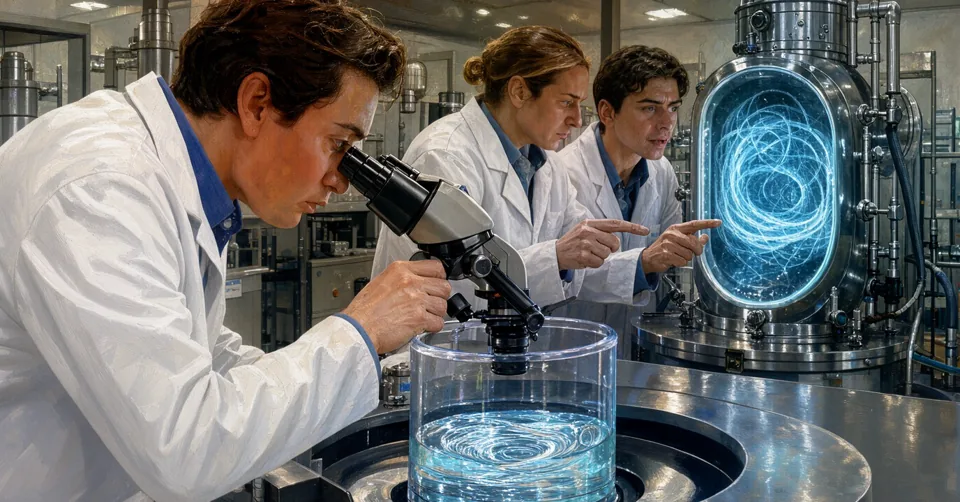
Researchers at Cambridge directly observed a type of turbulence called ultraquantum turbulence in a dilute quantum gas of potassium atoms. They cooled the atoms near absolute zero and imaged tangled vortex lines in a cylinder shaped gas. The team found the process resembles order formation in liquid helium, though the systems differ.
CHAPEA crew completes 378 days of simulated Mars mission
Four volunteers left NASA's Mars Dune Alpha habitat on Oct. 31 after 378 days of isolation, simulated Marswalks, robotic operations, and crop cultivation. The CHAPEA Mission 2 crew collected health and performance data while navigating limited resources and communication delays of up to 22 minutes each way. NASA says the mission prepares for future Moon and Mars exploration.
Satellite plays Doom after first orbital voice command
The PRETTY cubesat played the 1993 video game Doom after a voice command from a rooftop in Oslo on July 27. The command was picked up and transcribed by on board voice recognition, making it the first demonstration of orbital voice control. The experiment was run by a consortium including ESA, with software from Estonia's Tanagra Space.
Nearby dwarf galaxies hold little of the oxygen made by stars
A study of 37 nearby dwarf galaxies found that most of the oxygen made by stars has been lost from those galaxies. Typically only 15 percent of that oxygen remains inside them today, mostly in gas, with small fractions in stars and dust. Researchers say radiation from massive stars and supernovae drives oxygen-rich gas outward, likely into the circumgalactic and intergalactic media. Oxygen is a key tracer of how elements are distributed.
Researchers create room temperature supersolid state
An international team created a supersolid, a state with a crystal like structure and frictionless flow, using particles that combine properties of light and matter. The international team, including researchers from Warsaw, Poland, IBM Research Zurich, and CNRS, observed the behavior at room temperature. Published in Science Advances, the result may help optical computing and sensitive sensors.
NASA features Rigel and the Witch Head Nebula in daily image
NASA's Astronomy Picture of the Day highlights IC 2118, the Witch Head Nebula, a blue gas and dust cloud about 50 light-years across. The nebula is near Rigel, a bright star in Orion, and its shape has led to its popular name. Its blue color comes from Rigel's blue starlight and dust scattering blue light more efficiently than red.
Caltech robot builds first autonomous structure in space
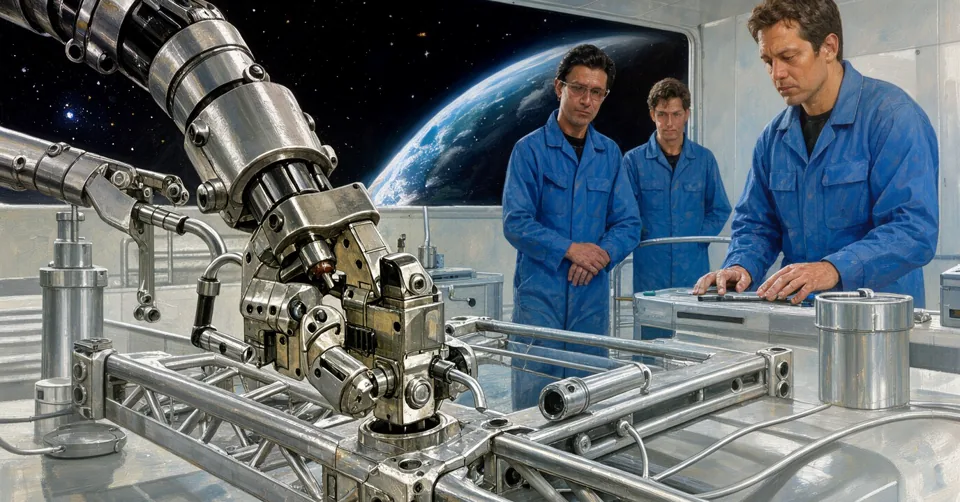
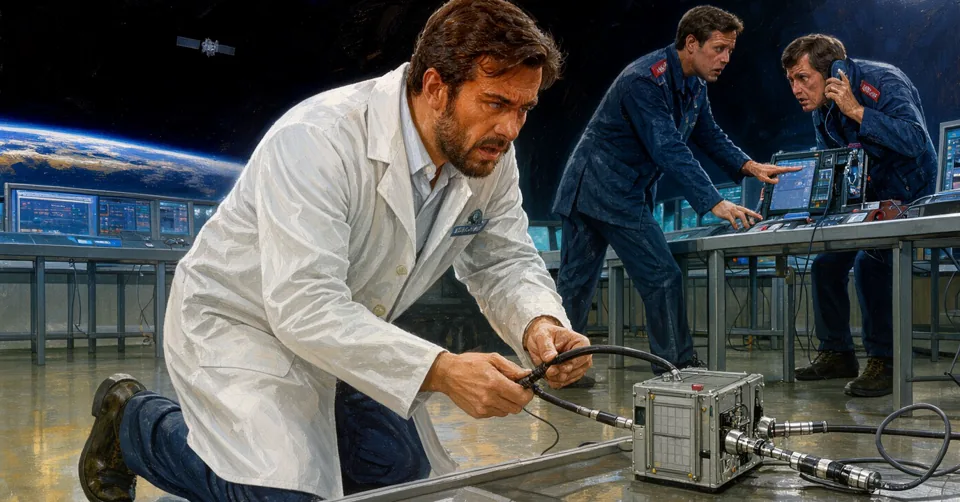
A Caltech robotic arm assembled part of a truss in orbit by retrieving tubes and joints from storage dispensers and joining them into bays. The ASTRA demonstration, funded by DARPA, aimed to build a 1.4 meter reflector antenna but completed an initial section. Researchers say the method could support larger space structures without astronauts.
Antarctic ozone hole reaches 2026 maximum, seventh largest in 48 years
NASA says the Antarctic ozone hole reached its 2026 maximum and ranked seventh largest by area in 48 years of monitoring, though it was not as deep as other large holes on record. The hole is the area where stratospheric ozone falls below 220 Dobson Units, a level not observed before 1979. The ozone layer absorbs ultraviolet light that can damage DNA in plants, animals and humans.
NASA outlines 2028 Moon landing after 2027 lander test
NASA has outlined a plan in which Artemis III will test SpaceX and Blue Origin lunar landers in Earth orbit in 2027, with Artemis IV landing astronauts on the Moon in 2028. The updated strategy includes streamlined rocket preparations and a lighter spacesuit. The 14 day rehearsal will let four astronauts practice rendezvous and docking before a surface landing.
Dormouse numbers in England and Wales may be recovering
New data suggests hazel dormouse numbers in England and Wales increased by almost 10% between 2020 and 2025, after falling by almost 60% since 2000. Researchers say the apparent upturn coincided with warmer springs and summers, which may boost food supplies and reduce torpor. Conservationists say woodland and hedgerow protection remains essential, with considerable uncertainty around the estimate.

 Illustration