Daily Summary of Climate & Energy · Live edition, updated continuouslyMonday 9 November 2026 · UTC
Latest Climate & Energy News Today: 9 November 2026
COP31 opens as record energy imbalance and fossil fuel prices strain climate talks
COP31 opened in Turkey as the UN climate chief warned that high fossil fuel prices are spreading inflation and as the WMO reported a record Earth energy imbalance. A record El Niño is already causing drought in the Amazon and extreme rainfall in the Greater Horn of Africa, while the US attends without an official delegation after withdrawing from the international climate framework.
UN climate chief says fossil fuel prices spread inflation like cancer at COP31
Simon Stiell, the UN climate chief, told the opening plenary of COP31 in Turkey that a global fossil fuel price crisis is spreading inflation around the planet. He joined Turkey and Australia in promoting renewable energy and a new electrification goal as alternatives to oil, coal and gas. The two-week talks face pressure after slow results, with a historic El Niño building and global heating confirmed to reach at least 1.8C.
EVs now displace 1.2 million barrels of oil a day, T&E says
A T&E analysis says electric vehicles now displace 1.2 million barrels of oil a day, five times the 215,000 barrels displaced in 2021. Battery electric cars are 4.2% of the global fleet but 25% of new car sales, up from 6.6% five years ago. T&E says current policies put battery electric cars on track to displace about 5.8 million barrels a day by 2034. T&E says the shift is crucial because road transport burns close to half of the world's oil.
CGN connects first unit of highest-altitude CSP plant in Tibet
China General Nuclear Power Corp. connected the first 25 MW unit of a 50 MW concentrated solar plant in Ali Prefecture, Tibet, to the grid on Nov. 6. The facility, at an average elevation of 4,300 meters, is the world's highest-altitude operational grid-connected CSP plant, CGN says. It uses surplus PV electricity to heat molten salt, with 14 hours of thermal storage and battery support in remote Ali.
Big Rooter solar project at Texas coal plant secures $1.8 billion loan
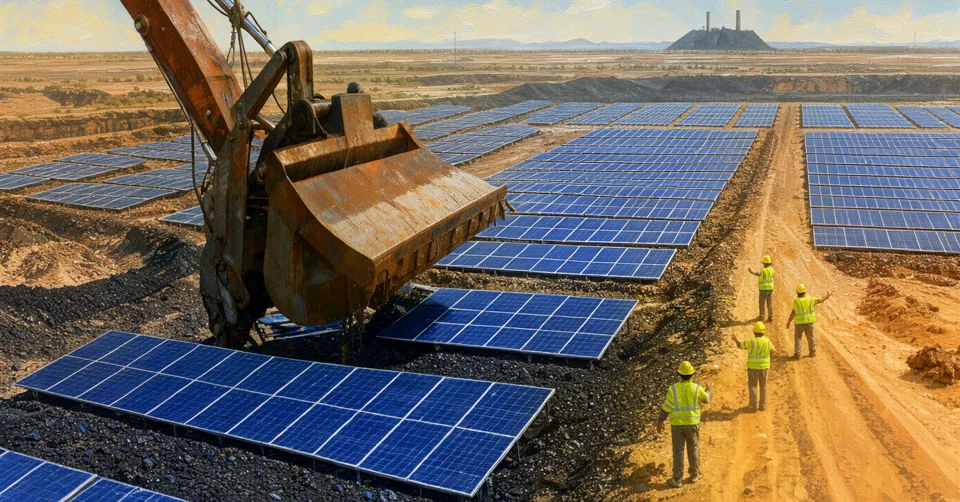
Panamint Capital closed the first phase of a $1.8 billion green loan for the 1.2 GW Big Rooter Power solar project at its Twin Oaks coal site in Texas. The $769 million tranche funds the 491 MW Big Rooter West stage, with a second phase over $1 billion to finance the 658 MW Big Rooter East stage. Panamint calls it the largest solar build at an existing coal mining site and the largest brownfield renewable project in North America.
Strongest El Niño on record arrives with potential for global weather shifts
A record-breaking El Niño has formed in the Pacific, with scientists estimating the additional heat could kill around 450,000 people worldwide. The phenomenon is already causing drought in the Amazon and extreme rainfall in the Greater Horn of Africa. Researchers suggest climate change may be intensifying these events, and the current system may not peak for another month or two.
Bayer tests salt-based thermal storage for renewable steam in Spain
German pharmaceutical company Bayer has begun testing a system using renewable electricity to produce steam at its plant in Asturias, Spain. The project, developed by Iberdrola, combines a 15 MW renewable power purchase agreement, a 2.5 MW solar installation, and salt-based thermal energy storage.
The trial phase is expected to conclude by the end of the year, aiming to meet 100% of steam requirements for acetylsalicylic acid production with renewable electricity.
Tongwei unveils 26.03% efficient TOPCon solar cell with high sheet resistance
Chinese manufacturer Tongwei has developed a TOPCon solar cell with a 26.03% efficiency, featuring an emitter with a sheet resistance of 1,600 ohms per square. The design aims to reduce recombination losses and improve surface passivation. The researchers stated that this implementation confirms TOPCon remains highly competitive for commercial applications.
Latvia switches on 174 MW solar farm, one of the largest in the Baltic states
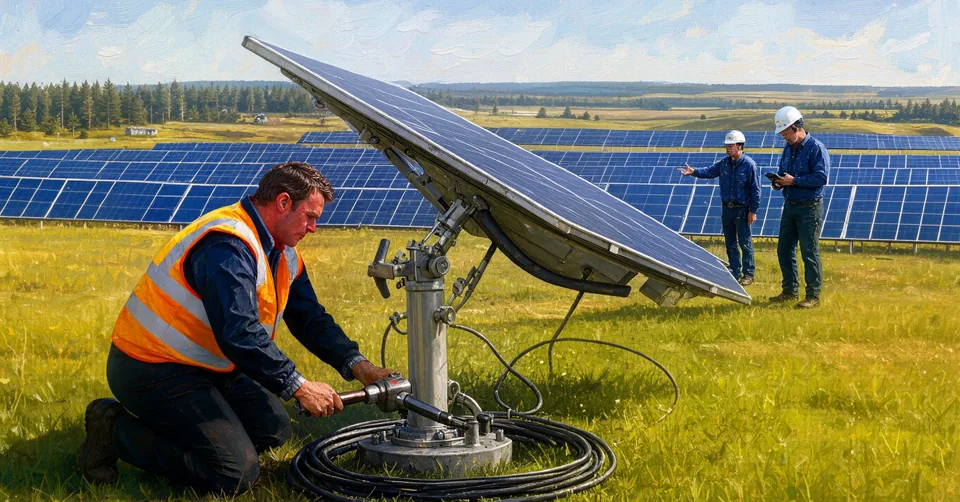
Lithuanian company Ignitis Renewables has brought the 174 MW Tume solar farm into commercial operation in Latvia. The project spans 302 hectares and is expected to meet the annual electricity demand of 85,000 households. It is the company's first solar project to use solar trackers and is primarily maintained by in-house specialists.
Indian manufacturer Jaskon targets 3 GW integrated solar capacity by 2028
Jaskon Engineers Limited plans to operationalize 3 GW of integrated ingot, wafer, and solar cell manufacturing capacity in India by the end of 2028. The company may expand ingot and wafer capacity to up to 10 GW and cell capacity to 5 GW depending on market conditions. Jaskon currently has approximately 1.2 GW of solar module manufacturing capacity and expects substantial industry consolidation in the next four years.
Britain issues rare electricity margin notice as European wind power drops
The National Energy System Operator issued a rare call for extra electricity supplies in Britain due to low wind power forecasts across Europe. The initial shortfall of almost 1,400 megawatts was reduced to 200 megawatts before being cancelled entirely just after 9am. The notice was described as a precautionary measure, with no risk to customer electricity supplies despite the unusual timing.
WMO says Earth energy imbalance at record as COP31 begins
The World Meteorological Organization said Earth's energy imbalance reached its highest level since monitoring began, with heat accumulating at an accelerating rate. It reported that 2026 is on track to be among the four warmest years on record, while Berkeley Earth said it is 95% confident the year will be the hottest. The findings arrived as COP31 began in Antalya, Turkey, with leaders facing rising heatwaves, droughts and cyclones.
Solar waste yields silica nanoparticles for battery anodes
Researchers funded by a South Korean solar panel recycling program made silica nanoparticles from end-of-life cell powder and found that blending them into graphite anodes raised battery capacity. In lab tests, a 95% graphite, 5% silica anode delivered 370.34 mAh/g after 100 cycles at 0.1 A/g, compared with 308.24 mAh/g for pure graphite. The study was published in the International Journal of Electrochemical Science.
SolarEdge exits Australia and New Zealand operations
Israel-based SolarEdge said it is closing local sales and operations in Australia and New Zealand, ending product certification renewals, marketing promotions and incentive programs. Installers must submit final purchase orders by 20 November 2026, with final delivery by 18 December 2026. The company said it is redirecting resources to core regions and higher-growth opportunities.
US skips COP31 as Democrats attend after midterm wins
The US will have no official delegation at COP31 in Antalya, the second year in a row, after the US withdrew from the international climate framework. About 20 members of Congress are attending with philanthropic funding after being denied State Department help. Democrats' midterm win has given countries hope, while the White House said the summit rejects reality by failing to acknowledge that extremist climate policies are destroying countries.
US solar imports face shifting trade and tariff rules
The US solar market has long relied heavily on imports, with trade remedies playing a dominant role in shaping its supply chain in recent years. Rapid changes in antidumping and countervailing duties, Uyghur Forced Labor Prevention Act enforcement, foreign entity of concern compliance requirements and tariff policies have repeatedly pushed the market.
Choking haze drives Palangkaraya family to bedroom refuge
In Palangkaraya, Indonesia, wildfires that began in July have filled the city with toxic haze, prompting residents to seek clean air safe houses. Apri Dona Yusmelita keeps her infant son in a bedroom with an air purifier because the smoke has made him sick. Many fires were started by slash and burn clearing for crops such as palm oil.
Dormouse numbers may be recovering in England and Wales
New data suggests hazel dormouse numbers in England and Wales increased by almost 10% between 2020 and 2025, after falling by almost 60% since 2000. Researchers say warmer springs and summers may reduce torpor and give dormice more time to feed and breed. Conservationists caution that uncertainty remains and that protecting woodlands and hedgerows is still essential.


 Illustration