Daily Summary of Science & Space · Live edition, updated continuouslyFriday 13 November 2026 · UTC
Latest Science & Space News Today: 13 November 2026
Starship seeks first double catch as cryosphere breaches safe limits
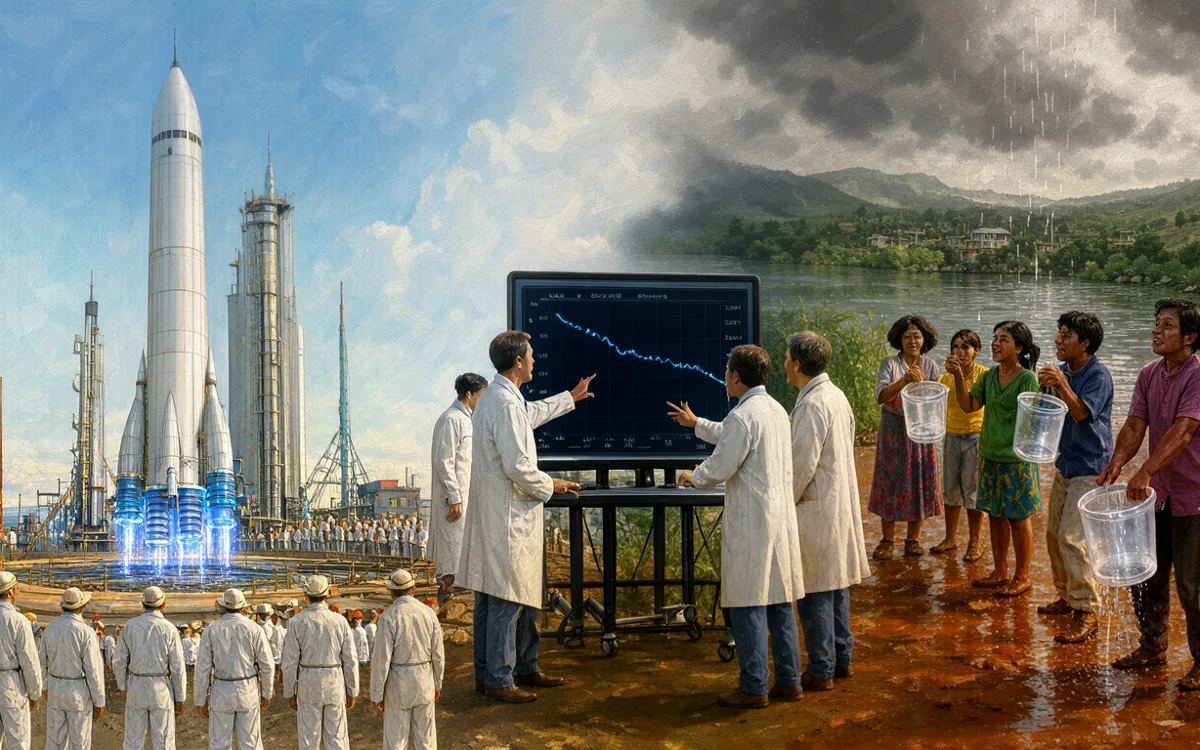
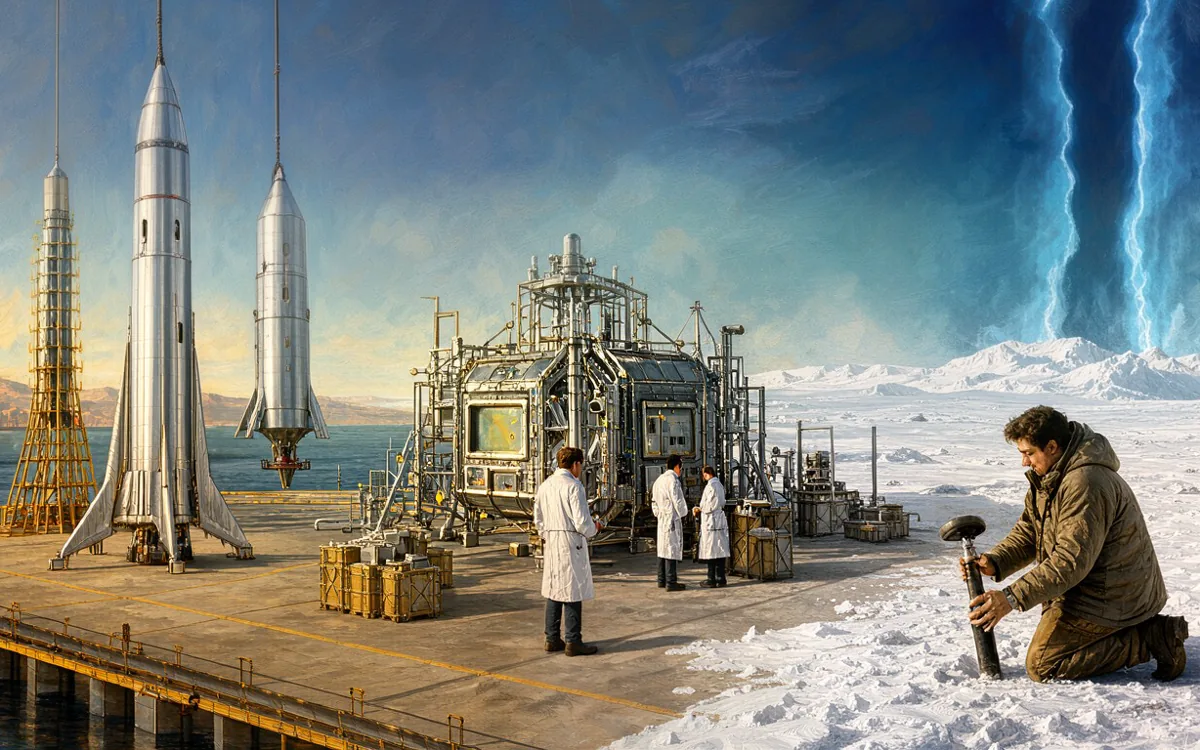
SpaceX will try to catch both Starship stages on its 15th test flight, a milestone for fully reusable rockets. A new Science study finds the cryosphere has moved beyond safe planetary limits, raising risks to water, ecosystems and coastal communities. Measurements from the May 2024 solar superstorm suggest Earth's atmosphere may have amplified the strongest ring current disturbance ever recorded.
Mystery radio signals traced to white dwarf and sun-like star
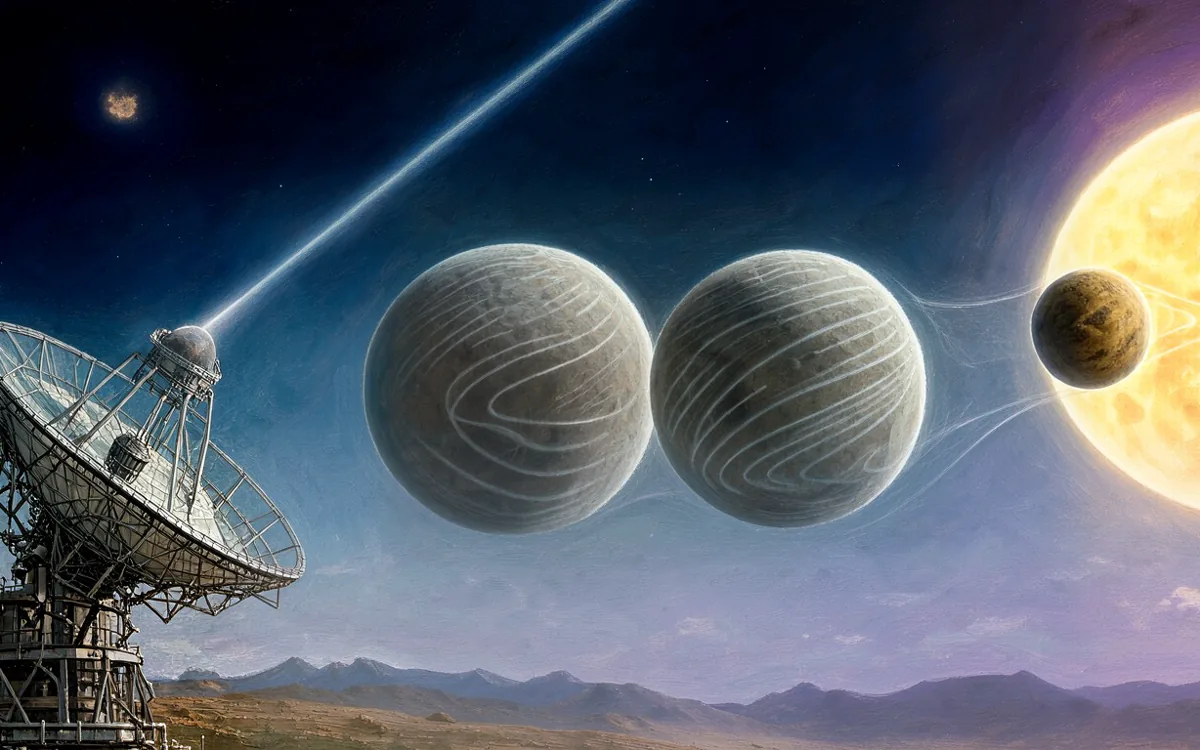
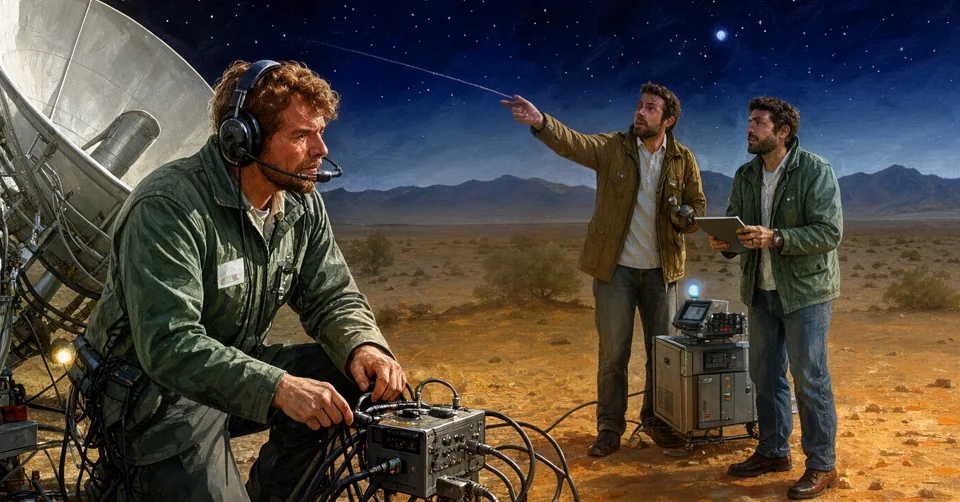
Astronomers have traced a mysterious radio signal to GPM J071507-114153, a system about 5,000 light-years away containing a white dwarf and a sun-like companion. The white dwarf spins once every eight minutes, and the pulses are clear enough to show it moving in orbit, pointing to the white dwarf or a region near it as the source. The team also detected flares on the companion and the white dwarf behind a likely prominence.
Researchers build first quantum clock powered by sunlight
Researchers at the University of Colorado Boulder have built the first optical clock that uses sunlight, locking a laser to spectral shifts caused by sunlight hitting iron atoms in the Sun's atmosphere. The clock uses a frequency comb to make ticks, but it does not match the accuracy of the best atomic optical clocks. In the 2024 partial solar eclipse, the team saw a Moon-caused spectral shift, suggesting it could detect exoplanets.
Chandra finds trigger for repeated outbursts from massive star
Astronomers using NASA's Chandra X-ray Observatory have identified what is triggering repeated outbursts from AT 2016blu, a giant, unstable star in the spiral galaxy NGC 4559. The galaxy is about 30 million light-years from Earth, and the star is estimated to be at least 33 times the mass of the Sun. The finding comes with a new image released on Nov. 9, 2026.
Vulcan Centaur launches first time in nine months with Amazon Leo satellites
United Launch Alliance will launch Vulcan Centaur from Cape Canaveral on Nov. 13, its first flight in nine months, carrying 40 Amazon Leo satellites. The rocket had been paused for national security missions after solid rocket booster nozzle problems on two earlier flights, and ULA says it will use an improved nozzle. The mission will expand Amazon's broadband constellation, which will eventually include more than 3,200 satellites.
Astronomers confirm tiny asteroid 2026 QQ8 as Earth's temporary moon
Astronomers have confirmed that a tiny asteroid, 2026 QQ8, entered Earth's orbit in April and will remain a temporary moon until January 2027. The object, about 6 feet across, was first observed in August and reported by the IAU Minor Planet Center on Oct. 29. It is orbiting at roughly 1.5 times the Moon's average distance, so it is not expected to pose a threat.
Wider daily temperature swings linked to stronger fevers in reptiles and amphibians
A review of 47 studies covering 49 amphibian and reptile species found that infected animals from places with larger day to night temperature swings showed stronger behavioral fevers. Researchers from the University of São Paulo and São Paulo State University found clearer evidence of fever in amphibians than in reptiles.
The findings, published in Proceedings of the Royal Society B: Biological Sciences, suggest temperature swings may shape fevers.
Superheated magma may fuel towering lava fountains
A team led by the University of Manchester found that superheating can slow crystal formation in magma as it rises. The researchers studied material from the 2021 Tajogaite eruption on La Palma, Spain, and found that extreme heat can keep magma fluid longer by dissolving crystal seeds and making the melt more uniform. The result, published in Nature Communications, offers an explanation for why some volcanoes produce towering lava fountains.
Dark energy may have flipped sign 9.5 billion years ago
New analysis of an alternative gravity model suggests the effective density of dark energy may have been negative in the early Universe before becoming positive. Researchers at Istanbul Technical University revisited teleparallel f(T) gravity and found a mathematical scenario that had received little attention. The result, published in Physical Review D, adds to DESI observations questioning whether dark energy has remained constant.
SpaceX aims for first double catch of Starship stages on 15th test flight
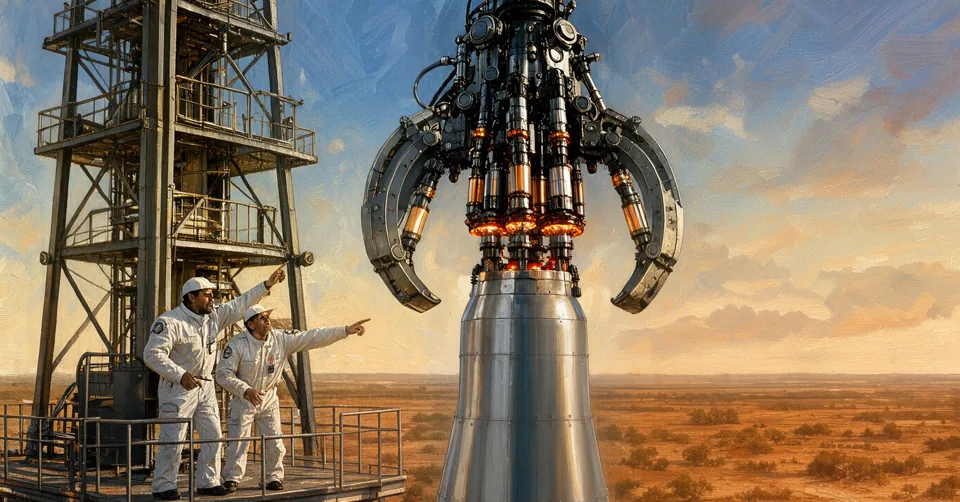
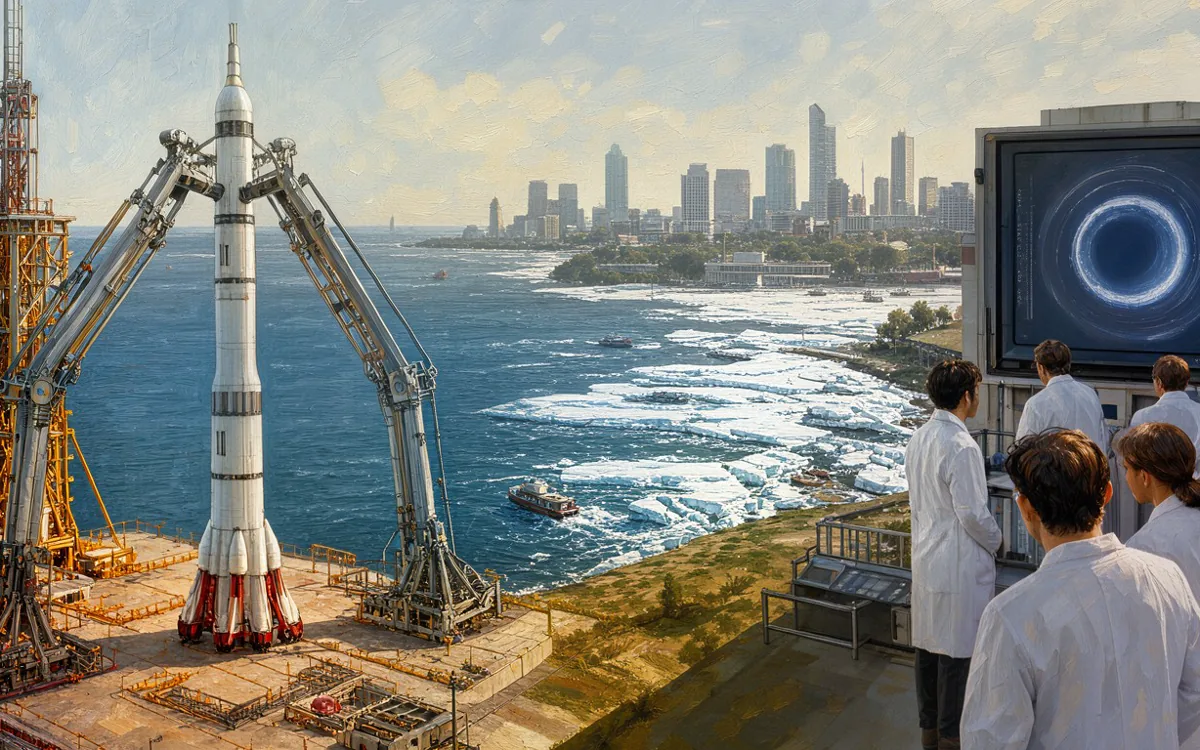
SpaceX plans to launch Starship on its 15th test flight from Starbase in South Texas on Nov. 13, with a 75-minute window opening at 5:45 p.m. EST. The company will try to catch both the Super Heavy booster and the upper-stage Ship with the launch tower's chopstick arms, a first for the pair. If all goes to plan, the mission will last more than 22 hours, with Ship deploying 26 Starlink V3 satellites before returning for a catch on Nov. 14.
NASA features NGC 206, a young star cloud in Andromeda
NASA's Astronomy Picture of the Day features NGC 206, a large stellar association in the dusty arms of the Andromeda galaxy, also known as M31. The galaxy is 2.5 million light-years away, and NGC 206's bright blue stars indicate that its youngest massive stars are less than 10 million years old. The association spans about 4,000 light-years, making it much larger than young star clusters in the Milky Way disk.
Mangrove forests show global rebound after decades of decline
Mangrove forests began a global rebound around 2010 after decades of decline, according to research published in Science. The study, using Landsat imagery from 1984 to 2023, found losses of nearly 3,000 square kilometers from 1984 to 2010, followed by an increase of nearly 2,000 square kilometers after 2010. Expansion was driven by colonization of new areas and restoration or regrowth in degraded areas.
Light-activated molecules in porous crystals show quantum chemical sensing potential
An international team led by Nobuhiro Yanai of the University of Tokyo and Michael R. Wasielewski of Northwestern University created polarized radical pairs in metal-organic frameworks. The light-activated molecules transfer electrons when excited and are held in porous crystals. The findings, published in Nature Communications, could underpin quantum chemical sensing and improve methods such as magnetic resonance imaging.
Earth's atmosphere may have amplified May 2024 solar superstorm
During May 10 and 11, 2024, combined solar eruptions struck Earth's magnetosphere and produced the strongest magnetic disturbance ever measured in the ring current. First direct measurements of its composition found that particles from Earth's ionosphere dominated, while solar wind particles contributed very little. Published in Science Advances, the result suggests Earth's atmosphere can intensify extreme geomagnetic storms.
Tiny diamond flaws could speed quantum computing search
A new computational technique developed at the DOE's Princeton Plasma Physics Laboratory could speed the search for diamond materials useful in quantum computers and sensors. The method isolates a small region of 16 to 30 atoms around a crystal defect, reducing the computational cost of modeling quantum behavior. The findings, published in ACS Central Science, identify new candidates for quantum technology.

 Illustration