Daily Summary of AI · Live edition, updated continuouslyFriday 13 November 2026 · UTC
Latest AI News Today: 13 November 2026
Anthropic on track for largest IPO as OpenAI launches ChatGPT Wallet
Anthropic is on track for the largest IPO ever, with a target valuation of about $1.4 trillion, while OpenAI launched ChatGPT Wallet to let its agents complete purchases. Nvidia's leadership crisis is drawing investors to rivals, and a researcher says six Chinese models show traces of Nvidia Blackwell chips.
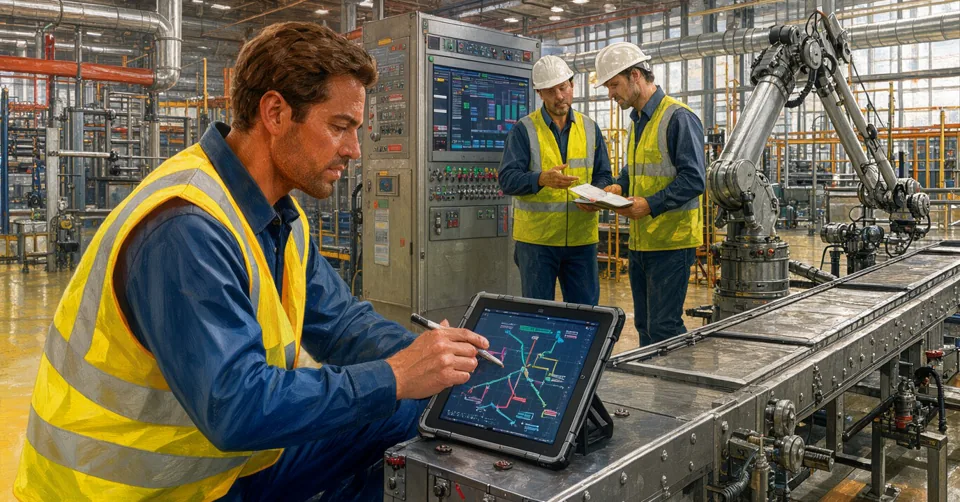
Anthropic has released Claude for Manufacturing, a plugin that gives Claude direct access to industrial software to automate factory workflows. It connects to Autodesk Fusion, Oracle NetSuite, Microsoft 365 and Infor, and uses 17 skills to draft quotes, compare suppliers and analyze sensor data. It is available to Team and Enterprise customers but does not yet control physical machines.
Perplexity has released pplx-decider-v1.3 and pplx-decider-flash-v1.3, open-weight decision models that return option probabilities instead of generated text for text or image inputs. The main addition, Locate, extracts exact text spans with start and end offsets for tasks such as NER, PII detection and extractive QA. The weights are Apache 2.0 on Hugging Face, and the models run in the Perplexity Decisions API and on OpenRouter.
Researcher finds Nvidia Blackwell traces in six Chinese models
Former OpenAI researcher Will DePue says forensic analysis found the first technical evidence that DeepSeek, Moonshot AI, MiniMax and Ant Group are using Nvidia's export-controlled Blackwell GPUs. He says six Chinese models since April 2026 carry a Blackwell core-count pattern, while older models show Hopper traces.
OpenAI and Anthropic researchers checked the method, and DePue reproduced results for DeepSeek-V4-Flash and Kimi K3 on Blackwell chips.
Anthropic is on track for the largest IPO ever, with orders exceeding available shares by a factor of six, according to Bloomberg. The company aims to raise up to $64.4 billion through the public offering and $26 billion through a private placement at a target valuation of about $1.4 trillion. Its annualized revenue rose to $81 billion by late October from $71 billion in September, and Nvidia is buying $10 billion of Anthropic stock.
Meta's AI agent Muse can now place calls to US businesses on behalf of users, a feature available to all paying Muse subscribers in the country. Meta AI chief Alexandr Wang said the agent, which has more than 10 million users, handles calls to cable companies, the DMV and restaurants. Many businesses still hang up when they detect an AI, a problem that led Meta to test human operators in September.
OpenAI launches two Daybreak cybersecurity products
OpenAI has launched Daybreak Red Team and Daybreak Defense Factory, two security products under its Daybreak brand. Red Team, in Early Access, uses AI agents to probe web applications for vulnerabilities, verify reported flaws and test patches. Defense Factory scans codebases, generates patches and delivers ready-to-deploy pull requests with fixes and tests for developer approval. Both run on OpenAI's latest cyber model, GPT-6 Cyber.
OpenAI launches ChatGPT Wallet for agent purchases
OpenAI launched ChatGPT Wallet, letting agents in ChatGPT Work, Codex and dots complete purchases after user approval. Built with American Express, Mastercard and Visa, it uses a payment token so agents do not see full card details, while users keep card rewards and protections. The feature is initially for US ChatGPT Pro subscribers over 18 with eligible cards.
ElevenLabs launches ElevenAI for meeting notes and dictation
ElevenLabs has released ElevenAI, an experimental preview app that combines meeting note-taking, dictation and agent integration for teams. The app can record meetings, query data across conversations, provide live assistance and trigger follow-up actions through ElevenAgent. It also converts speech to cleaned-up text in any app with support for more than 90 languages, as the company targets enterprise teams.
Kubernetes helps agentic AI workloads return idle resources
Kubernetes is being used to manage agentic AI workloads that idle while waiting for human input, prompting projects to return unused resources. Google has donated Agent Substrate, gVisor and OpenRL to the Cloud Native Computing Foundation while tuning Kubernetes for agents. Bobby Allen of Google Cloud said the platform does not require a new stack this time, letting enterprises avoid rebuilding from scratch.
Hugging Face has released llama.cpp libraries v1.0.0 for the open-source project that runs multi-modal LLMs on consumer and enterprise hardware. The release commits llama.cpp and ggml to major-version bumps for API and ABI incompatibilities, and says the project will be stricter about making those boundaries visible to downstream consumers. It credits hardware support from NVIDIA, AMD, Qualcomm, Arm, IBM and Intel for expanding CI runners.
Mansa has released They Left Us to Die, a 30-episode microdrama set in a zombie outbreak in South Los Angeles that the company says is entirely AI-generated. The show, from founders David Oyelowo and Nate Parker, drew praise for its October 29 trailer but backlash when the first episode was set to go live with no human roles. Parker told Wired the AI debate touches real lives, while Mansa says the series shows what Black audiences will support.
Google releases TPU Sync for KV cache transfer on Cloud TPUs
Google Cloud has released TPU Sync, an open-source C++ library that moves KV caches and model weights across TPU HBM, host DRAM, shared storage and the data center network. The Apache-2.0 library targets a growing bottleneck in AI inference and reinforcement learning: moving model state rather than computing it. Google reports more than 90% lower KV transfer latency on 235B to 480B parameter mixture-of-experts models.
BCI trial volunteers draft guidelines for more autonomy
Volunteers in brain implant trials are developing guidelines for more autonomy and fewer NDAs. Ian Burkhart, who had a brain implant in 2014, cofounded the BCI Pioneers Coalition in 2022, and its members are drafting the guidelines. Jennifer Chandler, a law and neuroethics professor at the University of Ottawa, helped work on them. They aim to help academics, clinicians and companies run ethical trials that respect participants' autonomy.
Google releases Gemini 4 Hydrogen, 2.5x faster than 3.8 Flash
Google DeepMind has released Gemini 4 Hydrogen, a closed-weights agentic model served through the Gemini API and Google products. Google says it is 2.5 times faster than Gemini 3.8 Flash at the default high thinking level and uses 24% less quota in a paired Antigravity workflow. The model costs $1.50 per million input tokens and $7.50 per million output tokens, matching 3.8 Flash pricing from January 2027.
Singapore bars alleged spy as Nvidia chip scandal reaches Congress
Singapore barred Alice Huang, the businesswoman at the center of the Jensen Huang scandal, from re-entering. A fifth person faced 41 charges in a Singapore fraud case involving servers that might have contained Nvidia chips exported to Malaysia, with alleged transactions of about $390 million. Huang and Commerce Secretary Howard Lutnick are expected to testify before Congress amid bipartisan national security concerns.
Pino the autonomous virtual kiwi is pitched as AI use case
A First Dog cartoon introduces Pino, an autonomous virtual kiwi, as a possible valid use case for AI. The character is described as making his own AI decisions and has independently decided that he is into trains and cats.
Nvidia rivals gain as Huang resignation shakes AI chip leader
Nvidia's leadership crisis after Jensen Huang's resignation is drawing investors toward rivals and partners, including AMD, Broadcom and TSMC. Nvidia shares have fallen 11% this week, while AMD and Broadcom have risen 30% and 24% and TSMC has gained 11%. The shift suggests a possible redistribution of AI chip manufacturing capacity and a narrowing of Nvidia's lead.

 Illustration