Daily Summary of Science & Space · Final editionTuesday 3 November 2026 · UTC
Science & Space News: 3 November 2026
NASA seeks Hubble rescue as Swift reentry looms and cooking tops urban pollution
NASA is asking industry for ideas to boost or enhance Hubble, which is on track to reenter Earth's atmosphere about six years from now, while Swift is expected to reenter Wednesday. In central London and Beijing, cooking now emits more harmful fine particles than vehicle exhausts. Researchers also reported a supersolid in light matter hybrids at room temperature.
NASA has issued a request for information on servicing Hubble in space, which is operating well but is on track to reenter Earth's atmosphere about six years from now. Options could include boosting its orbit or enhancing its capabilities. The observatory, launched in 1990 with ESA and last serviced by astronauts in 2009, has produced at least 23,000 papers and remains in high demand.
Swift Observatory to reenter Earth's atmosphere Wednesday
NASA's Neil Gehrels Swift Observatory, a 3,200-pound spacecraft launched in 2004, is expected to reenter Earth's atmosphere around 3:30 a.m. EST on November 4. Most of the observatory will burn up, though surviving fragments may fall between 20.6 degrees south and north latitude. The risk to humans is estimated at 1 in 2,100, and the reentry is uncontrolled after a private rescue mission failed.
Light matter hybrids form supersolid at room temperature
Researchers from the University of Warsaw, Poland's Military University of Technology, IBM Research Zurich and CNRS observed a supersolid in an exciton polariton Bose Einstein condensate at room temperature. The state combines frictionless superfluid flow with crystal order. It was produced in an optical microcavity filled with a liquid crystal and coated with an organic semiconductor, according to a study in Science Advances.
Hubble traces Beta Pictoris tail to Pluto sized impact
Astronomers using Hubble found that the Cat's Tail, a long feature extending from the debris disk around Beta Pictoris, likely formed after two Pluto-sized bodies collided. The system is 63 light-years away and only a few million years old, so it preserves a violent early stage similar to the young Solar System. The tail is so long it could wrap around the Sun-Earth system about 500 times.
Study finds common loon chick production dropping in North America
A study led by Birds Canada found a widespread decline in common loon chick production across nine Canadian provinces and seven U.S. states over 49 years. Chick production has dropped significantly in regions like Atlantic Canada and the prairie provinces, with cumulative losses of 74% and 65% since 1992. Researchers attribute the decline to climate change, extreme rainfall, and regional threats like lead tackle and mercury contamination.
High-resolution mapping reveals two magma reservoirs under Kīlauea
Scientists used a dense network of 1,815 seismometers and artificial vibrations to map magma storage beneath Kīlauea's summit at high resolution. The study identified two distinct reservoirs: one beneath the Halemaʻumaʻu crater and another beneath the south caldera. The reservoirs are separate near the surface but may connect at greater depth, providing new insight into the volcano's underground plumbing.
Astronaut captures Russian rocket fireball over West Africa
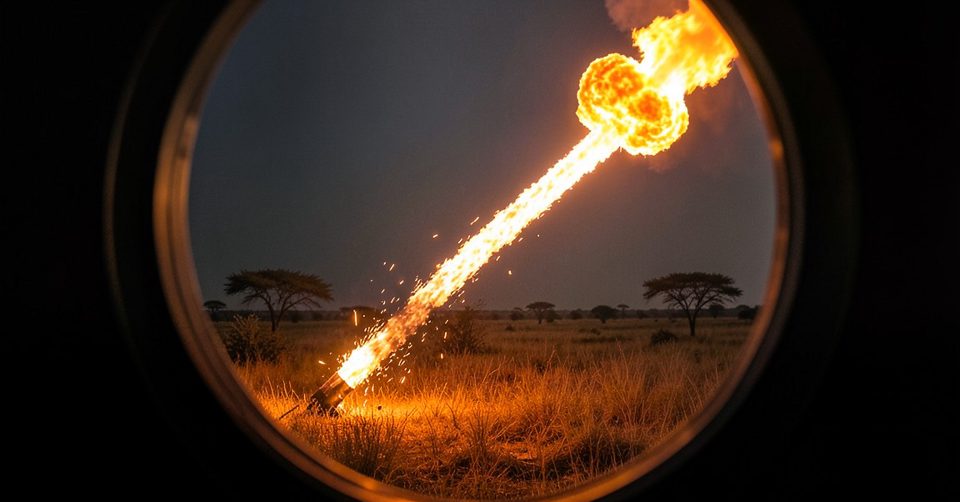
NASA astronaut Chris Williams photographed a fireball over West Africa from the ISS cupola. He first thought it was debris or a satellite breaking up, but it was later identified as the burning remains of the Russian Soyuz rocket that launched Progress 95. The event showed how rocket parts burn up after resupply missions.
Rat study hints Mars radiation may scar astronaut hearts
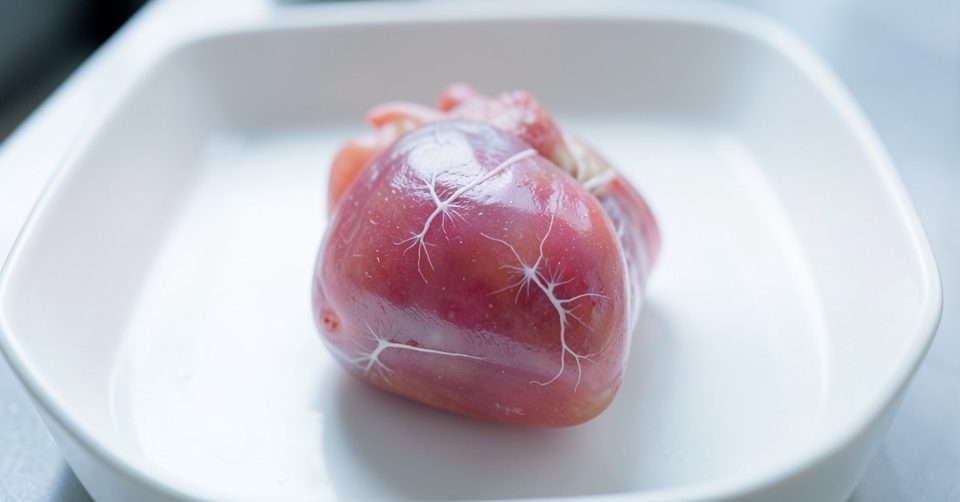
Rats exposed to radiation similar to a long Mars trip developed more scar tissue around small heart blood vessels than unexposed rats, a sign of cardiac fibrosis. The study, published in PLOS One and using NASA's SimGCRSim, found the effect nearly a year after exposure. Authors say it highlights the need for long-term heart monitoring after astronauts return, though human effects may take around 30 years.
Red and green auroras may share electron driven origins
During the second most intense magnetic storm of the space age on May 10, 2024, researchers photographed red and green auroras near Göttingen, with rays connecting the red glow above to the green glow below. The international team compared the images with solar wind and magnetic field data. The study, published in Annales Geophysicae, suggests the red glow may share an electron-driven origin with the green aurora.
Arctic bacteria use acetone to convert carbon dioxide into food
Researchers identified a new Arctic Ocean bacterium, Porticoccus arcticus, that uses acetone to incorporate carbon dioxide into its metabolism. The study, published in Nature Communications, describes how the bacteria survive in nutrient-scarce waters by combining acetone consumption with light capture. This process, called photoheterotrophy, allows the organism to fix carbon while using organic compounds for energy.
LHCb finds first evidence of rare Bd to mu mu decay
The upgraded LHCb experiment at CERN reported first evidence of the rare Bd to mu mu decay, in which a beauty quark particle decays into two muons. The result, expected about once in 10 billion beauty particles, reached 3.2 sigma and follows a search of more than 40 years. It lets physicists test the Standard Model more precisely and look for new particles or forces at zeptometer scales.
Vibrating mattress and nitric oxide pills may clear Alzheimer's protein
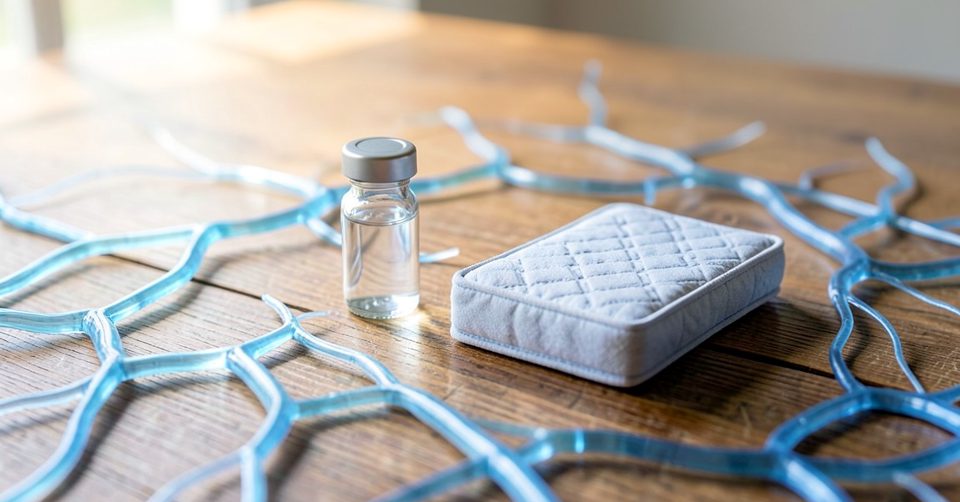
Researchers led by Vesa Kiviniemi at the University of Oulu had 29 adults without Alzheimer's or other cognitive issues take nitric oxide pills and lie on a vibrating mattress for 40 minutes. The combination made brain blood vessels swell and constrict more strongly, enhancing the glymphatic system's clearance of a protein that accumulates in Alzheimer's. He warned that nitric oxide can lower blood pressure and should not be tried at home.
Fingernail sized chip sorts mixed light into clean beams
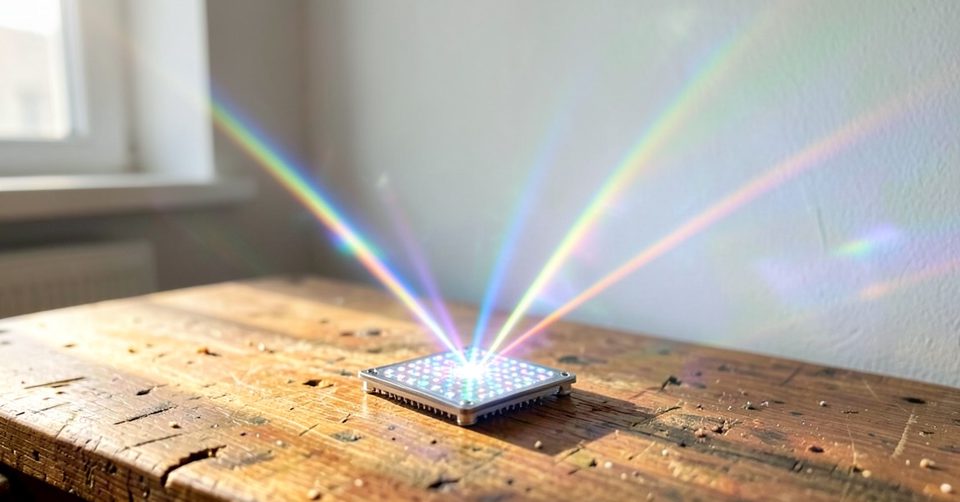
Stanford engineers and colleagues demonstrated a fingernail-sized photonic chip that can take mixed, partially coherent light from multiple lasers and sort its photons into separate clean beams. The result, published in Nature Photonics, is the first demonstration of a device that decomposes such light into mutually incoherent buckets. It could enable new approaches in microscopy, astronomy, communication, computing and sensing.
Capotauro is a cold brown dwarf, not an early galaxy
A faint red object nicknamed Capotauro, first seen by the James Webb Space Telescope as a possible early galaxy, has been identified as a cold brown dwarf in the Milky Way. Liu of the University of Edinburgh and colleagues compared Webb images from December 2022 and June 2026 and found the object had moved. Its unusual infrared colors had suggested a redshift of about 32, but the motion shows it is much closer.
Researchers at the Smithsonian's National Zoo and Conservation Biology Institute and Pennsylvania State University found evidence that chytridiomycosis likely caused frog declines at Brazil's Boracéia Biological Station from 1979 to 1982. The study, published in Molecular Ecology, used museum frogs to show the fungal disease was spreading then. It helps explain a 50-year-old mystery in a rich amphibian region.
Placental inflammation linked to autism-like traits in male mice
A study from Cold Spring Harbor Laboratory found that inflammation during pregnancy can trigger autism-like traits in male mice. The research showed that immune activation at 12.5 days of pregnancy caused developmental abnormalities in about one-third of male fetuses within 24 hours, while females developed normally. The findings suggest that placental changes may be an early gateway to autism spectrum disorder.
JWST confirms Leviathan's stars are spread out in early universe
JWST has confirmed that Leviathan, a massive dust rich galaxy seen when the universe was about 1.5 billion years old, has its stars spread out rather than concentrated. William M. Baker of the University of Copenhagen and colleagues measured its mass and redshift of z = 4.0514, using hydrogen and ionized nitrogen emissions for the redshift. The result challenges the idea that dusty submillimeter galaxies quickly become compact.
Study finds auditory processing and knowledge predict reading
A large study led by Daniel Hajovsky at Texas A&M University combined 50,000 correlations from 137 cognitive and achievement test batteries to examine reading development. It found visual processing had no meaningful relationship with reading, while general intelligence had a smaller influence than some earlier research suggested. Auditory processing and comprehension-knowledge emerged as strong predictors for decoding and comprehension.
Cambridge-led LHCb detects signals at a scale 100 billion times smaller than an atom
Cambridge-led LHCb analysis has detected signals at a scale 100 billion times smaller than an atom, a region some physicists call the zeptoverse. The experiment studied beauty quark decays at a billion-trillionth of a metre, where particles may be more sensitive to dark matter. The result could help build a more complete theory of the Universe. Twenty-eight countries agreed a £150m LHCb upgrade that would increase such decays tenfold.
All five DNA and RNA letters found in Ryugu asteroid samples
A study in Nature Astronomy reports that all five nucleobases, the molecular letters of DNA and RNA, were detected in samples from asteroid Ryugu. The material was returned in 2020 by JAXA's Hayabusa2 mission, and the team analyzed two samples using ultra clean lab conditions. The finding suggests ingredients for life may have been widespread in the early Solar System, aligning with earlier results from meteorites and NASA's Bennu samples.
NASA APOD shows Comet PanSTARRS and a colorful meteor
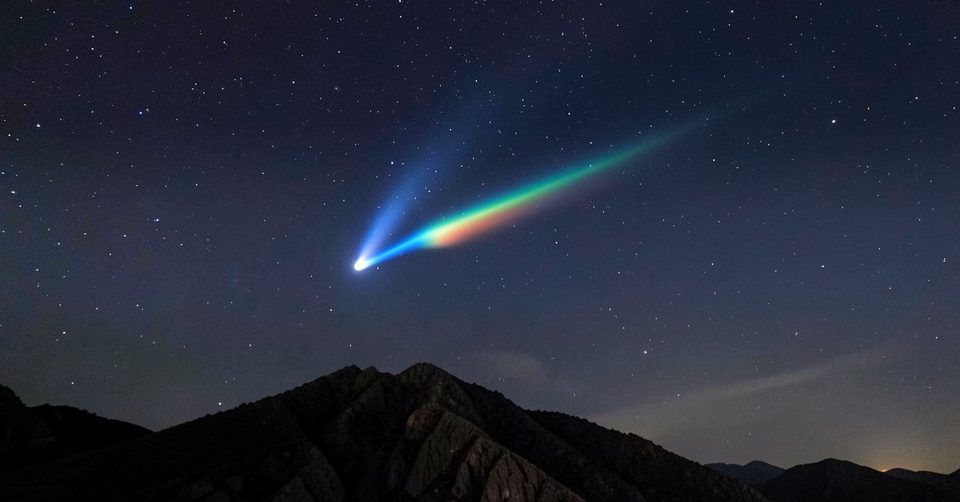
NASA's Astronomy Picture of the Day shows Comet C/2025 R3 (PanSTARRS) and a colorful meteor, with the comet far behind the streaking object. The comet was photographed from Hautacam, France, in April with blue ion and dust tails. The meteor's color may indicate a complicated composition, while November's Southern and Northern Taurids and Leonids will peak over the coming days and weeks.
NASA images show annular Super Typhoon In-fa and busy Pacific storm season
NASA satellite images captured Super Typhoon In-fa near the Mariana Islands on October 29 and 30, 2026, when it had a nearly circular shape and large eye typical of rare annular storms. The Northwest Pacific basin has had elevated activity since April, with In-fa the fifth typhoon to affect the Mariana Islands this year. Remnants of Typhoon Champi also moved toward Alaska as an extratropical storm.
Hera separates Didymos and Dimorphos in first distinct image
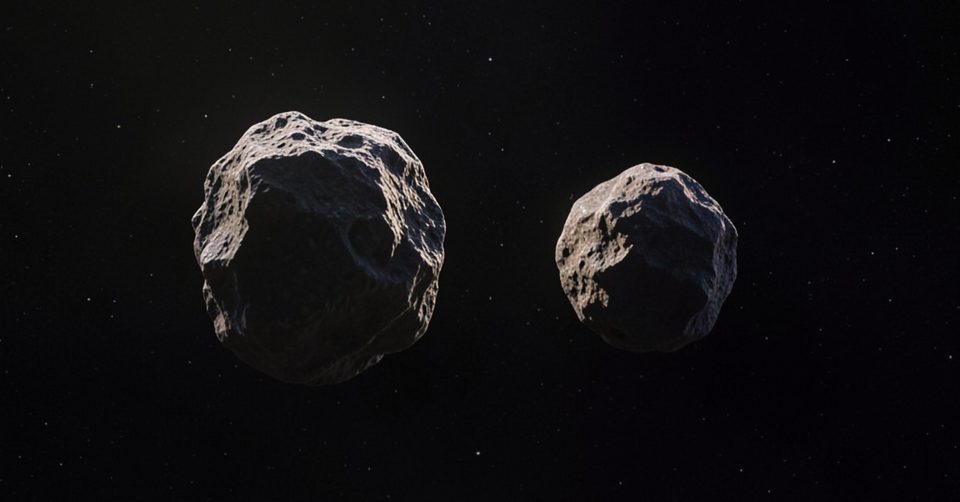
ESA's Hera spacecraft has captured the first image in which Didymos and Dimorphos appear as separate objects. The black and white picture was taken on October 18 from about 1,280 kilometers away, after maneuvers slowed Hera to 20 meters per second relative to the pair. The result sets up detailed views of Dimorphos, the first object in the Solar System whose orbit was measurably shifted by human action.
Monarch butterflies get tiny trackers to map migration stopovers
Scientists attached solar powered radio tags to nearly 1,750 monarch butterflies this year to track their roughly 3,000 mile migrations from southern Canada to central Mexico. The study aims to find critical stopover sites in Texas before habitat loss, pesticides and climate change erase them. The public can follow individual butterflies on the free Project Monarch Science app.
Voyager 1 nears one light day milestone after power work and outage
NASA's Voyager 1 is approaching a one light day milestone nearly 50 years after leaving Earth. In September, engineers completed a power saving upgrade that replaced three devices with alternatives that consume less electricity, and on October 20 the spacecraft resumed communication after a 48 hour interruption. The work is expected to extend the operating lives of its remaining instruments as its power supply slowly fades.
Vera Rubin Observatory finds two more dim Milky Way satellites
The Vera Rubin Observatory has found two more faint Milky Way objects in its Early Data Preview 2: a likely ultra-faint dwarf galaxy, Aquarius IV, and a globular cluster, Rubin-GC1. Aquarius IV is a low-luminosity, compact system in the outer Galactic halo with an ancient, low-metallicity population. Rubin-GC1 lies toward the Milky Way's bulge, a dense, dusty region. The detections are almost certainly the beginning of many more discoveries.
Dumpster diving saves money and diverts usable goods from waste
Darryl Baker, a north London mother of two, has probably saved hundreds of pounds in six months by taking discarded clothes and other items from supermarket bins with staff permission. She has donated or sold finds, including a men's Barbour jacket for £30. Jeff Ferrell, 72, has dumpster dived for more than 50 years and estimates his finds are worth tens of thousands of dollars a year.
Inca children were given cocaine, alcohol and the ayahuasca compound harmine
Researchers found cocaine in hair samples from eight frozen Inca child mummies, with markers of alcohol and coca leaf chewing in half of the individuals. A hallucinogenic compound from ayahuasca, harmine, was detected in one nail sample. The children, thought to have been aged 6 to 14, were sacrificed in capacocha rituals, and each had a unique chemical signature that may reflect different preparations.