Daily Summary of Science & Space · Final editionFriday 30 October 2026 · UTC
Science & Space News: 30 October 2026
India launches NavIC satellite as ISS installs seventh solar array
India launched its third next generation NavIC navigation satellite into geostationary transfer orbit, moving the regional system toward the four satellites needed for position, navigation and timing service. Astronauts completed a spacewalk of 7 hours and 11 minutes to install the seventh International Space Station solar array, part of a power upgrade. Webb released a mid infrared image of the Cat's Head Nebula in Carina.
India's GSLV Mark II launches NVS-03 into geostationary transfer orbit
India launched its NVS-03 navigation satellite on Oct. 30 from Satish Dhawan Space Centre on a GSLV Mark II rocket, which placed it into geostationary transfer orbit as planned. It is the third next generation satellite for NavIC, India's regional navigation system. The constellation currently has three fully functioning satellites and needs four to provide position, navigation and timing service.
Pompeii wardrobe yields child's charm necklace and personal objects
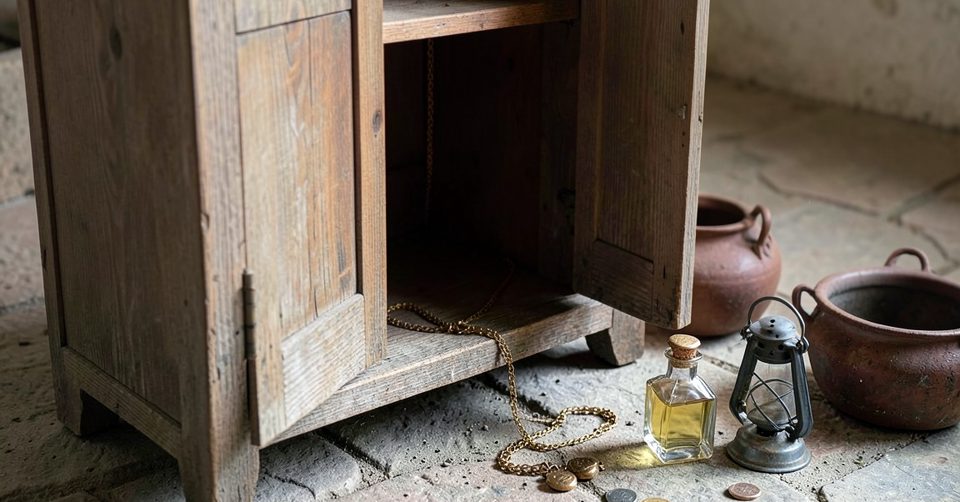
Archaeologists found a wooden wardrobe in a Pompeii home on Via dell'Abbondanza that had been sealed since the AD 79 eruption. Inside were tweezers, a glass perfume bottle, an incense burner, a bronze lantern, 38 bronze coins, cooking pots and a child's necklace with more than 20 charms. The director said the rattling crepundia helped parents track children and could identify them, while coins left behind suggest the owners fled quickly.
Rusty Mars crust may have supplied hydrogen to warm the planet
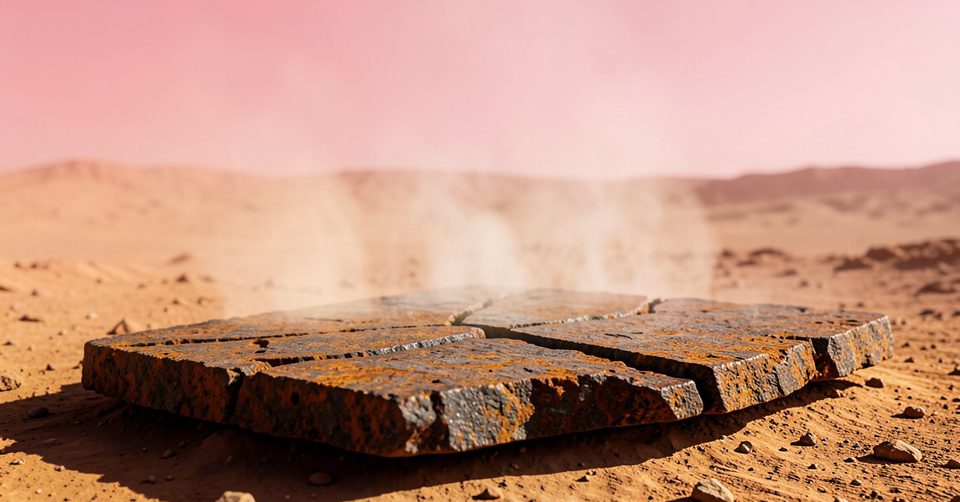
A new proposal by Cin-Ty Lee says water circulating through Mars's thick southern highlands crust may have rusted iron-rich basalt and released hydrogen into the atmosphere. Hydrogen is not a greenhouse gas by itself, but collisions with carbon dioxide can enhance infrared absorption, potentially keeping average temperatures above freezing. The proposal suggests this process could have sustained a warm, wet climate before water and power ran out.
NASA seeks commercial ideas to extend Hubble's orbit and life
NASA issued a Request for Information on Oct. 29 about industry capabilities for in-space servicing of Hubble. The agency is exploring a mission to boost Hubble to a higher altitude, enhance its capabilities, or perform a safe re-entry or orbital disposal. Hubble's altitude is slowly decreasing, and analysis predicts re-entry in 2033 to 2034, so NASA anticipates a mission would need to occur by 2032. Responses are due Nov. 30.
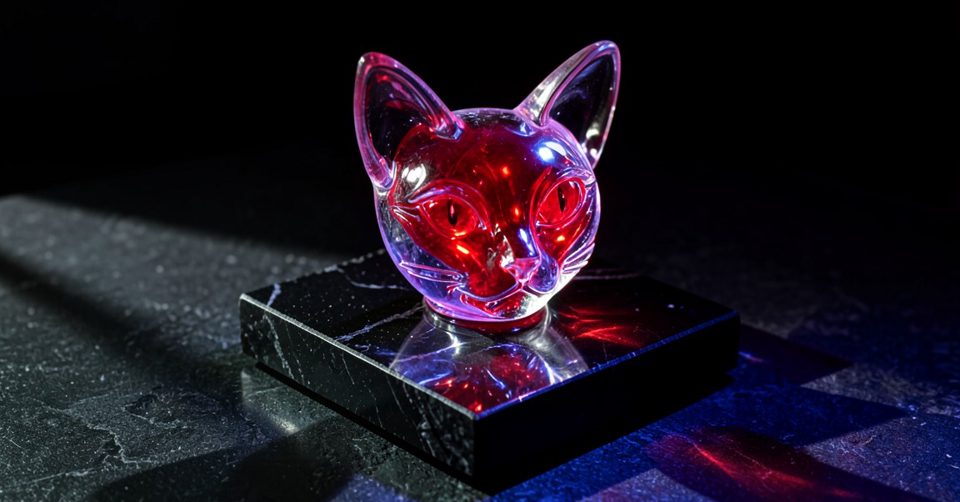
NASA's James Webb Space Telescope released a mid-infrared image of the Cat's Head Nebula on Oct. 29, 2026. The distinctive shape is thought to have been sculpted by ultraviolet radiation and winds from massive stars in the larger Carina Nebula, about 7,500 light-years away. A glowing red eye in the view could be a young star trapped in the nebula, and Hubble and Webb images in different wavelengths reveal new details.
Virgin Galactic's Apeiron Delta-class space plane makes first flight
Virgin Galactic's Delta-class space plane Apeiron made its maiden flight on Oct. 28, flying beneath VMS Eve from Mesa, Arizona, to Spaceport America in New Mexico. The six-passenger, two-pilot vehicle will undergo tests before planned commercial service in spring 2027, when Eve would carry it to about 45,000 feet before a rocket-powered suborbital flight. Virgin says the fleet is built for twice-weekly flights and nearly 700 ticket-holders wait.
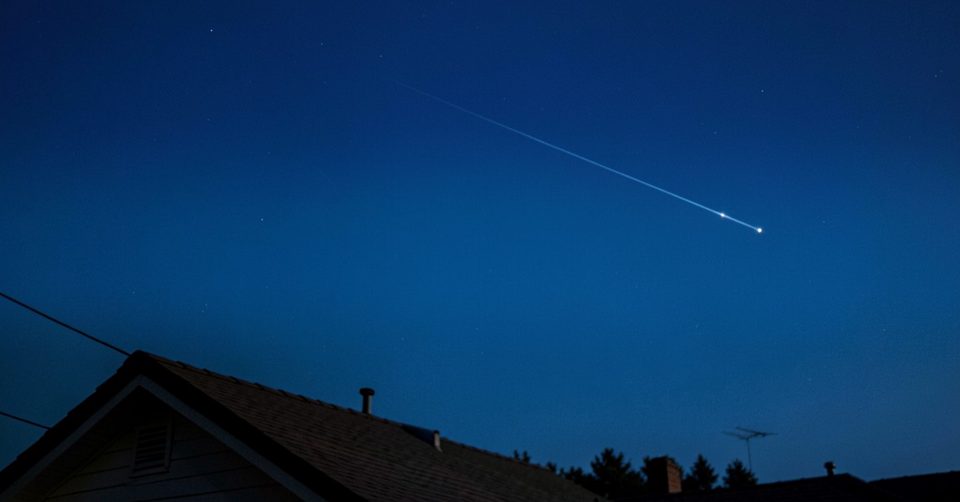
China's Shenlong space plane offers naked-eye passes over the U.S.
China's secretive Shenlong spacecraft is making a series of passes over the United States from Oct. 30 into early November, and it may be visible to the naked eye under favorable conditions. The spacecraft is on its fourth mission, and China's space agency says it is testing technologies for more convenient and affordable round-trip methods for the peaceful use of space.
It would appear as a steadily moving point of light, best seen in the predawn sky.
Reverse physics could bridge classical and quantum worlds
Gabriele Carcassi at the University of Michigan is developing a reverse physics programme to place physics on rigorous mathematical foundations. The approach would derive physical assumptions from mathematics and mathematics from physical assumptions, creating two-way definitions for theories. Carcassi and colleagues in the Assumptions of Physics project see this as a bridge that could help connect quantum mechanics with general relativity.
54% of young adults achieve type 2 diabetes remission in 6 months
A clinical trial found that more than half of participants with early-onset type 2 diabetes achieved remission within six months by following an intensive lifestyle program. The study, published in The Lancet Regional Health Americas, combined a low-calorie diet with supervised exercise and compared it to standard care, where only 4% achieved remission.
The findings suggest this approach could significantly change the course of type 2 diabetes in adults under 45.
Physicists create tiny universe where time emerges without a clock
Professor Giovanni Barontini at the University of Birmingham created a miniature universe using approximately 24,000 atoms cooled to near absolute zero. The experiment demonstrated that the passage of time can be measured without an external clock, emerging naturally from the behavior of particles within the system.
Published in Physical Review Research, the findings provide experimental evidence that time may arise from relationships within the universe rather than being a fundamental ingredient.
Warm climate preference may explain why crocodiles survived asteroid
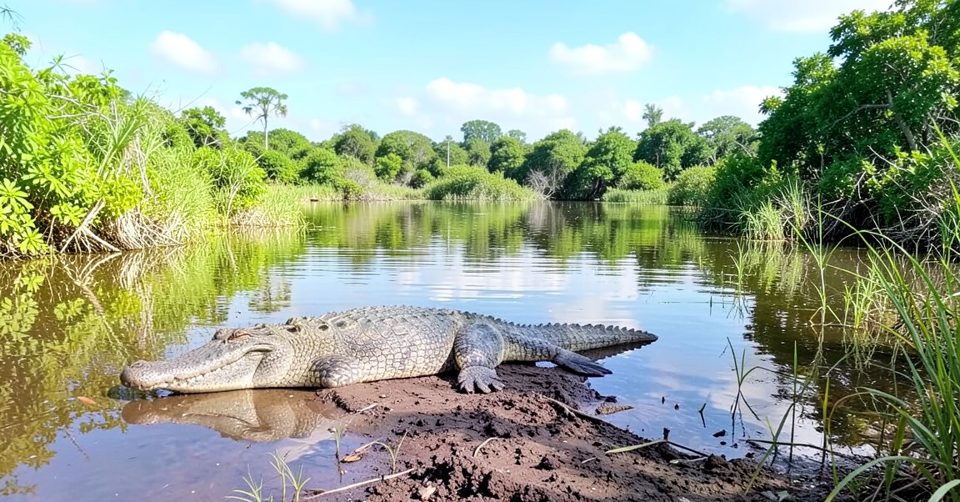
New research suggests that crocodiles survived the asteroid impact that wiped out the dinosaurs 66 million years ago because they preferred warm environments. The study, published in Science Advances, analyzed over 7,000 fossils and found that crocodiles tracked warm climates throughout their 250 million years of history.
Simulations indicate that tropical regions remained suitable for crocodile relatives after the impact, providing refuges where populations could persist and recover.
Computer scientist breaks through All-Pairs Shortest Paths limit from 1996
A computer scientist has achieved a breakthrough in the All-Pairs Shortest Paths problem, a challenge that involves finding the shortest distance between every pair of points in a network. The advance improves upon a method developed in 1996 by Dor, Halperin, and Zwick, which produced distance estimates within twice the actual shortest distance.
The new approach aims to reduce the massive computational workload required for densely connected networks.
Hubble data suggests stellar winds hindered early universe reionization
A study using Hubble Space Telescope data challenges the leading theory of how the universe emerged from darkness. Researchers found that powerful winds from exploding stars can prevent ultraviolet radiation from escaping galaxies, interfering with the reionization process. This discovery, published in Nature Astronomy, offers new clues about how the universe became transparent to ultraviolet light roughly 13 billion years ago.
Study maps hidden snakebite crisis killing up to 513,000 people a year
Researchers have identified a data crisis in snake envenoming, finding that the condition kills up to 513,000 people annually, a toll far greater than official statistics suggest. The study, which used a geostatistical model to fill data gaps in 79 countries, found that sub-Saharan Africa bears the heaviest burden.
The findings highlight the need for better mapping to meet the World Health Organization's target to halve snakebite mortality by 2030.
Hidden aggressive cells found in lower-risk childhood cancers
Scientists have discovered that some childhood rhabdomyosarcoma tumors classified as lower-risk contain hidden populations of highly aggressive cancer cells. The study, published in Cancer Research, examined samples from 16 children and found that these hidden cells may explain why some patients experience fatal outcomes despite lacking the usual genetic warning signs.
The findings could change how doctors identify children at risk of life-threatening cancer.
NASA image shows Ghost and Iris nebulae in Cepheus dust clouds
NASA's Astronomy Picture of the Day features a broad view of dusty regions in the constellation Cepheus, including the Ghost Nebula and Iris Nebula. The Ghost Nebula, also called vdB 141, lies in a molecular cloud complex about 1,200 light years away and shows signs of dense cores collapsing in early star formation. The Iris Nebula reflects bluish light from hot young stars in NGC 7023, and the scene spans almost six full moons across the sky.
Landsat image shows bare ice on Vega Island's skull face
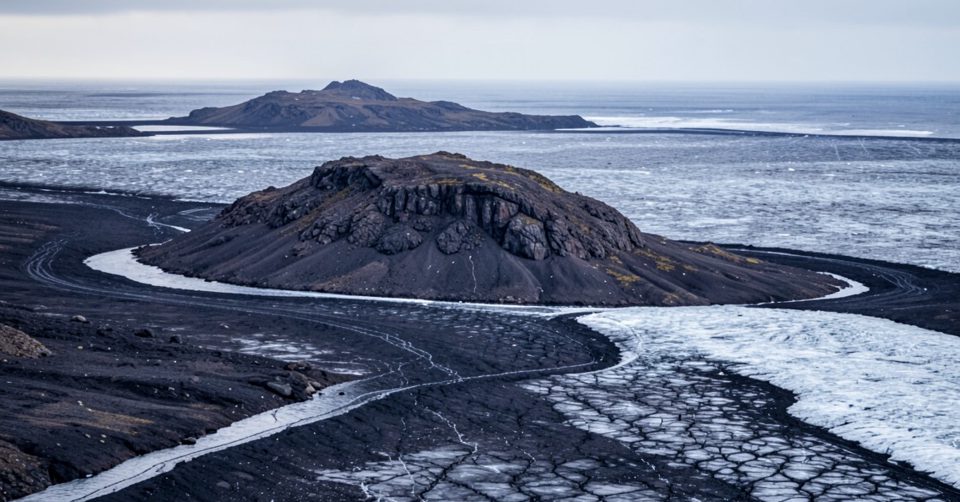
Landsat 9 images of Vega Island in the Weddell Sea show an icy formation that resembles a skull, with a nunatak as an eye socket, a lateral moraine as a mouth and Devil's Bay Glacier as a jawbone. An October 2026 image shows large areas of bare ice, unlike a March 2025 image in which snow covered the ice.
Glaciologist Mauri Pelto said above average winter temperatures, limited snow accumulation, sublimation and wind scouring exposed the ice, and darker bare ice may speed melting as the season warms.
Astronauts install seventh solar array in major ISS power upgrade
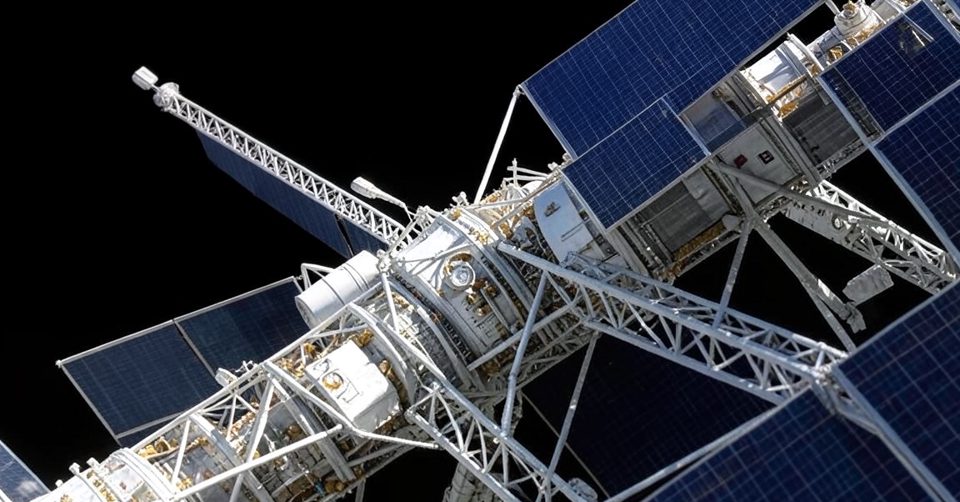
NASA astronaut Anil Menon and CSA astronaut Joshua Kutryk completed a 7-hour, 11-minute spacewalk to install the seventh International Space Station Roll-Out Solar Array. This installation is part of an expansion that will increase the station's power capacity from 160 to approximately 215 kilowatts. The final array is scheduled for installation on November 5.
Map points to 13 possible Martian sources of meteorite Teghaza 001
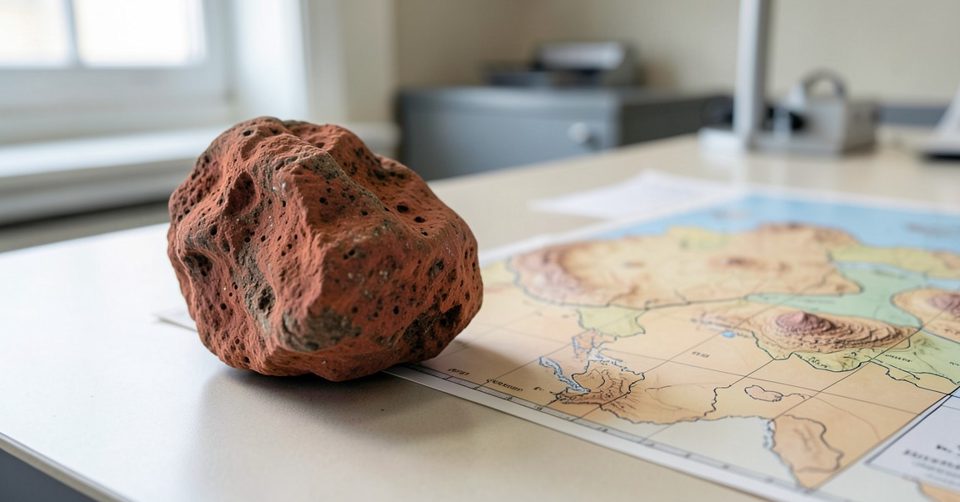
NASA's map of Mars shows 13 locations whose mineralogy and chemistry match Teghaza 001, one of the most ancient Martian meteorites found on Earth. The map uses base data from the Mars Orbiter Laser Altimeter on Mars Global Surveyor and Mars Reconnaissance Orbiter data to mark areas with similar mineralogy and chemistry.
The clues point to highlands in the southern hemisphere, but scientists say the meteorite's exact origin cannot be known for sure.
Visible mending moves from workshops to designer catwalks
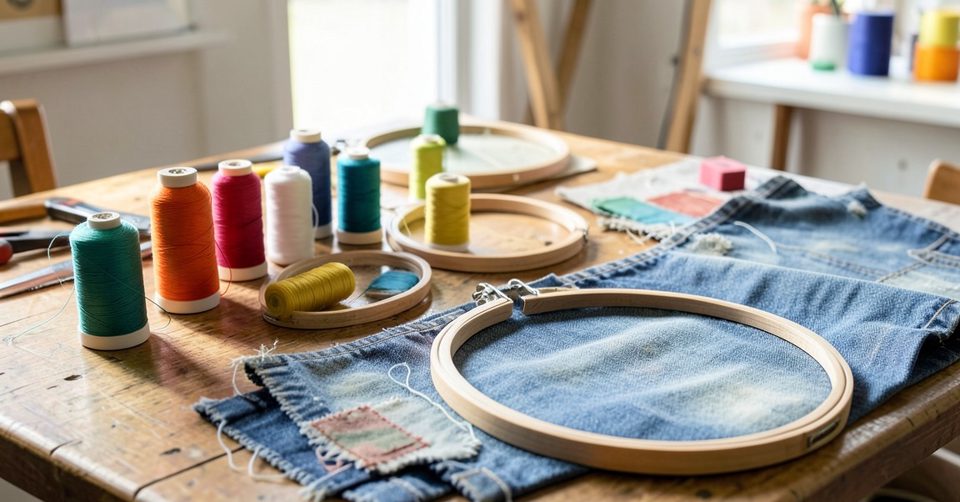
Visible mending, a fashion trend that uses decorative repairs to cover holes, stains and other flaws, is spreading from hobby crafters and community workshops to fast fashion brands and designer catwalks. The practice, which took off about six years ago, draws on techniques such as Boro, Sashiko and darning.
Jayne Eagle describes the revival as a backlash against throwaway fast fashion and its environmental and labour impacts, while the trend celebrates repairs rather than disguising them.

 Illustration