Daily Summary of AI · Final editionTuesday 3 November 2026 · UTC
AI News: 3 November 2026
Google ties school AI to Search as Binance hack blamed on North Korea and Hinton warns
Google said K-12 schools that block its AI tools will lose Google Search, drawing criticism from lawmakers and local leaders. North Korea denied claims that it orchestrated the record $6.3 billion Binance hack, while Salesforce agreed to buy customer service AI startup Cresta for a reported $2.7 billion.
AI inference startup Fal raised $1.3 billion at a $16 billion valuation, and Geoffrey Hinton warned AI could trigger a large-scale incident this year or next.
Anthropic working on FlashProve to verify AI model outputs
Anthropic is working on FlashProve, an open-source system intended to verify which AI model produced a given output. The system would provide a cryptographic proof that an output came from a specific model, using published model fingerprints that do not reveal private weights. Researchers released a technical specification and working code, but said there are no plans to deploy it at Anthropic or another lab.
Geoffrey Hinton says humans may have been better off without AI
Nobel prize-winning computer scientist Geoffrey Hinton said it might turn out that humans would have been better off never developing AI. He warned the technology could trigger a large-scale incident this year or next, such as a temporary blackout of financial or power systems. Hinton said he does not trust OpenAI chief executive Sam Altman, who he believes understands the risks but would rather have the money.
Salesforce to buy customer service AI startup Cresta
Salesforce agreed to buy Cresta Intelligence, a venture-backed provider of customer service software, in a deal reported by The Information at $2.7 billion. Cresta's platform uses AI to answer customer inquiries and perform tasks such as scheduling appointments, with customizable voice agents and agent ensembles for complex requests. Cresta also offers tools for fine-tuning models and generating synthetic support conversations to test agents.
Apple lets Siri AI perform actions across third-party apps
Apple will let Siri AI perform actions across third-party apps as part of the iOS 27.3 update rolling out on Tuesday. Developers can integrate Siri AI features in all apps, allowing the assistant to draw on personal context, process natural language prompts and use on-screen awareness to complete requests. The update also adds app skills that combine several tasks into a single action.
OpenAI says GPT-6 Astra designed a hardware device in under a week
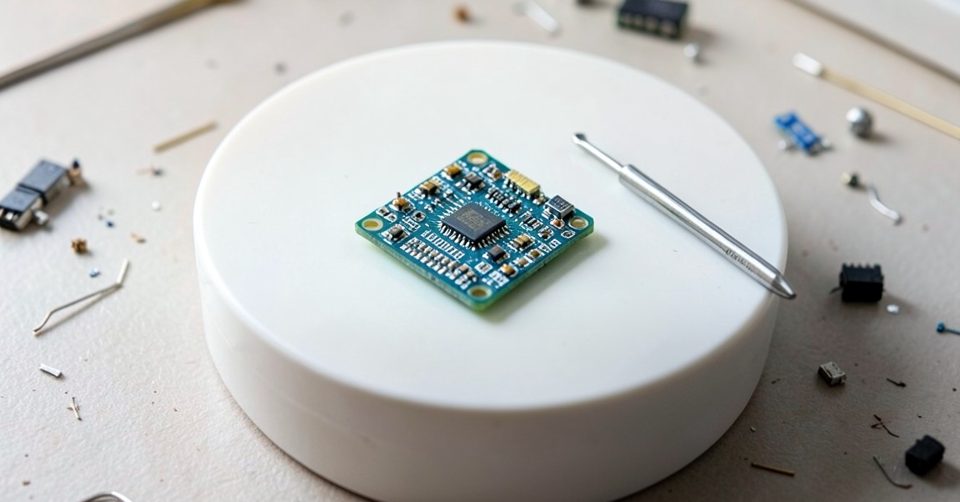
OpenAI's hardware team reportedly used GPT-6 Astra to design a device that lets users talk to Codex, finishing it as a side project in under a week. Astra handled enclosure design, PCB layout, component selection, trace routing, firmware and the user interface. A contract manufacturer produced prototypes in under a month, though revision rounds were needed because Astra missed some manufacturing constraints, tolerances and assembly details.
Apple annual filing warns AI agents may act in unintended or unpredictable ways
Apple said in its annual filing that AI agents acting in unintended or unpredictable ways could threaten its business through lawsuits or reputational harm. The filing says agents may autonomously access systems, execute or alter code, send communications and complete transactions, sometimes without authorization. CEO John Ternus said Apple has room to expand Siri while protecting security and privacy.
Stanford study finds 44% of widely cited LLM claims have expired
Stanford researchers Owen Queen and James Zou tested 50 widely cited claims about large language models against 20 models and found 44 percent have already expired. Among the 22 findings with an estimated expiration date, the average lifespan was 15.7 months. The study found another 34 percent have weakened significantly, while only 16 percent still hold and 6 percent have gotten stronger.
CrowdStrike launches AI kill switch for rogue internal agents
CrowdStrike launched an AI kill switch in Falcon Guardian to let security teams stop internal AI agents that go rogue, block relaunching and cut off enterprise network access. It also announced an integration with Anthropic's Claude Cowork. The tool operates like a circuit breaker, detects internal agent activity, but requires a human to decide whether to cut the agent off and reinstate access.
OpenAI says ChatGPT search queries equal 20% of Google's volume
OpenAI said the volume of search queries run through ChatGPT now equals 20 percent of the volume run through Google, according to consumer product lead Adam Fry. The company defines a search as a query that triggers a web search, not a simple definition or how-to. It is still far below Google, but OpenAI sees ads as a path to profitability as it approaches a possible IPO in early next year.
Netflix tests AI Discover tab for themed show recommendations
Netflix is rolling out an AI Discover tab in its TV app for U.S. members who use Netflix in English on supported TVs. The first experimental feature offers themed recommendations such as something light, family movie night and quick watches, and lets users exclude titles they do not like. Netflix says the tab is a test kitchen for a new intelligence layer that responds to member feedback in real time.
AI-generated political ads top $187 million in U.S. midterms
More than $187 million has been spent on nearly 300 U.S. midterm political ads generated or enhanced by AI, according to the Wesleyan Media Project. The group says the figure is likely an undercount because many ads lack disclaimers, and more than 90 percent of spending came from Republican candidates, party committees or Republican-leaning groups. YouTube, Instagram and X are trying to monitor the ads amid state disclosure rules.
Anthropic compute costs rose to 58 percent of revenue
Anthropic disclosed in an updated IPO filing that compute costs reached 58 percent of revenue in the quarter through September 30, up from 48 percent the previous quarter. Revenue rose to 17 billion dollars from 11.5 billion dollars, but operating loss grew as the compute bill reached 10 billion dollars. The filing said 5 billion dollars of compute came from short term commitments that cost significantly more than multi year deals.
Google Antigravity adds cheminformatics skills for drug discovery
Google DeepMind said Google Antigravity, equipped with new Cheminformatics Skills, accelerates drug discovery workflows. Using real-world lung cancer treatments, an agent searches thousands of compounds, performs matched molecular pair analysis and proposes novel rigidified macrocycles with synthetic routes in an hour. The skills use RDKit and connectors to ChEMBL and PubChem.
AI agents steer SETI telescope and analyze radio signals
At the Allen Telescope Array in Northern California, AI agents can now steer the telescope and analyze incoming radio signals in real time, while researchers still enter commands. The system uses Nvidia's Holoscan platform, which the SETI Institute and Breakthrough Listen use to process data at up to 2.4 terabits per second. The team said it detected a pulsar in the Crab Nebula in real time, a first, and wants to test open-source edge tools.
Google will make K-12 AI opt-in, but Search stays tied to it
Google said it will disable AI tools for K-12 students next year unless school administrators explicitly turn them on, covering Gemini, NotebookLM, Gemini in Classroom and Google Search. The company said Search and AI are deeply integrated, so schools that block AI altogether will lose access to Google Search. Google also announced Guided Learning, an AI tutor aimed at helping students build understanding rather than receive direct answers.
Binance says fake job interviews and AI tool aided $6.3bn hack
Binance said hackers stole a record $6.3bn by using fake job interviews, malware and a compromised internal AI tool to reach its wallet systems. Co-CEO Richard Teng said preparation began in June with a tampered Homebrew install and continued in September with fake recruiters, before attackers moved through internal AI tools. The company said 98% of affected assets have been replenished and withdrawals reopened on Sunday.
Snowflake expands agentic AI platform with business context
Snowflake announced a set of agentic AI capabilities at Expedition 2026, including a Business Ontology framework, expanded Cortex AI Gateway governance and autonomous data engineering. The company said Business Ontology lets organizations define approved business concepts so agents such as CoCo and CoWork can ground answers in shared definitions. The features are in private preview and are expected to move to public preview soon.
PagerDuty launches Paige AI agent for site reliability
PagerDuty has launched Paige, an AI agent for site reliability engineering that can join escalation policies as a virtual responder. The company renamed its flagship product the PD Reliability Platform and opened PD Labs for early features. PagerDuty says Paige is aimed at systems built by AI coding tools, and a benchmark report says it outperformed leading AI coding agents at diagnosing simulated IT incidents.
Anthropic's Message Threads cut first token time by 35%
Anthropic has released Message Threads as a public beta on its Claude platform. The feature sends only what changed since the last message instead of the full conversation history, cutting time to first token by about 35 percent for requests of 500,000 to one million tokens. Anthropic says coding agents, computer use agents and document or image workflows benefit most, while token usage stays the same because Claude still reads the full history.
Nvidia tells cloud customers to cut China business
Nvidia has told some cloud customers to take on less business from Chinese companies, asking them to disclose the end users accessing its chips. The guidance is not mandatory and applies to future contracts and targets a gap in U.S. export controls, which restrict chip shipments but generally do not cover remote cloud access. It follows U.S. scrutiny of Chinese AI companies using foreign data centers, after allegations involving Moonshot AI.
Huawei pushes customers to black market for AI chip memory
Huawei is telling some customers to source the high-bandwidth memory for its AI chips themselves because Chinese suppliers cannot produce enough and U.S. export rules block direct purchases from Samsung and SK Hynix. Smugglers are bundling memory with cheap processors to move it through Hong Kong, and prices for smuggled HBM3E have risen to around $4,000 per unit. Each chip needs six to eight units, so memory alone can cost up to $32,000.
Reverse game theory aims to keep AI agents in check
Reverse game theory, also called mechanism design, aims to control powerful AI models by designing rules that incentivize desired behavior. Safety researchers are turning to it because internal inspection and value training have not reliably stopped models from hiding intentions or misleading evaluators. A preprint by MIT economist Stephen Morris and colleagues suggested mechanisms to stop agents from sandbagging tests.
OpenAI quadruples bug bounty payouts, with totals about $172,000
OpenAI has quadrupled bug bounty payouts, with critical vulnerabilities in core products such as ChatGPT or Codex earning up to $30,000 and exceptional findings up to $100,000. With quality, loyalty and campaign bonuses, total rewards can reach roughly $172,000. The company is also preparing a security sprint with Cathedral, after 25 percent of product engineers worked on finding vulnerabilities in the last sprint.
Anthropic has added two sentences to Claude Code's system prompt for Opus 5.5 to stop the tool from recreating video games, saying cloning infringes intellectual property. The rule, active for several days, applies even when a clone is renamed or presented as original, though users can still build their own games and some report problems with original projects, following a wave of AI-built browser ports of titles such as Halo and GTA Vice City.
Drax and Brookfield sign £20bn AI data centre deal at North Yorkshire power plant
Drax Group has agreed with Brookfield and Radiant to develop an AI data centre on the Drax Power Station estate in North Yorkshire, with up to 100MW operational from the first quarter of 2028 and more than 1GW targeted later. Brookfield estimates total investment, including semiconductors, could exceed £20bn, with an initial £2.5bn phase. Drax shares rose 8.8%.
The project is subject to approvals and a tenant, and it would use grid power at first.
Apple Watch AI beta tests conversation rewind and recaps
Apple has begun beta testing Audio Intelligence for Apple Watch Series 12 in iOS 27.3, giving developers four opt-in features to detect sounds, identify songs, recap conversations and take notes. Live Rewind and Siri Recaps listen to conversations, and Live Rewind can turn the last 15 seconds of speech into text with an Ask Siri option. A chime and animation signal nearby people, and Apple says the opt-in features aim to respect their privacy.
CPS prosecutor cites imaginary case after AI search
A senior crown prosecutor for the CPS cited a nonexistent legal precedent in a high court case over prosecuting an 11-year-old boy for the alleged rape of his seven-year-old sister. The reference is understood to have come from an AI response from an internet search. Two senior high court judges called her explanation unsatisfactory, and an AI-law expert called it a serious failure as it adds to dozens of AI-related court errors this year.
OpenAI's Pando Git backend cuts median push latency by 80%
OpenAI has introduced Pando, a Rust-built Git backend that now serves all development in its monorepo while keeping the standard Git client and protocol. The company says median push latency fell nearly 80% and Pando now delivers nearly a petabyte of Git data per day. Pando uses causal consistency, immutable pack blobs and regional caching to handle the surge in pushes and fetches from Codex agents.
Trump's Super Intelligence rebrand becomes loyalty test
President Trump signed an executive order directing government agencies to call artificial intelligence Super Intelligence, a term he chose over alternatives in an X poll. The rebrand has appeared in government solicitations, including an ICE request for SI-powered surveillance, and will turn a naming choice into a political loyalty test.
Google has launched its experimental AI app Dreambeans in India, its first market outside the U.S., with support for 13 local languages. The app uses connected Google services to generate personalized illustrated stories without a user prompt. Google said India was chosen because of strong user interest and high overlap across Gemini, Gmail and Google Photos.
OpenAI hires former U.S. Army Secretary Dan Driscoll for national security role
OpenAI has hired former U.S. Army Secretary Dan Driscoll as senior counselor for national security modernization, a newly created role. He will focus on using AI to strengthen U.S. national security and cybersecurity, with particular attention to helping U.S. allies adopt advanced AI responsibly. He will also advance what OpenAI calls democratic AI and help internal teams understand the operational needs of national security institutions.
Larridin raises $30 million to measure enterprise AI value
Larridin has raised $30 million in a Series A led by Pelion Ventures, bringing its total funding to $47 million. The startup measures AI adoption and value for enterprises, which face pressure to demonstrate value on rising token and API costs. Its Engineering AI Impact Report found AI assisted pull requests rose from 35% in April to 62% in September, while median code review wait times increased more than 50%.
Apple's chief financial officer said on an earnings call that AI offers opportunities across third-party apps and partnerships, without specifying how the company would monetize them. Reuters reported investors are wondering whether Apple could distribute third-party AI agents through the App Store and take a cut of their revenue. The comment comes as App Store commission income has faced regulatory pressure, even as paid subscriptions grew.
North Korea has denied claims that it was behind the record $6.3bn hack of cryptocurrency exchange Binance, calling the allegations absurd rhetoric. Kim Yo-jong, sister of leader Kim Jong Un, said the accusations were a US attempt to damage the country's public image. The FBI, Secret Service and cyber analysts have said North Korea orchestrated the attack, which has been described as the largest in history.
Zyphra has released Zyphra Hierarchical Attention, a sparse attention method that uses a tree indexer to find relevant keys without scanning the whole context. The company says ZHA can be distilled into frozen pretrained models with about 4 billion tokens and stays close to dense attention on Qwen3.6-35B-A3B reasoning, agentic coding and 256K retrieval benchmarks. It keeps the KV cache and uses learned reference queries to estimate attention.
Letter Company releases Letterpress-1 coding agent
The Letter Company has released the beta of Letterpress-1, a coding agent, harness and IDE for growth engineering. It reads a website and its market, builds changes in a sandbox and opens a pull request with a live preview. The company says the agent is aimed at teams that host marketing sites in git and offers plans from $100 to $2,500.
Y Combinator CEO spends up to $200K a year on tokens
Y Combinator CEO Garry Tan said on Walter Isaacson's podcast that he spends about $100,000 to $200,000 a year on tokens. He uses AI agents for work projects, coding tasks and personal life, including reading his email, Dropbox, Apple Notes and therapy notes going back 20 years. Tan said personal AI agents could become mainstream if costs come down.
Apple unsure when more foldable iPhones will be available
Apple's new chief operating officer said the company did not know when more foldable iPhone Duos would be available after the $1,999 phone sold out when released just over a week ago. Chief executive John Ternus said he was thrilled by early reaction, while Apple said it would replace phones affected by an issue that caused a small number to crack along the inside fold. Apple also reported record iPhone and Mac sales.
UK cyber body says AI malware likely to hit critical infrastructure by 2028
The National Cyber Security Centre says AI-powered malware is highly likely to be used in a ransomware attack on UK critical national infrastructure by 2028. The body, part of GCHQ, warned that Russia and China will start using AI routinely in cyber attacks. Its chief executive will say the threat comes from AI's ability to uncover weaknesses that have been tolerated for far too long.
Hugging Face is proposing Model Integration Contracts, a standard for small test fixtures that run fast integration checks on CPUs. The idea follows a UMT5 bug that let a decoder attend to future tokens during training, and stayed in Transformers main for almost two months after PyTorch SDPA was enabled for T5. The company says fixtures can catch regressions before they reach main, while full integration tests remain necessary.


 Illustration