Daily Summary of Science & Space · Final editionSaturday 31 October 2026 · UTC
Science & Space News: 31 October 2026
Deep freeze metals, gut cancer clue and DUNE construction lead science day
Scientists reported metals that stay damage resistant at 20 kelvin, a gut bacterium toxin receptor linked to colon cancer, and an ultracold atom simulation of matter-antimatter pair production. DUNE construction is set to start in South Dakota, and a 4,000-year-old wall in Morocco and a rare Celtic helmet in Poland added to the day's discoveries.
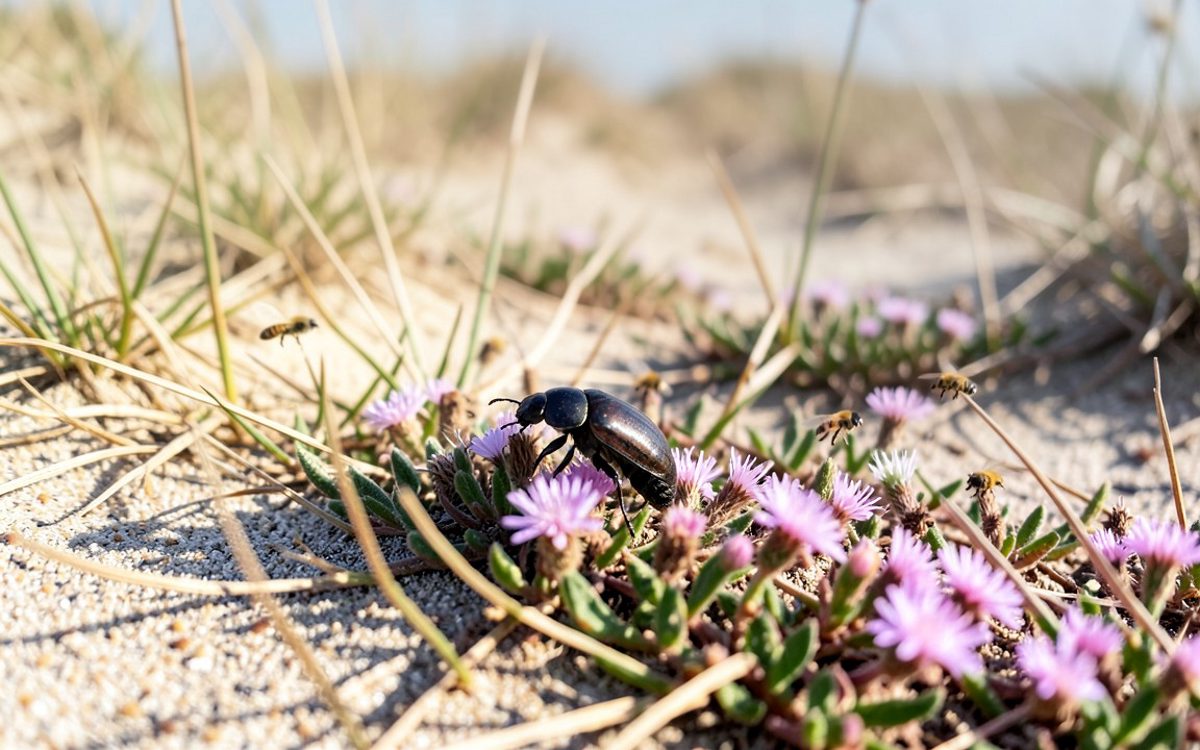
The Short-Necked Oil Beetle has been found in Pembrokeshire after being missing from Wales for 60 years. Experts discovered larvae at Castlemartin Range, suggesting the nationally rare species is breeding again after last year's survey found only dead adults. The beetle depends on solitary bees and flower-rich coastal grassland or sand dune habitat, and is listed as vulnerable on the IUCN Red List.
New study suggests supernovas may have trapped photons that ended cosmic dark age
A new study in Nature Astronomy suggests supernovas may have trapped the ultraviolet photons that cleared the early universe's hydrogen fog, rather than helping scatter them. The team used Hubble to study six star-forming galaxies about 3.5 billion light-years away, analogues of the ancient cosmos. The finding challenges the idea that fast supernova-driven winds were needed for ionizing photons to escape and end the Epoch of Reionization.
Ultracold atoms simulate matter-antimatter pair production
Researchers at the University of Science and Technology of China and other institutions used ultracold rubidium atoms in an optical lattice to simulate the Schwinger effect, in which a strong electric field can create particle-antimatter pairs from the vacuum. The Physical Review Letters study describes a false vacuum arrangement in which atoms hop between traps to mimic pair creation, with a quantum gas microscope imaging the process.
Clay figurine of shrine maiden found at fifth-century Japanese burial mound
Archaeologists found a human-shaped clay haniwa in a moat around a fifth-century burial mound at Nishikaminomiya, northwest of Tokyo. The surviving head and torso, about 16 inches tall, are thought to represent a miko, a female shaman who performed funeral rituals in the Kofun period. Its topknot, bracelets, red sash and ritual implement suggest it was carefully made and likely placed near a boat-shaped sarcophagus.
Betelgeuse's companion Siwarha disrupts the star's atmosphere
New radio observations show Siwarha, Betelgeuse's smaller companion, passing through the red supergiant's extended atmosphere and leaving a wake. Data from the Very Large Array and ALMA show the star's atmosphere stretches into an egg shape when Siwarha is farthest away and rounds out when it passes in front of or behind the star. The work helps explain how the companion affects the star, which has largely recovered from its 2020 Great Dimming.
Deep Underground Neutrino Experiment construction set to start in South Dakota mine
Construction of the Deep Underground Neutrino Experiment is due to start Monday in the former Homestake mine in Lead, South Dakota, a mile beneath the Black Hills. Engineers will assemble four giant detectors to observe neutrinos from the sun, supernovae and a beam sent through 800 miles of rock from a lab near Chicago. The experiment could reveal new physics and help explain why matter, rather than antimatter, exists.
Rare Celtic helmet found in Poland far from homeland
A new Antiquity study reports a rare Berru-type bronze helmet from a ritual pit at Lysa Gora in northeastern Poland, about 2,400 years ago. It is the only known helmet of its kind found outside its Celtic homeland in the 4th century BC. The find, with iron adzes, a scythe and La Tene brooches, suggests long-distance contacts and possibly Celtic people living there. The study says trade is unlikely.
Kerosene gel fuel may improve rocket and satellite control
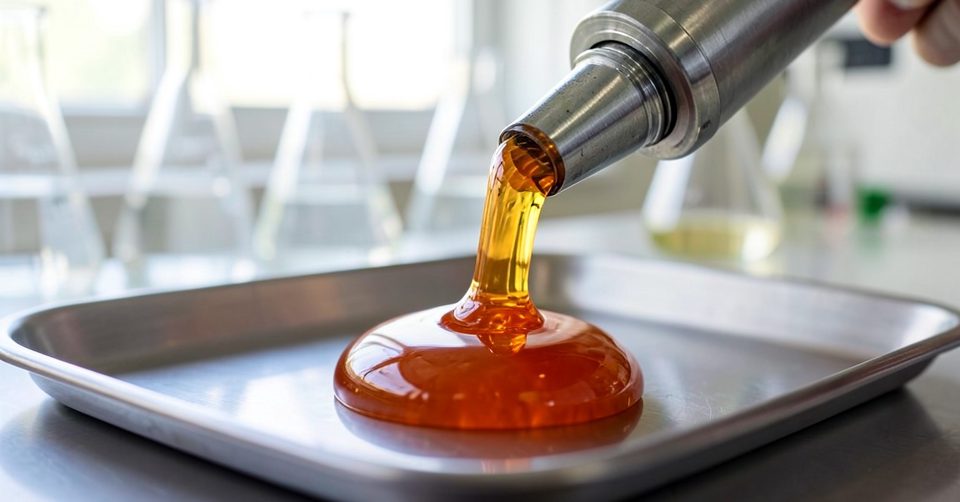
Concordia researchers developed a kerosene-based gel that combines kerosene with lecithin and a small amount of calcium chloride. The Langmuir study says its viscosity drops by about 100 times under increasing force, so it can flow for fuel injection, while at rest it behaves more like a soft solid to reduce sloshing and leakage. Samples stayed stable for more than a year in sealed containers, though testing in propulsion systems is needed.
Fork-tailed drongo is a strong candidate for animal lying
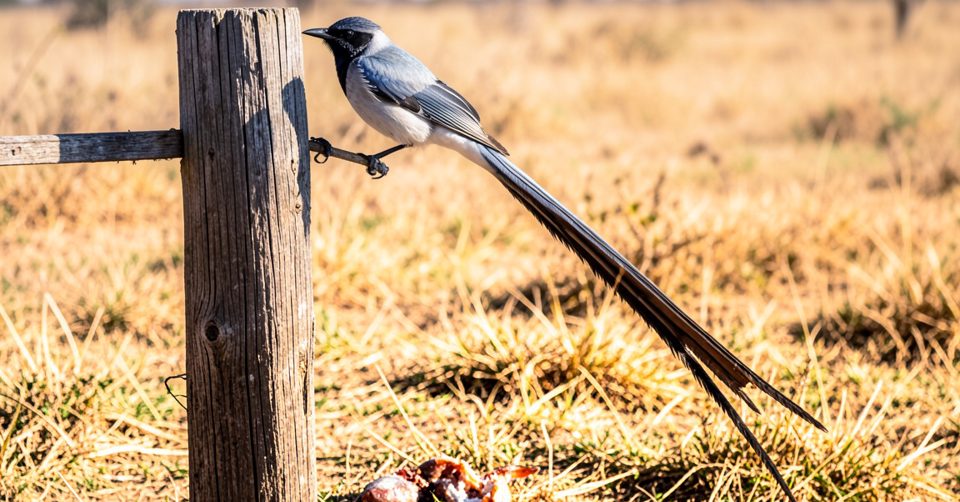
In his new book, Liars, Cheats and Copycats, biologist James O'Hanlon examines whether animal deception can amount to lying. He highlights the fork-tailed drongo, a small African bird that mimics meerkat alarm calls and other signals to steal abandoned food. Researchers have identified over fifty unique deceptive vocalizations in the bird, making it one of the strongest candidates for deliberate animal lying.
Gut bacterium toxin uses claudin-4 to reach colon cells
Johns Hopkins researchers found that claudin-4 is the docking point for BFT, a toxin from Bacteroides fragilis that can damage the colon and encourage tumors. The Nature study identifies the missing step in how the toxin attaches to intestinal cells. The team also made a molecular decoy that intercepted the toxin and protected mice, suggesting a possible way to prevent bacterial damage linked to colorectal cancer.
Ancient wall in Morocco rewrites North Africa history
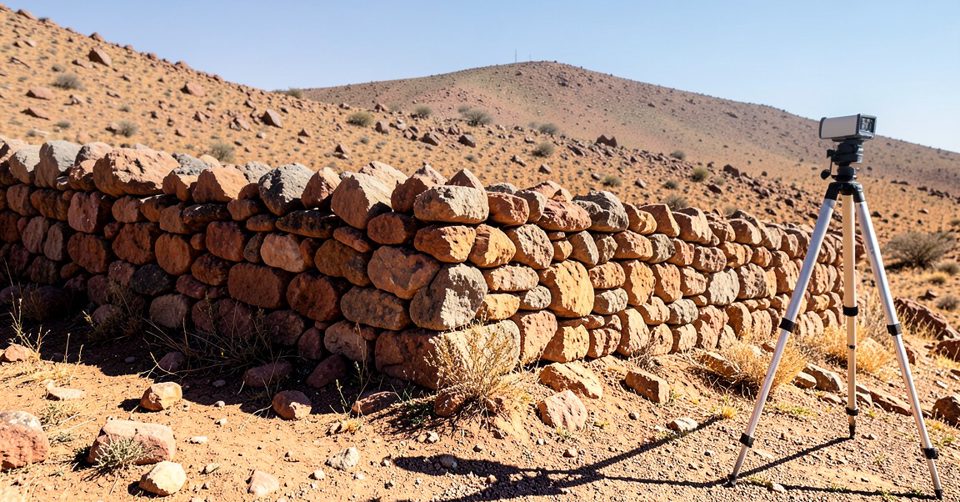
Excavations at Oued Beht in north-west Morocco uncovered a large defensive structure dated to about 4,000 to 3,500 years ago, the earliest known large-scale construction of its kind in north Africa beyond the Nile Valley. The study says the wall-like structures likely responded to competition over land, resources or movement rather than invaders. The site also shows the ridge was reused in the 11th to 13th centuries AD.
Researchers named Infernogallus jamesi, a small turkey-sized oviraptorosaur from the Hell Creek Formation, the first known dinosaur that specifically ate fruit. Its chewing muscles were adapted to mash soft food and remove flesh from seeds, a pattern previously seen in fruit-eating parrots. The Nature Communications study links Cretaceous dinosaurs to flowering plants.
Metals stay tough at 20 kelvin through a new microscopic process
Researchers reported two experimental niobium and titanium alloys that remain damage resistant at 20 kelvin, or minus 253 C, instead of becoming brittle. The Nature study says the alloys activate a different microscopic process that helps stop cracks from spreading, rather than relying on dislocation movement that slows in cold. The finding challenges ideas about body-centered cubic metals and may help engineers design tougher materials.
75,000-year-old Neanderthal may have been killed by a spear aimed at the heart
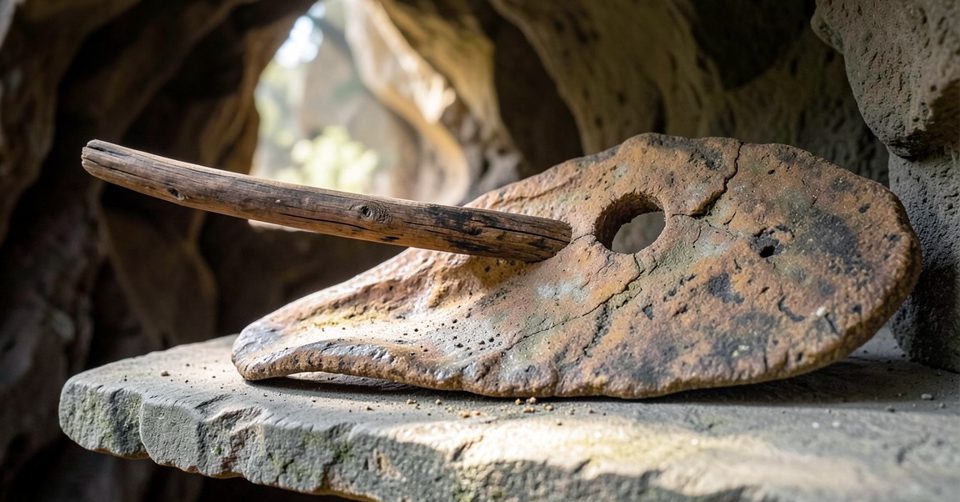
A 15-millimeter circular hole in a 75,000-year-old Neanderthal shoulder blade from Shanidar cave in Iraqi Kurdistan suggests the individual was struck by a sharpened wooden spear. University of Cambridge researchers say the weapon likely entered the left chest, passed through a lung and probably major blood vessels, and may have been an intentional heart shot.
Shanidar A remains may be the oldest evidence of fatal violence involving a wooden spear.
Gladstone scientists find bacterial defense that activates toxin with DNA
Scientists at Gladstone Institutes reported a bacterial immune system called type VI retrons that uses DNA to activate a toxin when viruses attack, rather than keeping a toxin suppressed. The self-destruct response can protect the colony by stopping viral spread. The team says the mechanism may help design more precise DNA editing tools for correcting harmful mutations.
SpaceX launches 27 Starlink satellites on its 118th Falcon 9 flight of 2026
SpaceX launched 27 Starlink satellites into low Earth orbit from Vandenberg Space Force Base on Saturday, using a Falcon 9 whose first stage landed on a Pacific drone ship. The upper stage deployed the satellites about 62 minutes after launch, adding to a constellation of more than 11,000 spacecraft. It was the 118th Falcon 9 flight of 2026 so far, with more than 70 percent of those missions devoted to Starlink.
NASA features aurora over Iceland's Hverir geothermal area
NASA's daily image shows an aurora over Hverir, a geothermally active area in northeastern Iceland. Geomagnetic storms triggered by solar activity unleashed particles trapped in Earth's magnetic field, which penetrated the upper atmosphere at high latitudes. Steam and gas from local fumaroles rose against the greenish northern lights as the Sun is in early decline from the peak of its solar activity cycle.
Hera returns first image showing Didymos and Dimorphos apart
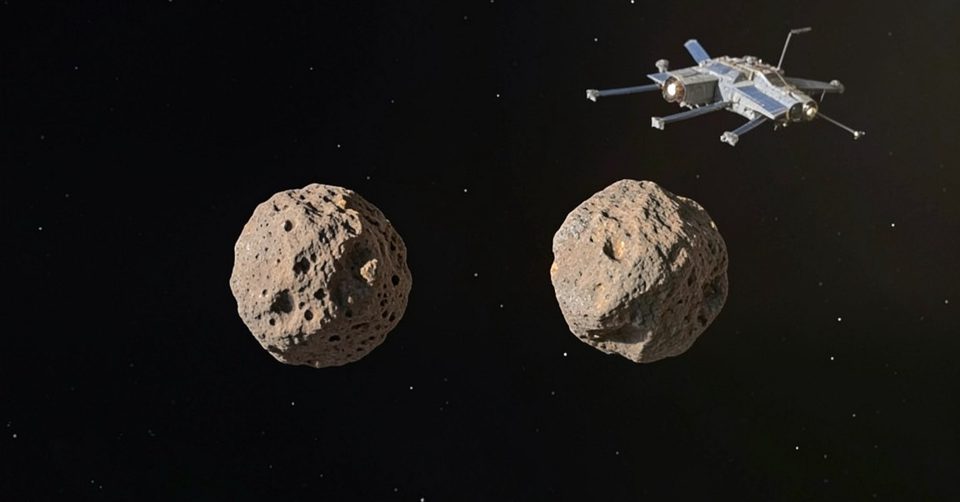
ESA's Hera spacecraft has returned the first image showing Didymos and Dimorphos as separate objects, about 1,280 km from the binary asteroid system. The mission, led by ESA with NASA and JAXA, will collect follow-up data on NASA's 2022 DART impact on Dimorphos. Its detailed images of Dimorphos, the first object whose orbit was measurably shifted by human action, are due on 25 November.
Global nature talks reach deal but money remains an issue
Delegates from nearly 200 countries agreed key parts of a new nature action plan in Yerevan early Saturday. The UN says the world is on track to meet only one of the 24 targets in the 2022 Global Biodiversity Framework, including protecting 30% of land and seas by 2030. Countries said money remains the main barrier, after 2022 pledges of $30bn and a further $170bn from private sources by the end of the decade.
Vitamin A derivative helps form sharp central vision
Johns Hopkins scientists found that a vitamin A derivative works with thyroid hormones to help develop the foveola, the tiny central retina region responsible for sharpest sight. Using human retinal organoids, they observed cells that initially detect blue light changing into cells sensitive to red and green light. The PNAS study challenges a roughly 30-year-old explanation and may aid research into macular degeneration and glaucoma.
UK could see 10 days without rain after wettest week in two years
The UK could see as many as 10 consecutive days without rain after Storms Austen and Boelo brought an unsettled end to October. The Environment Agency said England had its wettest week in two years, with rainfall from both storms and another low-pressure system. High pressure is now expected to bring a prolonged spell of dry, calm weather, with fog and cooler nights, into early November.

 Illustration