Daily Summary of Science & Space · Final editionThursday 29 October 2026 · UTC
Science & Space News: 29 October 2026
Spacewalkers add ISS solar array on 100th US spacewalk; Voyager 1 recovers from signal loss
Astronauts Anil Menon and Joshua Kutryk spent about seven hours outside the International Space Station on the 100th US spacewalk and deployed a new solar array. NASA said Voyager 1 is back in contact after a 48-hour signal loss and is now running on lower-power hardware. New research suggests Earth could have made its own water as it formed, and a UC Davis team argues that the universe's accelerating expansion might not need dark energy.
Lab experiments suggest growing Earth could have produced its own water
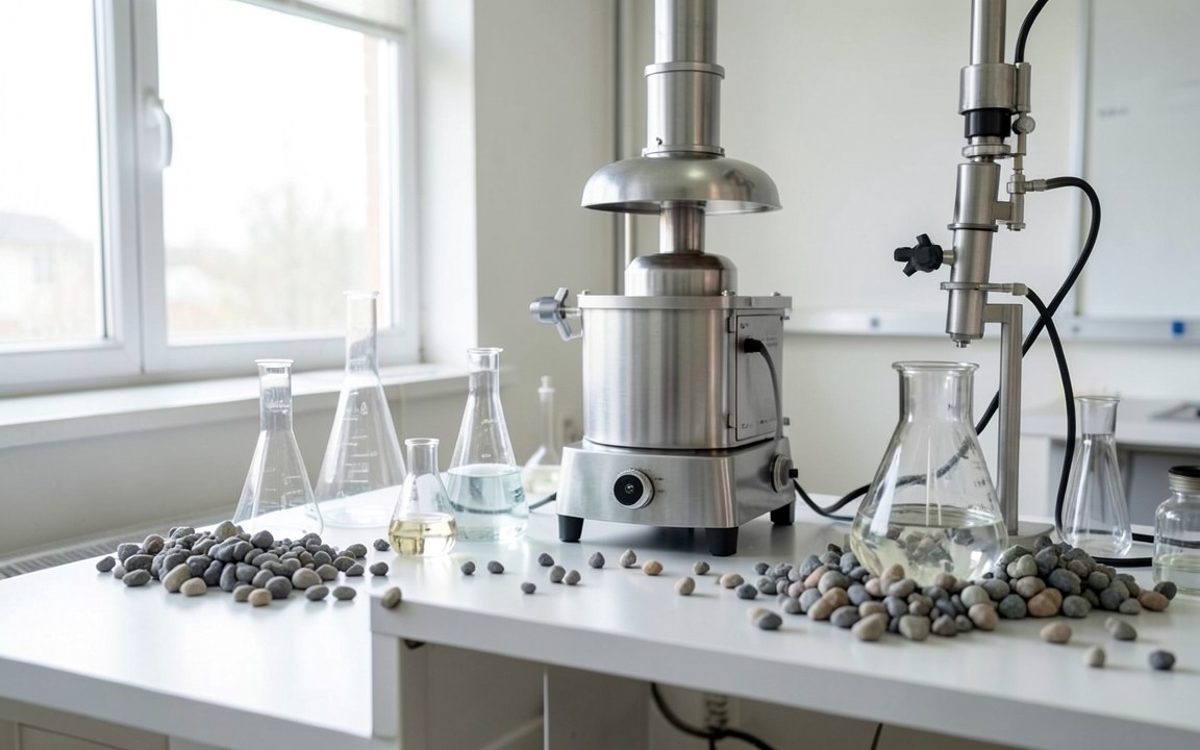
A study in Nature Geoscience led by Susmita Garai and Zachary Sharp of the University of New Mexico offers an alternative to the idea that comets and asteroids delivered Earth's water. Their high-temperature experiments show that iron oxide in silicate pebbles raining onto the young, growing planet could react with its hydrogen-rich early atmosphere and produce water vapour within minutes.
The authors say the mechanism means virtually any Earth-sized rocky planet should end up with water.
Voyager 1 regains contact after 48-hour signal loss and switches to lower-power devices
NASA said on 29 October that an unexpected loss of communication with Voyager 1 on 20 October resolved itself after 48 hours, before engineers had sent any troubleshooting commands. The Deep Space Network did not detect the probe's signal during two scheduled contacts 24 hours apart. Voyager 1 is about 24 billion kilometres from Earth.
In early September, engineers replaced three devices on the spacecraft with lower-power alternatives to stretch its shrinking power supply, about six weeks after making the same swap on Voyager 2.
Research led by Arin Avsar of the University of Arizona, published in The Astrophysical Journal Letters, uses Hubble observations taken between 2012 and 2025 to detect the Cat's Tail in visible light. The 1,000-astronomical-unit dust feature in the young Beta Pictoris system had previously been seen only by the James Webb Space Telescope. The team finds the feature is made almost entirely of dark, carbon-rich organic material.
It concludes that the material came from a collision between two bodies, each with about one to three times the mass of the dwarf planet Ceres.
Astronauts deploy new ISS solar array on the 100th US spacewalk
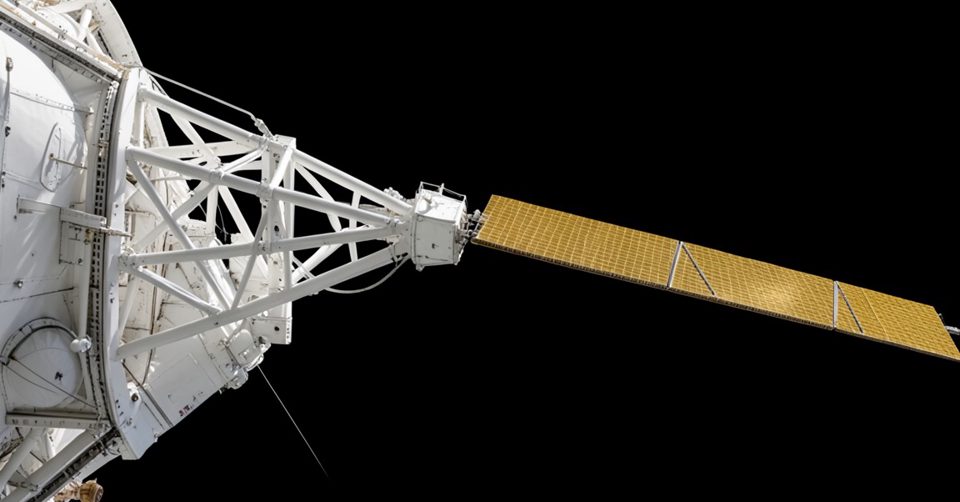
NASA astronaut Anil Menon and Joshua Kutryk of the Canadian Space Agency deployed a new solar array on Thursday during a seven-hour spacewalk outside the International Space Station. It was the 100th US spacewalk by station crew members. The work is part of a campaign to install the last two ISS Roll Out Solar Arrays over the station's original arrays, which have degraded after more than two decades in space.
Six of the arrays were already in place, and a second spacewalk is scheduled for 5 November.
UC Davis mathematicians argue cosmic acceleration may not require dark energy
A study in Proceedings of the Royal Society A by researchers at the University of California, Davis argues that the Friedmann spacetimes underlying the standard Lambda-cold dark matter model of cosmology are unstable. Corresponding author Blake Temple says this instability could produce accelerated expansion naturally under Einstein's equations, which would make dark energy unnecessary.
Dark energy has been the leading explanation for the universe's accelerating expansion for nearly three decades, so the claim challenges a central part of modern cosmology.
Juno data show Jupiter's bow shock is more complex than Earth's
A University of Iowa release on 29 October set out findings from NASA's Juno spacecraft, published on 31 July in Nature Communications, that give the most detailed view yet of Jupiter's bow shock. Earth's bow shock mainly uses waves at a single frequency, but Jupiter's uses plasma waves at several frequencies to slow and heat the solar wind.
Jupiter also has smaller shock regions, called shocklets, that slow the wind before it reaches the main shock. The researchers say the results could help explain shock waves around exploding stars.

 Illustration