Daily Summary of Technology · Final editionFriday 30 October 2026 · UTC
Technology News: 30 October 2026
Binance hack hits record as Apple Intelligence comes to China
Binance said $6.3bn was stolen in what is believed to be the largest crypto hack on record, with about $3bn frozen and analysts linking the theft to North Korea. Apple will bring earlier Apple Intelligence features to China in iOS 27.3, while Waymo and Toyota will begin testing autonomous bZ4X robotaxis in Japan in 2027.
Salesforce to buy defense AI startup Rune for $375M
Salesforce agreed to acquire Rune Technologies for $375 million in cash and stock, according to Resilience Media. Rune builds AI software to help the U.S. military predict supply needs and manage logistics from the field. The deal extends Salesforce's Missionforce unit, which the company said has grown 80 percent year over year after a 10-year, $5.6 billion contract with the U.S. Army.
Apple said Apple Intelligence will launch in China with iOS 27.3, first in a beta on November 4 and then in a full release in December. The launch includes earlier features such as notification summaries, real-time translation, rewriting and proofreading tools, visual intelligence, and object removal, but not the new Siri AI. Apple also said it worked with Ailbaba to add support for its Qwen chatbot in some experiences.
Anthropic expected to receive high junk rating after IPO
Anthropic is expected to receive a high junk rating from credit agencies following its initial public offering, according to a report from the Financial Times. Blackstone, an anchor investor in a recent deal to finance the company's chips, told investors it expects a double B range rating. This prediction reverses an earlier statement that the company would receive an investment-grade rating before 2027.
Applebee's fixed a security flaw that let anyone access registered customers' personal information after a researcher found an internal database password in its Android app. Robert Wiggins of What Security used AI to locate the hardcoded credential, which exposed names, email addresses, dates of birth, phone numbers, ZIP codes, veteran status, and login data. The issue was verified by decompiling the app and retrieving a test account's data.
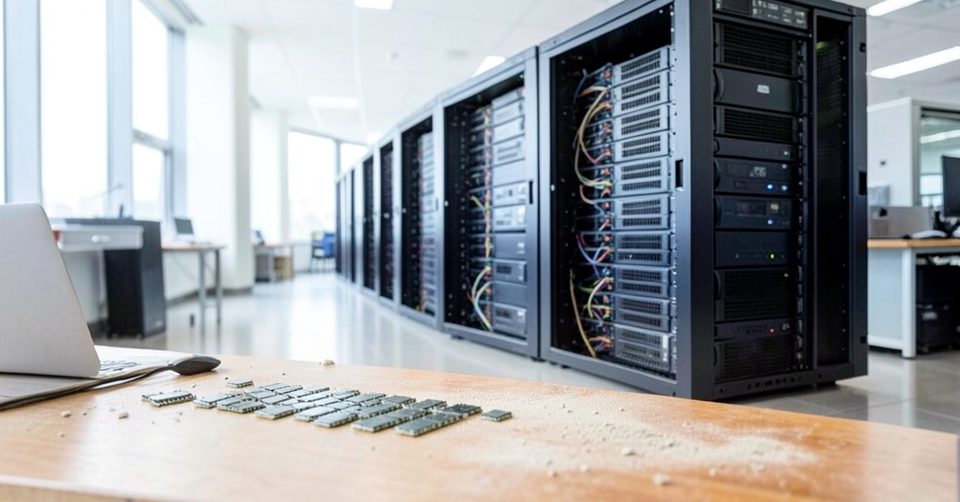
OpenAI CEO Sam Altman said it is terrible from a global allocation perspective to have limited DRAM sitting in personal computers that are used only five percent of the time. He argued that maximum utilization in the cloud is preferable during a supply-constrained memory market. The comments came as Samsung and SK Hynix have long-term deals with cloud operators and projects such as OpenAI's Stargate, reserving much of the world's RAM output.
AI giants adopt shared standard for publishers to opt out of scraping
OpenAI, Google, Microsoft, and Anthropic will adopt a new standard allowing publishers to opt out of AI scraping across multiple companies at once. The shared policy token, proposed by Anthropic, will live in a website's robots.txt file, replacing the need to set preferences individually. Meta signaled support for the setting, while Microsoft and Google plan to support it next year.
Meta settles social media addiction case just before trial
Meta reached a settlement in a social media addiction lawsuit to avoid a trial set to begin next month, leaving Snap as the only remaining defendant. The case was brought by an 18-year-old woman from Mississippi who described losing focus and engaging in self-harm. Terms of the settlement were not disclosed, and Snap's CEO is expected to testify in the remaining trial.
Bluesky launches dedicated moderation inbox for users
Bluesky is rolling out a beta feature called the moderation inbox, which allows users to track reports, account strikes, and their overall standing on the platform in one place. The feature aims to make communication easier than previous email-based notifications, which were difficult for users on independent servers. Users can also appeal most moderation decisions directly through the app.
Fan fiction site AO3 down for maintenance that may take weeks
Archive of Our Own, a major fan fiction site run by the nonprofit OTW, is down for maintenance that could take two to four weeks. OTW said the site's data is intact and does not believe any has been exfiltrated, while the cause of the outage remains unclear. The organization had planned a 12 hour outage but extended it after taking the site offline just after 3 a.m. ET.
Satlyt tests software to turn satellites into space data centers
Satlyt successfully tested software that spreads computing tasks among satellites in orbit based on available compute and communication. The test, conducted with the University of Houston on a NASA-funded project, simulated a network of four computers and eight services. The company aims to create a system where users define permissions and priorities while the software manages task assignment.
Fujifilm to boost tape production fivefold as AI fuels demand
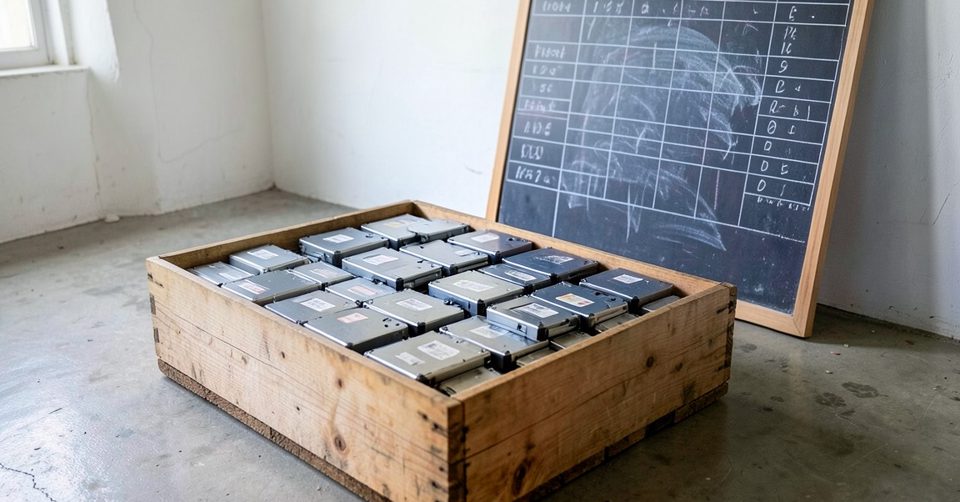
Fujifilm will invest about 10 billion yen, roughly $63 million, to increase magnetic tape production capacity fivefold during fiscal 2026 through 2028. The company said generative AI is driving exponential growth in archiving demand, and major cloud and data center operators are using tape for low cost, offline storage. The project at its Kanagawa factory will focus on producing LTO Ultrium10 tape.
Google's Suncatcher satellite produces first AI response in orbit
Google said its Project Suncatcher prototype satellite has produced the first AI response from a data center class TPU in orbit. The spacecraft, launched on October 1 and carrying four TPUs, ran a prompt on its onboard Gemma 4 model and downlinked a haiku about being in space. Google will now test the chips under thermal stress and radiation, with twin interconnected satellites planned for 2027.
DOJ charges five in AI-driven ghost student loan fraud scheme
The US Department of Justice charged five individuals in the first broad federal crackdown on ghost students who used AI to steal identities and student loans. The scheme involved purchasing personally identifiable information and using AI to fill out applications and complete coursework. The DOJ seized more than $750,000 in cryptocurrency from a network associated with Kenyan nationals.
Anthropic denies Claude Code extension breach involved its systems
Anthropic denied that a malicious Claude Code extension in Cursor's marketplace resulted from a compromise of its own systems. The company said a malicious actor used access to Cursor's marketplace to publish a tampered copy that infected up to 5,000 developers. The extension, available for about 11 hours on Thursday, contained an SSH backdoor that collected host and user data and installed persistence.
Tech stocks slide as AI spending fears hit Intel and Amazon
US tech stocks fell for a second day as investors worried about hundreds of billions in AI spending. Intel shares dropped as much as 30%, extending losses after Alphabet's stock price fell by more than $500bn the previous day. Amazon shares fell after earnings missed expectations, while major tech firms have committed to $800.6bn in 2026 spending.
AlpineBSD announced as an AI-free open source operating system
AlpineBSD, a new operating system in the BSD family, has been announced with a policy to avoid the output of generative AI models. The project combines the NetBSD kernel with a userspace inspired by Alpine Linux, aiming to use as little AI-generated software as possible. No installation media are available yet, though it is possible to manually bootstrap an installation.
DoorDash says only several hundred orders come from AI agents
DoorDash revealed that third-party AI agents have generated only several hundred orders, a tiny fraction of the company's average of three million daily deliveries. CEO Tony Xu called the use case very low but noted the company wants to develop a healthy relationship with agent makers. The company recently released a Model Context Protocol connector to allow third-party tools to order through its platform.
Runware aims to mass produce AI data center pods like cars
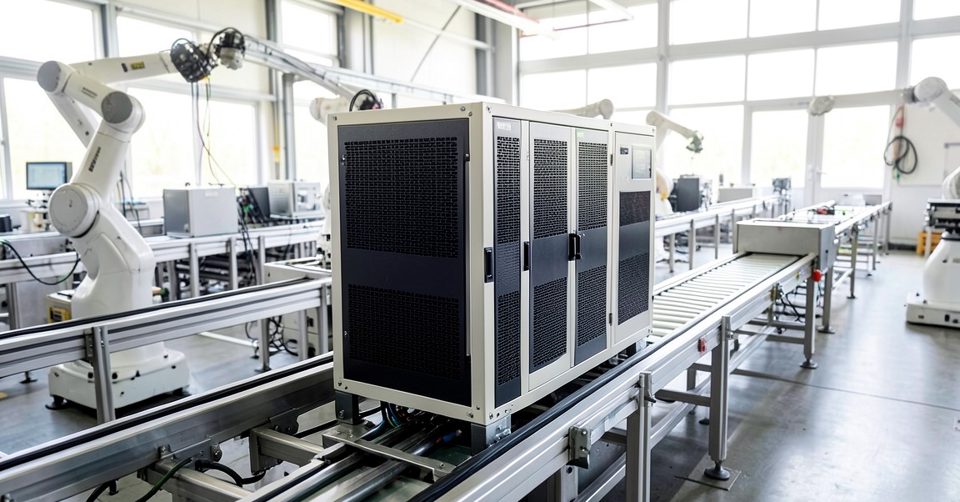
Runware says it will build a factory that assembles modular AI data center pods on a production line, aiming to scale to 30 megawatts of capacity per day by 2028. The company plans to bring pods online within 48 hours of installation and said a pod that once took three weeks to build will soon take one day. Customers can rent compute, supply their own GPUs, or use Runware's operations, with power and internet charged separately.
NHS warns GPs of patient data risk after website vendor collapse
NHS England warned GP practices to preserve patient data and contact patients after website provider Silicon Practice Digital Health Solutions went into administration. The collapse may affect hundreds of practices, with some GP websites offline. Its CTO told practices to manage consultation backlogs, preserve historical data not in clinical systems, and consider notifying the Information Commissioner's Office.
Meta launches Style Sketch AI fashion app in three countries
Meta released Style Sketch in Indonesia, Singapore and Thailand on Android and iOS, building a virtual closet from Facebook and Instagram photos or camera roll pictures. The app suggests outfit combinations and lets users try them on a virtual model matched to their body type and skin tone. Zuckerberg said AI has made it easier to develop many more apps that help Meta get more people to use and train its AI systems.
Apple's touchscreen MacBook Pro arrives with an OLED display
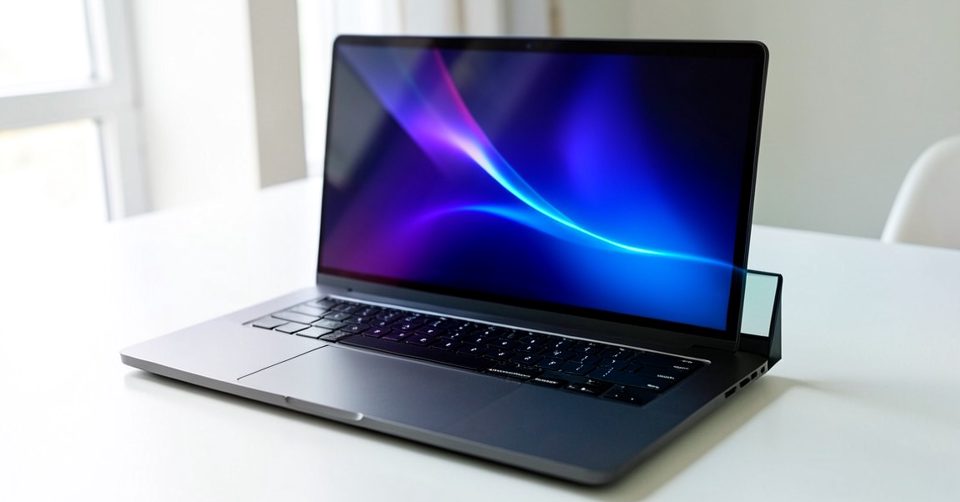
Apple's long-awaited touchscreen MacBook Pro has arrived with a PROLED XDR Display that combines an OLED screen with touch input. The display has inkier blacks, high brightness, rich colors and infinite contrast, and is the first laptop display with Apple CMF 2026 color modes. Touch support adds tap and swipe gestures, with some macOS 27 Golden Gate and app elements magnifying or expanding when tapped.
GCHQ still cannot count thousands of lost storage drives
GCHQ has lost thousands of storage drives that may contain sensitive data, and the agency still cannot say exactly how many are missing. The Investigatory Powers Commissioner's Office said the issue has been known for years and that GCHQ has not established a clear understanding of the lost media. GCHQ said it will implement an automated asset tracking system by the end of the year before giving a precise count.
Senators probe privacy risks in Meta's AI smart glasses
US Senators Ron Wyden and Edward Markey are investigating serious privacy and safety risks around Meta's AI smart glasses. They said the devices have been implicated in disturbing invasions of users' and bystanders' privacy, including secret filming and footage reviewed by AI contractors. The senators asked Meta to answer questions on camera activation, face and plate blurring, employee access and human rights testing by November 26, 2026.
Wikimedia says AI copyright ruling could threaten open web
The Wikimedia Foundation filed an amicus brief asking courts to protect large language model training on copyrighted work while limiting chatbots that reproduce that work. It said an overbroad ruling could let copyright holders gatekeep transformative uses or let AI companies ignore licensing terms. Wikimedia argued the outcome could affect Wikipedia's sustainability because its sites are key AI training data and AI tools help editors.
Binance to cover $6.3bn hack as North Korea is blamed
Binance said an estimated $6.3bn was affected by a record hack, with about $3bn frozen so far and the company promising to cover all losses. Analysts TRM and Chainalysis attributed the theft to North Korea's TraderTraitor, while Binance said a compromised engineer's laptop may have allowed unauthorized withdrawals. Bitcoin fell more than 3% to $76,368, a low in six weeks, and Coinbase shares dropped 4.8%.
GM to pay $220 million to settle multi-state data privacy lawsuit
General Motors will pay $220 million to settle a lawsuit by 35 state attorneys general and the District of Columbia over OnStar Smart Driver. The company sold driver data to insurance companies from 2016 through 2024 without telling customers, and dealership employees sometimes accepted terms for customers without express permission. GM must limit data collection, protect personal information and undergo privacy assessments and oversight.
Waymo will test autonomous Toyota bZ4X vehicles in Japan next year under a partnership that also aims to deploy the cars in right-hand driving markets such as the U.K. Toyota will manufacture the 2027 bZ4X and integrate Waymo's self-driving system at its Takaoka factory, with the companies also exploring use of the technology in personally owned Toyota vehicles.
Waymo has been testing autonomous Jaguar I-Pace vehicles in London and plans to launch a robotaxi service there once it receives permits.
AWS eyes trillion dollar business as AI demand accelerates
Amazon Web Services is on track for $184bn in annual revenue this financial year, with third quarter revenue just short of $46bn and growth of 39.3 percent year on year. Amazon CEO Andy Jassy said the cloud unit installs a new AI accelerator about every 14 seconds and expects AWS to become a trillion dollar business within five to ten years.
The company expects to spend $220bn on capital projects in 2026, after spending $75.9bn in the last quarter alone.
Intel shares fall almost a quarter on PC chip slowdown
Intel's share price fell by almost a quarter after its third quarter results showed client computing and physical AI revenue of $8.1bn, down five percent year on year and nine percent from the previous quarter. CEO Lip Bu Tan said customers are signaling a PC slowdown tied to memory prices and availability, and he expects the PC chip market to shrink by 12 percent next year.
The company still posted $16.5bn in revenue, up 21 percent, with datacenter and AI products growing 78 percent.
Binance freezes billions after suspected North Korean hack
Binance said $6.3bn of digital assets were affected by a security incident that may be the largest hack in history, with about half frozen and the company promising to cover all losses. Early checks point to a compromised engineer's laptop that let an attacker submit unauthorized withdrawals, while two analytics firms linked the theft to a North Korean unit called TraderTraitor.
The exchange has paused trading, deposits and withdrawals on Binance.com, and said the smaller Binance.US platform is not affected.

 Illustration