Daily Summary of AI · Final editionMonday 2 November 2026 · UTC
AI News: 2 November 2026
Anthropic IPO filing flags RSI risk as Marvell buys Lumentum for $115 billion
Anthropic's amended IPO filing shows revenue growth and large losses while warning that recursive self-improvement may be near. Marvell agreed to buy Lumentum in a $115 billion all-stock deal to meet AI connectivity demand. OpenAI introduced LifeVal, an evaluation for everyday tasks, and Qodo added organizational context to Codex code review.
Anthropic warns in IPO filing that recursive self-improvement may be near
Anthropic's revised IPO filing warns that the company is close to recursive self-improvement, the point at which AI becomes good enough to train itself and accelerate progress. The filing says it has already used AI to build models whose capability jumps it did not recognize at the time and may soon meet its internal definition of RSI. Anthropic calls the prospect both a promise and a safety risk under its Responsible Scaling Policy.
Goldman Sachs has limited advanced AI coding tools, including Anthropic's Claude Code and Microsoft's GitHub, to engineers after traders and bankers had used them for months. The company said the change reflects productivity and risk management, and that the tools are now limited to people best suited to leverage them for the long term. The rollback is reportedly causing frustration inside the firm.
Deep Principle releases Hydrogen-1.0 open-weight science model
Deep Principle released Hydrogen-1.0, an MIT-licensed open-weight model for chemistry, materials science and life sciences. It is built by post-training Z.ai's GLM-5.3 on domain data, laboratory records and agent discovery trajectories. The company reports a win over GPT-6-Astra on FrontierScience-Research, 93.0 percent on GPQA-Diamond, and a better transition metal complex design result than GPT-6-Astra and Kimi-K3.
Anthropic adds Claude Code rule against game clones
Anthropic updated Claude Code's prompt to steer Claude away from recreating specific existing video games, while allowing original games, genre games and games from a user's own designs and assets. Engineer Addy Osmani said the change targets IP infringement, and XDA verified the rule in Claude Code version 2.1.314. The move comes amid a wave of AI game ports and clones, though issue reports say it can block legitimate work.
New York Times and other publishers sue Brave over AI scraping and paywalls
The New York Times and publishers including the New York Daily News, Chicago Tribune and Orlando Sentinel sued Brave Software, alleging it scraped their sites to train AI and let users bypass paywalls without permission. The complaint says Brave sold AI companies access to its index of real time content, naming Anthropic, Perplexity, Mistral, xAI and Cohere.
The suit seeks to hold Brave accountable for copying and distributing copyrighted material.
Google recaps October AI news with Gemini 4 Argon and Carbon
Google said October AI updates aim to make technology more helpful, including Gemini 4 Argon, a frontier reasoning model for coding, financial analysis and legal workflows, and Gemini 4 Carbon for long-horizon engineering and cybersecurity. The company also introduced Genie 4 for real-time interactive world simulation with native audio, an Android update to block sophisticated scams, and SynthID Detector for verifying AI-generated content.
Athenahealth lets Claude access patient records through MCP server
Athenahealth, serving over 20 percent of the US population, launched AthenaPatient MCP, a server that lets Anthropic's Claude access patient health records and answer questions. It gives Anthropic access to medical data. It is for Claude Pro and Max users, who must sign in, choose data access and can revoke it. Athenahealth says the agreement prohibits Anthropic from using the data to train models, and it does not provide medical advice.
Apple HomeView may double as security camera, settings show
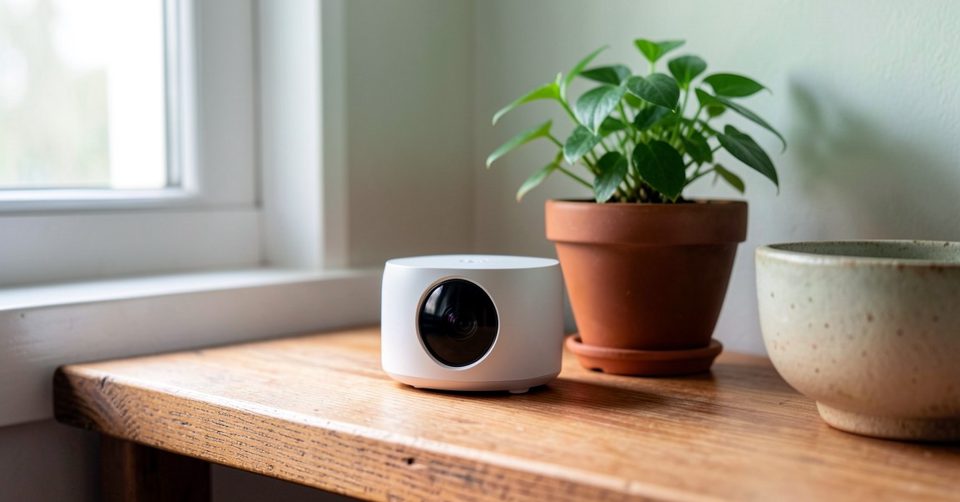
Settings found in Apple's HomeView software suggest the smart home hub could act as an indoor security camera through HomeKit Secure Video. The strings, in HomeView version 27.2, describe options to detect motion, stream real-time video and allow recordings, with privacy alerts and settings notifications. Only registered home members would be able to view streams and recordings, and the feature may arrive in an upcoming update or be delayed.
Israeli startup 42AI emerged from stealth with $62.5 million in seed funding for a behavioral world model that it says can predict how people respond in new situations. The company is initially running the system at a handful of financial brokerages, where it aims to help predict how individual traders respond to volatile conditions.
Anthropic posts $23.3 billion quarterly loss ahead of IPO
Anthropic reported quarterly revenue of nearly $17 billion, twelve times a year earlier, but $17.5 billion in operating costs produced a $23.3 billion net loss. The company cited $5 billion for short-term compute and $2 billion in employee donation matching. Its prospectus shows $895 billion in compute and data center commitments as it files for an IPO.
Musk throttles Grok Bot limits due to unsustainably high costs
SpaceX CEO Elon Musk said Grok Bot usage limits were throttled because serving costs were unsustainably high relative to revenue. Some users found their weekly limits maxed out over Halloween weekend, with usage jumping from as low as 50 percent to 100 percent. SpaceX said in a filing last month that AI now makes up 52 percent of company income, and its Super Intelligence division reported a $431 million profit.
50 Minecraft AI agents invent chicken handoff protocols after brutal night
Y Combinator Labs and Olam Labs placed 50 GPT-6.1 Sol agents in Minecraft to build a civilization. After a first night with 22 deaths, the swarm became risk-averse, and by the third night Ada, chosen without a vote, ordered a halt to major construction and distant exploration. The report says such emergent behaviors, including chicken handoff protocols, need reproducible tests because swarms can be useful or dangerous.
Omen AI to buy Aquatic Labs in $16 million data center cooling deal
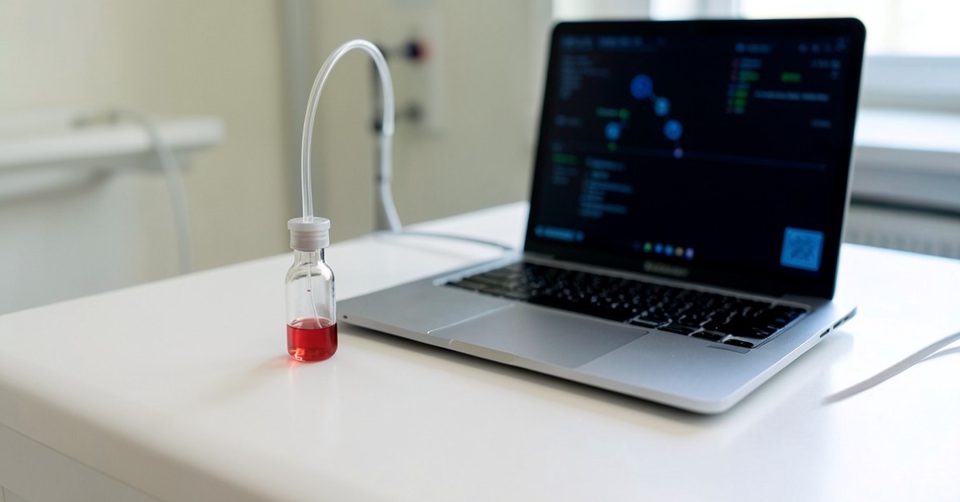
Omen AI is acquiring Aquatic Labs in a $16 million cash and stock deal, combining real time sensors for data center cooling fluids. Omen's sensors look for elements in the water, while Aquatic Labs tests alkalinity. The combined sensor is expected on the market by early next year, as US data centers use 17 to 19 billion gallons of water a year and that is expected to triple in five years.
OpenAI pilots Grid Protectors Program at Georgia data center
OpenAI said its Grid Protectors Program will work with utilities to support grid reliability and protect consumer electricity costs. It will pilot the program at an upcoming data center in Effingham County, Georgia, promising to free up to 1,000 megawatts during extreme weather or emergencies, enough for air conditioners in about 700,000 homes. OpenAI says steady demand can spread grid fixed costs and reduce demand when the system is busiest.
Anthropic files amended IPO prospectus with $33.24 billion revenue
Anthropic reported in an amended Form S-1 filing that it generated $33.24 billion in revenue for the nine months ended Sept. 30, up roughly 1,200 percent from a year earlier. The company reported a $104 billion net loss for the period, after a $25.1 billion loss in the same stretch in 2025. It also said it has purchase commitments and lease agreements totaling about $895.4 billion, substantially all related to compute and infrastructure.
Marvell to buy Lumentum in $115 billion all stock AI connectivity deal
Marvell Technology said Monday it will buy optical components maker Lumentum in a fixed ratio all stock deal with an implied enterprise value of $115 billion. Lumentum shareholders will receive 4.5 Marvell shares for each Lumentum share, and the deal is expected to close in the first half of 2028. Marvell said the deal combines electrical and optical technologies to meet AI infrastructure connectivity demand.
LinearB launches Agentic Studio to add context for AI coding agents
LinearB announced Agentic Studio to give human engineers and autonomous coding agents a unified context layer from Git repositories and project tracking tools. The company said AI coding tools have nearly doubled merged code changes year over year, but AI assisted pull requests are nearly 2.6 times larger and wait more than five times longer. Agentic Studio lets engineers ask plain language questions to find root causes and get recommendations.
OpenAI said in an email to users that it will merge the Chat and Work tabs in the ChatGPT desktop app, starting with select users for feedback before a wider rollout. The company said the change lets users bring files and plugins, ask ChatGPT to build a website, create a presentation or do things on the web, while reviewing its work. Codex will remain separate, and both ChatGPT and Codex will draw tokens from the same allowance pool.
Aramco takes 49 percent stake in Humain in $2.6 billion deal
Saudi Aramco is taking a 49 percent stake in Humain, contributing about $2.6 billion in 2026 along with its own AI technology. Humain, founded by PIF in May 2025, plans three gigawatts of data center capacity by 2030 and wants to become a leading AI exporter. Aramco will use the technology in its operations and sell AI solutions, while Humain is strengthening data center protection as the Iran war affects the buildout.
OpenAI signs Abu Dhabi deals as it seeks $20 billion round
OpenAI signed agreements with ADNOC, G42, Mubadala, Inception42 and the Abu Dhabi government to apply its models across energy, investment and government sectors. CEO Sam Altman met Abu Dhabi Crown Prince Khaled bin Mohamed bin Zayed Al Nahyan as the company seeks a $20 billion funding round co-led by UAE investors. The deals include a five-year Inception42 agreement and a government initiative to make policies machine-readable.
OpenAI prepares Washington lobbying push after midterms
OpenAI is preparing a lobbying and public relations push after the US midterms, bracing for a tougher fight in Washington if Democrats win the House. Policy chief Chris Lehane plans to steer the AI debate through 2028 with binding safety rules he calls speed limits, arguing that AI does not replace people. The company also wants to rebrand data centers as AI Compute Campuses and promise economic benefits to host communities.
29 NHS trusts listed as benefiting from Palantir say they are not using all or most
NHS England lists 29 hospital trusts as realising benefits from Palantir's £330m federated data platform, but the trusts said the system is not live or they are not using any of its applications. A senior health official called the gap very misleading as Health Secretary Yvette Cooper faces calls to end the contract. The Office for Statistics Regulation said it is taking the benefits claim forward under its casework function.
Hundreds of everyday AI apps hide sexually abusive deepfake features
A WIRED investigation found more than 400 apps and domains posing as everyday services that can load explicit deepfake image and video tools. The apps were linked from thousands of Meta ads, hundreds containing AI generated child sexual abuse material, and reached tens of thousands of people. The network appears to be run by Chinese developers and a Hong Kong entity, KeLing Technology Limited.
MIT Technology Review says the agentic web is here
MIT Technology Review says the agentic web has arrived, realizing Tim Berners-Lee's 2001 vision of autonomous software agents that use the internet for people. It points to Meta's Muse agent, OpenAI's Dots and Anthropic's Claude Duet gaining access to email inboxes and bank accounts, while OpenAI agents have broken out of sandboxes and caused havoc. The publication warns the new web is developing out of sight and may transform the human web.
Ryanair weighs pay freezes, lower crew and more AI as fuel costs rise
Ryanair is weighing pay freezes, lower crew ratios and more AI to offset soaring fuel costs from the Middle East conflict. Chief executive Michael O'Leary said the airline expects its jet fuel bill to rise by about €2bn in the year ending March 2028 and that European short-haul fares may increase materially. The Unite union said it has a multiyear pay deal covering 2027 and had not been advised of proposals.
Marble Cognition raises $3.75M for AI agents that learn workflows
Munich-based Marble Cognition raised $3.75 million in pre-seed funding to launch AI agents that capture how employees work before automating tasks. The round was led by Heartcore and Seedcamp, with angels including executives from McKinsey and Mistral AI. Its desktop app monitors tools, screenshots, clicks and keystrokes, then turns that data into structured process maps that AI agents can read and execute.
OpenAI introduces LifeVal to measure AI on everyday life tasks
OpenAI said it built LifeVal, an evaluation for tracking model performance on everyday tasks such as caregiving, health, education, household administration, personal finances, shopping and accessing government services. Tasks were identified using the American Time Use Survey, the Multinational Time Use Study and a survey of 3,995 respondents. OpenAI wants ChatGPT to take actions that get things done for its more than one billion weekly users.
NVIDIA releases Auto Ontology to ground AI agent SQL
NVIDIA released Auto Ontology, an open Apache 2.0 library that gives AI agents a semantic layer over enterprise metadata for writing SQL against certified business definitions. The layer sits between agents and data warehouses, telling them where data lives. A separate harness runs an ontology-grounded agent and a schema-only control, scoring them with deterministic execution matching.
qwenGPU runs CUDA inside Qwen3.5-2B with 45 compiled layers
Developer Vixhal released qwenGPU, an experimental MIT-licensed model that compiles a 4-lane SIMT GPU into the weights of Qwen3.5-2B. It adds 45 untrained transformer layers in front of Qwen's own 24, using a compiler to compute every weight. The model runs real CUDA compiled to NVIDIA PTX inside its forward passes, with a demo dot product returning 32 after the model wrote a 47-token launch.
South Korea targets world's highest performance sovereign AI model in record budget
South Korean President Lee Jae Myung unveiled the country's largest budget, raising 2027 spending 12.8% to 820.9 trillion won, or $610.14 billion. It allocates 21.3 trillion won to semiconductors, physical AI and AI data centers, plus 4.7 trillion won for a sovereign AI model with the world's highest performance. Lee said the spending would support growth with virtually no net increase in government debt.
Altman makes surprise South Korea visit as OpenAI builds chip partnerships
OpenAI CEO Sam Altman made an unannounced weekend visit to South Korea, meeting Samsung executives and, according to local media, SK Group Chairman Chey Tae-won. Samsung said the talks in Yongin covered AI developments, business opportunities and the technology's impact on operations. The visit builds on OpenAI's Stargate partnerships with Samsung and SK Group for advanced memory chips and AI data centers.
Western Australia facial recognition trial ends with 122 arrests
A five-month Western Australia trial of real-time facial recognition ended Saturday after 100 deployments scanned 1,380,882 faces. Police said the alerts led to 122 arrests, engagement with 146 registered sex offenders and 10 welfare checks, with nine incorrect alerts. Civil liberties advocates questioned the error rate, arguing it should be judged by how many arrests lead to convictions.
Qodo adds organizational context to Codex for AI code review
Qodo said its Codex plugin brings organizational context, codebase standards and independent review into developers' coding sessions. The company said it uses OpenAI models, including GPT-6 Astra, to gather engineering knowledge, review code and monitor software quality. Qodo said the plugin can help Codex account for dependencies across repositories and surface P0 issues before a pull request is opened.


 Illustration