Daily Summary of Cybersecurity · Final editionMonday 2 November 2026 · UTC
Cybersecurity News: 2 November 2026
FBI blames North Korea for $6.3 billion Binance heist as hackers hit European freezers
The FBI attributed the record $6.3 billion theft from Binance to North Korea's TraderTraitor group, while a second wave of cyberattacks disrupted refrigeration systems at supermarkets across Europe. Hackers also compromised emergency alert apps in Ukraine and Russia, sending fake nuclear warnings to millions of citizens.
Max-severity Node-RED bug exploited to deliver Linux malware
Researchers documented the exploitation of CVE-2026-58115, a maximum-severity vulnerability in Node-RED, a flow-based programming tool widely used in critical infrastructure. The flaw allows unauthenticated attackers to execute system commands on affected devices, including Siemens SIMATIC IoT2050. Attackers used the bug to deploy a flow that downloads and runs a Linux bot, raising concerns about internet-exposed operational technology.
Mercado Bitcoin suspends trading after $46 million cyberattack
Brazilian cryptocurrency platform Mercado Bitcoin suspended deposits and withdrawals after a Monday cyberattack that blockchain security firms say drained more than $46 million. The company, which serves about 4.5 million customers, stated the incident did not harm customers or cause a data breach, though experts disputed this by showing evidence of funds siphoned from customer wallets.
Tether and other platforms have frozen about $6.5 million of the stolen assets.
Chinese hackers use ARTEX AI in attacks against 200 organizations
CrowdStrike says Chinese hackers tracked as Vapor Panda used the ARTEX AI framework in attacks against more than 200 organizations in 14 countries, compromising at least nine. The operation targeted government, telecom, pharmaceutical, semiconductor, defense, nuclear and financial groups. Researchers say the campaign marks an escalation in China-nexus use of AI agents, which performed reconnaissance, exploited flaws and deployed web shells.
Michigan State, one of the largest U.S. schools, said BYOD ransomware gang claims of stolen personal information on 1.3 million current and former students are tied to an October incident that forced password resets for all student and employee accounts. The school said the activity appeared to be a potential credential compromise, but current evidence does not indicate a successful compromise of its central Active Directory.
Fintech platform Sageworks taken offline after suspected cyberattack
Abrigo took its Sageworks risk management application offline on October 30 after detecting irregular activity in its environment. The company has since restored most functionality, except for borrower-facing features, but has not disclosed whether the outage was caused by a breach or a technical issue. Abrigo serves more than 2,400 community banks and credit unions in the United States.
Trigger.dev incident exposes environment variables for some customers
Cloud-hosted AI workflow platform Trigger.dev disclosed a Sunday security incident in which an attacker gained unauthorized access to environment variables for a subset of organizations. The company said the exploit has been blocked and that affected customers were notified of steps to take. Compromised environment variables can contain credentials for connected services, including integrations such as Stripe, Supabase and Slack.
Belarusian and Ukrainian hackers claim breach of Russia's Rosstat
The Belarusian Cyber Partisans and pro-Ukrainian group Silent Crow claimed to have spent months inside Russia's federal statistics agency, Rosstat, before wiping servers and stealing data. Rosstat confirmed a cyberattack but disputed the hackers' claims, saying it found no evidence that protected information was leaked or databases compromised. The agency said it is working with cybersecurity experts and law enforcement to identify the source.
CISA orders federal agencies to fix exploited Ivanti VPN flaws
CISA added two exploited Ivanti Connect Secure zero-days, CVE-2026-111357 and CVE-2026-118527, to its Known Exploited Vulnerabilities catalog. Volexity said the flaws were chained with CVE-2026-104935 and that attackers used the SSL VPN appliances as a foothold and prepared for lateral movement. CISA ordered US federal civilian agencies to fix CVE-2026-111357 by November 2 and CVE-2026-118527 by November 13.
Google bans Videostrong after shutting down XCPE Android TV botnet
Google shut down the servers behind XCPE, a backdoor in Android TV set-top box firmware, and attributed it with high confidence to Videostrong Technology. More than 1.3 million devices were enrolled, and Videostrong sold access to criminal affiliates that pushed modules for ads, proxies, account theft and further malware. Google banned Videostrong and said the action cut off at least 10 million more compromised devices.
Drupal Commerce flaw exploited to manipulate orders and payments
Drupal confirmed active exploitation of CVE-2026-118539, a highly critical access bypass flaw in its Commerce Core module that can let unauthorized users manipulate orders or circumvent payment processes. The flaw is exploitable without authentication and affects both full-stack and headless Drupal Commerce deployments. Administrators were urged to install updates and investigate transactions for unauthorized changes.
BTCPay Server warns of hot wallet thefts targeting outdated instances
The maintainer of BTCPay Server, an open-source cryptocurrency payment processor, says hackers have drained hot wallets on instances running version 2.4.1 or earlier. The project identified an attack vector targeting those older versions and urged users to update to 2.4.7, saying it has no credible reports of drains on the latest release. BTCPay has not clarified which flaw is being exploited in the current attacks.
DarkBlinders hits Israeli target and Kurdistan government cloud
Dream Research Labs says an Iran state-aligned actor called DarkBlinders ran a cyber espionage campaign from August to October 2026 against Israel and the Kurdistan Region of Iraq. The campaign compromised a high-profile individual in Israel and a government cloud environment in the Kurdistan Region. The group is known to use spear-phishing and trojanized utilities, and earlier chains deployed SHELBYLOADER and SHELBYC2 backdoors.
Armadin tests find 88% of severe flaws outside vendor advisories
A report from offensive security startup Armadin found that 88% of critical and high-severity weaknesses in live enterprise attack tests would not have been identified through vendor advisories. Defects in client-written software made up 67% of critical findings, while vendor products deployed in ways no advisory described accounted for 24%. Armadin said nearly 70% of critical and high findings sat on the unauthenticated attack surface.
Florida student aid website breach may expose 4.9 million people
The Florida Department of Education says hackers breached its student financial aid website, potentially exposing the personal information of about 4.9 million people. The department discovered the intrusion on October 19 and has contained it, but has not named a responsible group. Affected data may include names, Social Security numbers, dates of birth, addresses, phone numbers, email addresses and gender codes.
Apple sends mercenary spyware alerts to users in 99 countries
Apple has begun sending threat notifications to victims of suspected mercenary spyware attacks in 99 countries, including a Turkey-based reporter and a Lebanese documentary filmmaker. The notices do not attribute the attacks to specific actors or regions because mercenary spyware is described as extremely costly, sophisticated and worldwide. At least two recipients have shared the alerts publicly.
Bitter deploys PapRAT in Asian cyber-espionage campaign
Fortinet's FortiGuard Labs attributed a cyber-espionage campaign to the South Asian group Bitter, which used native Windows tools and a custom remote access trojan called PapRAT to target organizations in South Asia, Southeast Asia and South Korea. The campaign used lure files referencing diplomatic meetings and gala dinners, with some chains deploying no traditional malware executable.
Researchers noted that the use of trusted system processes makes signature-based controls less effective.
Microsoft fixes Smart App Control issue from October Windows update
Microsoft said an October 2026 Windows 11 update, KB5127648, left Smart App Control grayed out on some devices running 24H2 or later, preventing users from turning on a feature that helps block potentially harmful apps. The company said the problem was fixed in updates released October 28, 2026 and later, including the KB5127936 preview. It also offered registry and Group Policy workarounds for enterprise devices.
Revolve data breach impacts at least 180,000 people
Online fashion retailer Revolve is notifying at least 180,000 individuals that their personal and payment card information was stolen in a data breach that occurred on September 11. The company said hackers may have accessed names, addresses, payment card numbers and expiration dates of customers who saved data to their accounts.
Revolve has not provided free identity theft or credit monitoring services but advised customers to review their statements.
Google introduces $250,000 Root-in-Cloud bug bounty reward
Google expanded its Cloud Vulnerability Reward Program with a new $250,000 top-tier reward for security weaknesses that could lead to full administrative control of arbitrary Google Cloud organizations or projects. The reward is designed to recognize high-impact architectural research, including remote code execution in Borg, Google's underlying production infrastructure.
Google said researchers must use a designated service account to cryptographically prove unauthorized access to avoid testing against real customer projects.
Northflank breach exposes customer secrets and AI API keys
Northflank said a breach exposed customer environment variables, leading to unauthorized use of AI API keys stored on its platform. The company asked users to assume all environment variables had been decrypted and to change stored secrets, and confirmed several customers reported unauthorized AI key usage. Wiz, which alerted Northflank on October 30, said stolen AI credentials can be used in LLMJacking to access or resell expensive models.
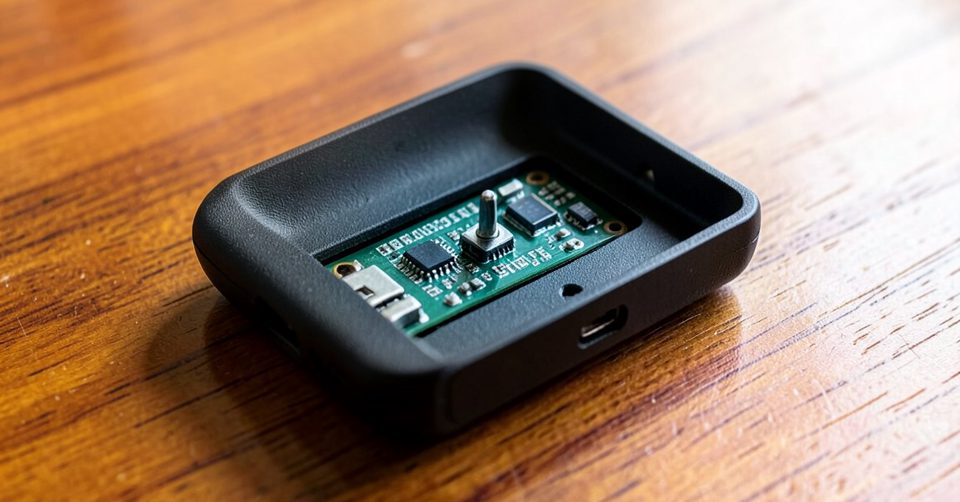
Trezor warns some CryptoBilis Safe 5 wallets may hide implant
Trezor warned that some Safe 5 wallets sold by CryptoBilis may contain a hidden implant that reads and transmits the owner's recovery phrase. The company advised buyers who purchased from CryptoBilis from March 2026 onwards to move funds to a new wallet with a new seed, or temporarily to a software wallet or exchange. An Indonesian customer reported an extra board with a cellular module and antenna between the wallet's main board and screen.
Over 1,000 GitLab servers remain exposed to active RCE flaw
More than 1,000 GitLab servers exposed to the Internet remain unpatched against CVE-2026-97229, a maximum severity integer overflow flaw that allows unauthenticated remote code execution. GitLab released fixes on October 12 for versions 19.4.2, 19.3.5 and 19.2.8, and CISA added the flaw to its Known Exploited Vulnerabilities catalog after confirming exploitation in the wild.
Second suspected cyberattack defrosts European supermarket freezers
Overnight on Monday, refrigeration and freezer systems in supermarkets across Belgium, Sweden, Luxembourg, Ireland, Estonia and the Netherlands were remotely set to high temperatures, causing food spoilage. Retailers and equipment suppliers described the incident as a cyberattack, but no group has claimed responsibility. The wave followed a similar October attack on hundreds of French supermarkets.
Critical Langflow flaws let unauthenticated attackers run code
IBM said two critical flaws in Langflow, an open source tool for building AI agents and workflows, could let a remote attacker with no account bypass authentication or run arbitrary code. Releases 1.0.0 through 1.12.8 are affected, and version 1.13.0 is the only fix. IBM also published records for 29 other Langflow flaws, including another unauthenticated remote code execution bug.
Cursor removes tampered Claude Code extension after SSH backdoor attempt
Cursor said tampered versions 2.1.312 and 2.1.313 of Anthropic's Claude Code extension were live in its marketplace for about 11 hours on October 29, affecting macOS and Windows. The code ran when the extension loaded and tried to add an SSH key, enable SSH, create a reverse tunnel and set persistence. About 5,000 systems may have downloaded them. Cursor removed them, suspended the marketplace, rotated keys and reopened it.
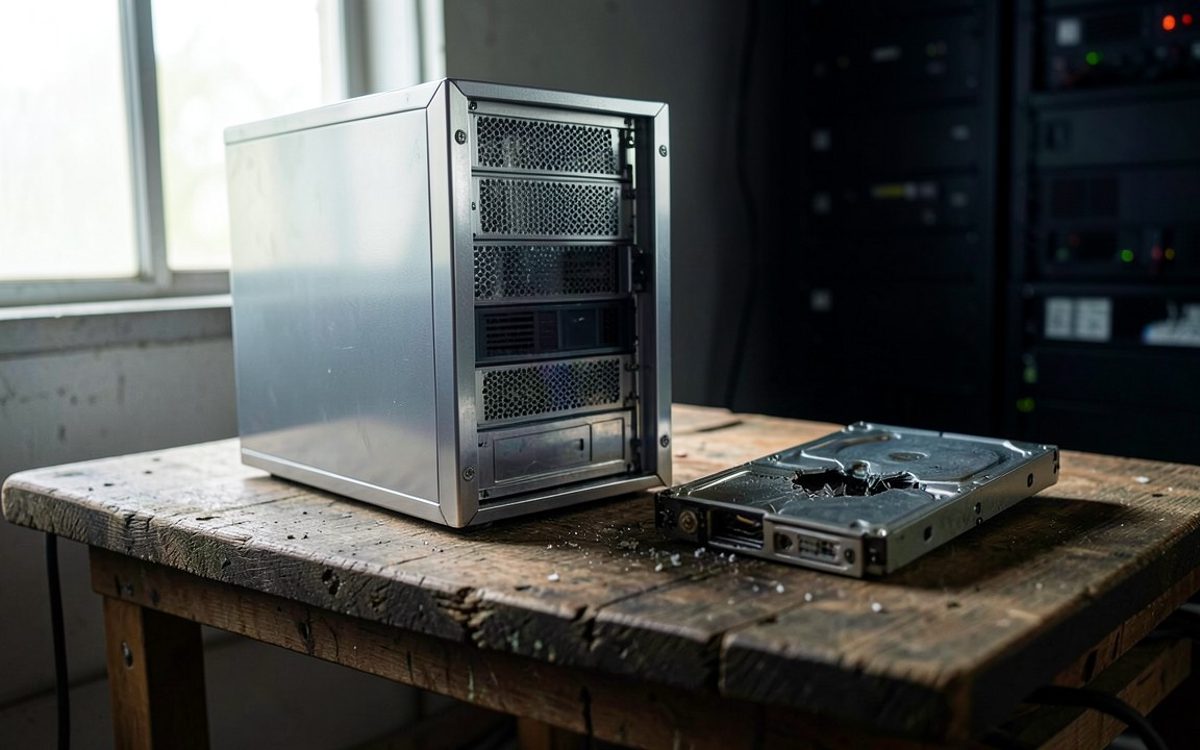
Synology urges DSM updates as C3RB3r ransomware hits NAS devices
Synology said C3RB3r ransomware is exploiting a vulnerability patched in December 2024 to attack outdated DiskStation Manager software on NAS devices and encrypt data for ransom. The company urged users to update DSM immediately, enable automatic updates and block the management web interface from the Internet. It linked the attacks to a November 2024 advisory covering CVE-2024-10441, CVE-2024-50629 and CVE-2024-10445.
Fake IT support on Teams used AD CS flaws to steal data
Microsoft said attackers posing as IT support on Teams talked employees into opening Quick Assist, giving them remote control of workstations. They then used insecure Active Directory Certificate Services settings to obtain certificates for privileged accounts, including one for a domain controller. In two intrusions, one resulted in company data being copied to an external server. Microsoft did not tie the activity to a known group.
SysGoRAT and AI scripts hit government Linux servers
Palo Alto Networks Unit 42 tracked a cyber espionage campaign, CL-UNK-1211, targeting Linux infrastructure tied to government entities from October 2025 to April 2026. It used open-source tools, web shells and a custom Go remote access trojan called SysGoRAT to maintain access and exfiltrate data. Researchers said malicious PHP and shell scripts likely generated by AI or AI agents were used for persistence, reconnaissance and data theft.
Ukraine and Russia report hacked alert apps sent fake nuclear warnings
Ukraine and Russia said Sunday night that hackers compromised their emergency alert apps and sent fake air raid and nuclear warnings. Ukraine's Air Alarm app sent red level warnings nationwide, with some Kyiv residents also receiving radiation, chemical and street fighting alerts. A Telegram message said the app was likely targeted and there was no radiation threat. Neither side's claims have been independently confirmed.
Polymarket returns $3.9 million after DebugBear DNS hijack
Polymarket is returning $3.9 million after a supply chain attack that halted its international trading on October 29. Hudson Rock linked unauthorized withdrawals to malicious JavaScript loaded from a DebugBear address. Polymarket said 726 wallets were affected. DebugBear says its DNS records were compromised through its domain registrar and that it found no indication its internal systems were compromised.
Chainalysis says AI agents were used in incident that stole customer data
Chainalysis says an external actor used offensive agentic techniques to access its systems and internal tools. The company said the attacker reached non-sensitive user IDs, full names, email addresses and organization role labels, but so far found no sign of access to investigation content or transaction and query results. It is still matching records to customers and warned that AI-powered attacks are becoming more common across the industry.
Ivanti patches two more exploited Connect Secure zero-days
Ivanti patched two more Connect Secure zero-days, CVE-2026-111357 and CVE-2026-118527, that attackers chained in the wild with a VPN authentication bypass disclosed in October. The flaws affected versions 25.1.1.2 and 22.8R2.5 and earlier, and fixes are in 25.1.1.3 and 22.8R2.6. CISA added both to its Known Exploited Vulnerabilities catalog, with federal deadlines of November 2 and November 13.
Byoky is an open-source wallet for AI API keys, available as a browser extension and mobile apps, that keeps provider keys encrypted on the user's device. Apps request access through the wallet, which sends requests to the provider and gives the app a session token while the key stays in the wallet. It supports 13 cloud providers, local Ollama and LM Studio servers, and lets users cap spending per app.
VOLTA infostealer uses Claude, Gemini and Kimi AI to rank stolen data
Researchers found VOLTA-AUTODOXER, a Windows infostealer that harvests browser, email, payment, crypto and app data, then builds a structured evidence bundle about the victim. It sends the bundle through OpenRouter to Claude Opus 4.6, with Kimi K2 and Gemini 2.5 Flash fallbacks, to rank valuables by monetization value and assess security posture.
Trust Onion app uses rotating codewords to verify callers
Trust Onion is a free app for macOS, iOS and Android that gives trusted groups three codewords that change every minute for verifying callers. It also offers signed selfies called Proofies, message checks and callback requests to trusted contacts. Its message check advised caution on a Croatian shopping promotion, and Scam Pulse provides examples of reported voice-cloning scams.
Aur0ra ransomware gang used AI agents to reach domain admin access
Sophos says the Aur0ra ransomware group, tracked as GOLD OGRE, used AI agents through Cursor to map networks, hunt credentials and move laterally, sometimes reaching domain administrator access. The agents were given VPN logins, proxy access and objectives, while humans kept control of entry and ransomware deployment. Sophos assesses that the group tested AI tools against EDR products and that other ransomware groups may adopt similar agents.
FBI blames North Korea's TraderTraitor for $6.3 billion Binance theft
FBI and Secret Service said North Korea's TraderTraitor stole more than $6.3 billion from Binance, the largest crypto theft on record. The FBI listed 608 Ethereum addresses, 19 Bitcoin addresses and one Solana address and asked exchanges, DeFi services and other operators to block linked transactions. Experts said about $3 billion had been frozen, while Binance said the attack had additional breach points and reopened deposits and withdrawals.


 Illustration