Daily Summary of Science & Space · Live edition, updated continuouslyWednesday 25 November 2026 · UTC
Latest Science & Space News Today: 25 November 2026
Hera reaches Didymos as Shenzhou-24 carries Pakistan's first astronaut to Tiangong
ESA's Hera has arrived at Didymos and Dimorphos to study the aftermath of Nasa's Dart impact, while China's Shenzhou-24 carried Pakistan's first astronaut to Tiangong. Researchers also reported new measurements of Comet Encke's nucleus and found that stable dolphin social groups are linked to longer lives.
Comet Encke's nucleus measured at 7 by 3 kilometers
A Japanese team used 2003 mid-infrared data from the Subaru Telescope to study Comet 2P/Encke, which was 0.26 astronomical units from Earth and 1.09 from the Sun. They found its nucleus measured about 7 kilometers by 3 kilometers and had a surface temperature of about 328 Kelvin. The result shows mid-infrared observations can isolate the nucleus from surrounding gas and dust, aiding studies of comet and solar system formation.
Indo-Pacific dolphins with stable social groups live longer
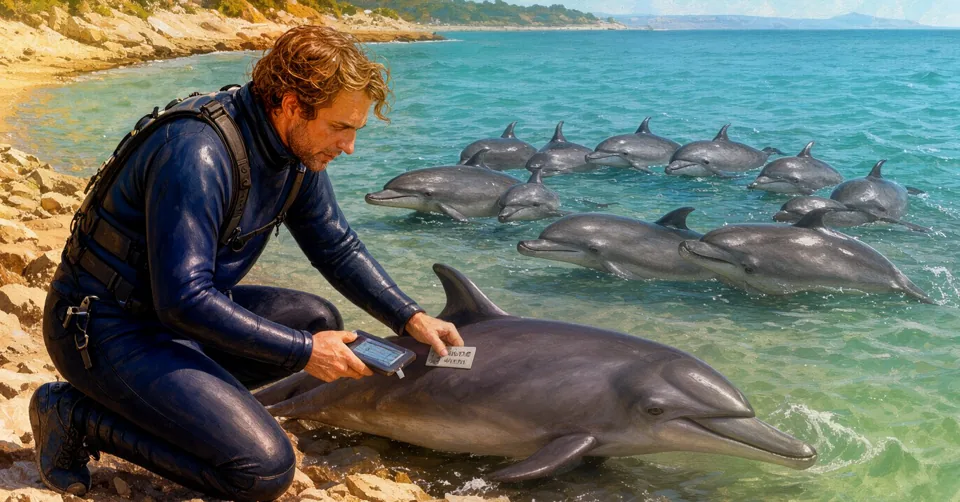
A study in PLOS Biology used nearly 40 years of Shark Bay observations to show that Indo-Pacific bottlenose dolphins in strong, stable social groups lived longest. Males generally spent time in larger groups, while females spent more time with kin and had less predictable group sizes. The findings suggest social bonds can affect longevity by helping dolphins find mates, share information and form alliances.
Hera arrives at asteroid to study Dart impact aftermath
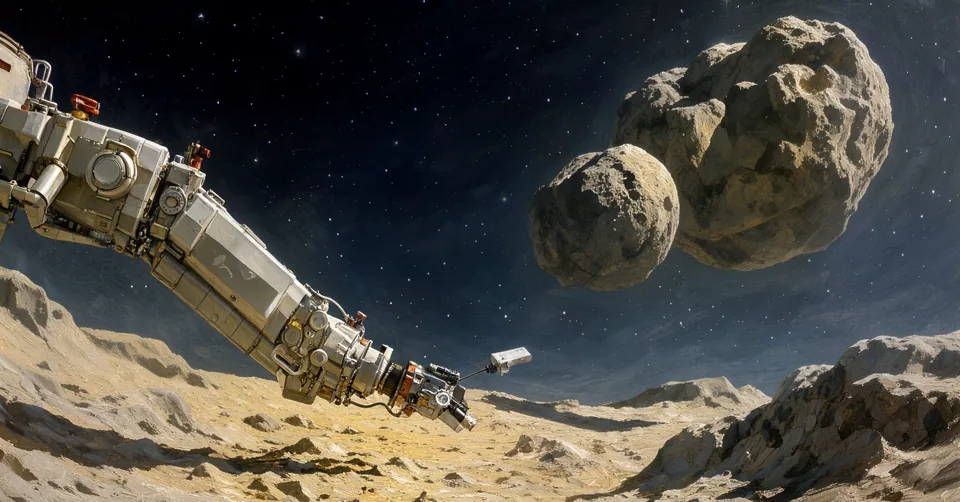
ESA's Hera spacecraft has arrived at the Didymos and Dimorphos asteroids to assess the aftermath of Nasa's 2022 Dart impact, the first test of planetary defences. The Dart craft struck Dimorphos at 22,000 km per hour and shortened its orbit by about 33 minutes. Hera will spend a year studying the smaller asteroid, measuring its mass and looking for a crater, with first images due later on Wednesday.
Shenzhou-24 carries Pakistan's first astronaut to Tiangong
China launched Shenzhou-24 on Wednesday, carrying commander Tang Hongbo, flight engineer Wu Yi and Pakistan's Muhammad Zeeshan Ali to Tiangong. Ali is the first foreigner to join a Chinese crewed space mission, and Beijing said it hopes the flight will strengthen ties with Islamabad. The crew will study aerospace medicine, combustion and the effects of space on living organisms, while Ali will examine radiation and microgravity on seeds.
New model links dark energy to atomic nucleus physics
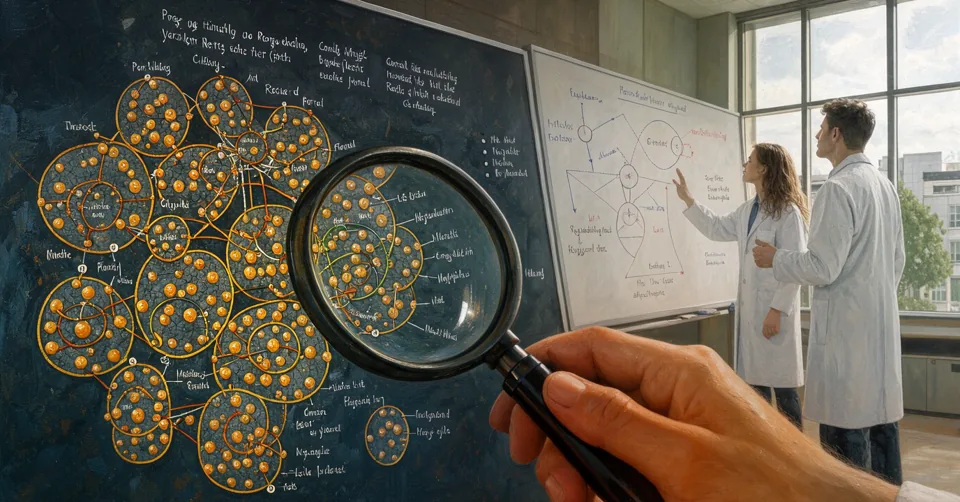
Scientists at the University of British Columbia and the University of Sheffield have proposed a model in which dark matter may be a product of the same physics that governs the strength of the atomic nucleus. The idea would let researchers use the standard model of particle physics instead of invoking new particles or exotic fields. Lead scientist Ariel Zhitnitsky said the framework suggests no new particles may be required.

 Illustration