Daily Summary of Science & Space · Live edition, updated continuouslyWednesday 18 November 2026 · UTC
Latest Science & Space News Today: 18 November 2026
Voyager 1 hits one light day as Homo erectus teeth rewrite China timeline
NASA's Voyager 1 became the first object made by humans one light day from Earth, while fossil teeth in southern China show Homo erectus survived there until 184,000 years ago. Astronomers also observed a red giant in Andromeda swallowing its companion, and NIST researchers demonstrated a quantum method for verifying a person's location.
Astronomers catch giant star swallowing its companion in Andromeda
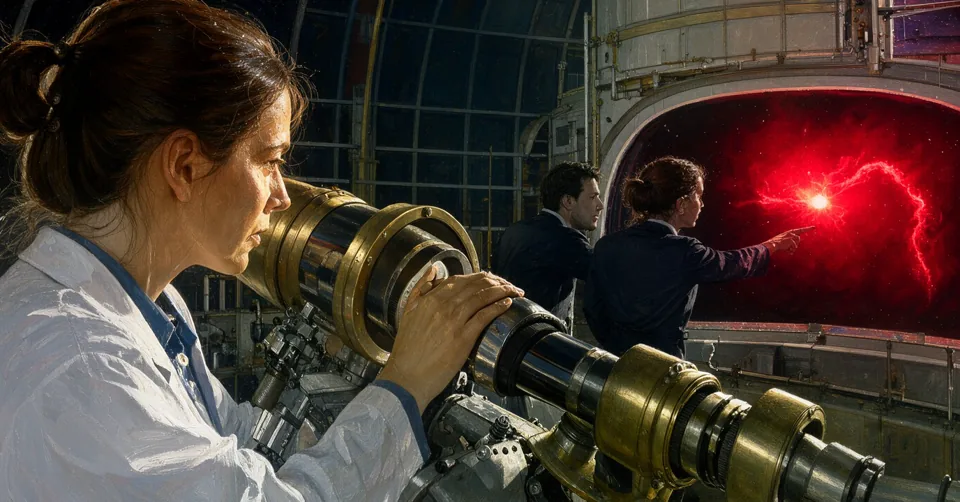
For the first time, astronomers have watched a red giant in the Andromeda galaxy expand and swallow its smaller companion. The object, AT 2025abao, flashed 100 times brighter and expanded at 330 kilometres per second over about a month in 2025. The common envelope phase, seen with SPHEREx and the James Webb Space Telescope, is rare and may affect nearly a third of stars.
Voyager 1 becomes first spacecraft one light day from Earth
NASA's Voyager 1 reached one light day from Earth on 18 November, making it the first object made by humans at that distance. The probe, launched on 5 September 1977, is about 16.1 billion miles away, so radio signals now take 24 hours to reach it and 24 hours to return. The milestone marks its continued journey through interstellar space after crossing the heliopause in 2012.
NIST team shows quantum physics can verify a person's location
NIST researchers and colleagues have shown that quantum position verification can confirm that a person or device is at a specific location. In an experiment on the Boulder campus, two verifier stations 195 metres apart checked a prover between them using entangled photons and timing. The method could secure banks and critical infrastructure, though practical use may be more than a decade away.
Ancient teeth show Homo erectus lived in southern China until 184,000 years ago
Two studies in Nature report that eight fossil teeth from Baxian and Naxian caves in Guangxi, China, are the youngest securely dated evidence of Homo erectus on the Asian mainland. The teeth, dated to 324,000 to 184,000 years ago, show the species survived in dense tropical forests long after it was thought to have disappeared from mainland Asia. The finding suggests these humans may have lived alongside Denisovans.
Factory worker dies after pressurized air experiment
A factory worker died after what he described as a silly experiment with a pressurized air system. He had severe abdominal pain and rectal bleeding, was flown by helicopter, and became unresponsive with signs of hemorrhagic shock before reaching hospital. A medicolegal autopsy found air in his face, brain and chest cavity, blood in multiple body areas, and foreign objects between loops of his small intestine.
Sentinel-3C produces first thermal images of land and sea-surface temperatures
ESA's Sentinel-3C has produced its first thermal images of land and sea-surface temperatures, using the Sea and Land Surface Temperature Radiometer on the third Copernicus Sentinel-3 satellite. The images include a 4 November view of Western Australia and show the instrument working well before full commissioning. The satellite provides data for Copernicus services that measure Earth's oceans, land, ice and atmosphere.
Ballymacombs More Woman was beheaded more than 2,000 years ago
An inquest style inquiry concluded that the Ballymacombs More Woman, found in a County Derry bog in October 2023, was a 15 to 22 year old female beheaded from behind with a bladed weapon more than 2,000 years ago. The investigation, chaired by coroner Joe McCrisken, drew on evidence suggesting her death was part of a tradition of ritualised killing and sacrifice in iron age northwestern Europe.
MIT finds aging weakens the brain's nighttime cleaning system
MIT researchers found that waves of cerebrospinal fluid that help clear brain waste are significantly weaker in older adults. The decline is linked to changes in slow electrical waves during deep sleep and blood movement, not simply less sleep time. Published in Nature Aging, the study raises questions about links to Alzheimer's disease and other forms of dementia, and whether interventions could strengthen the process.
Conservationists tag 10 large eels in River Tees migration study
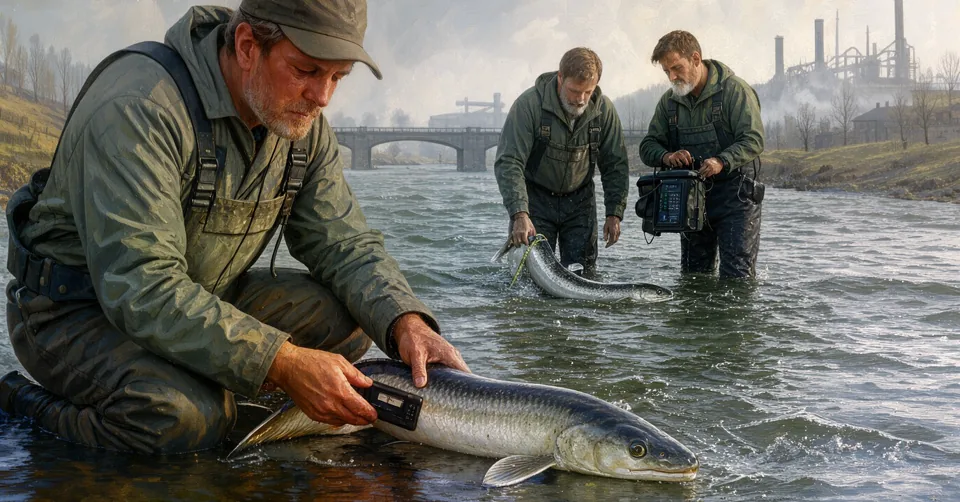
The Tees Rivers Trust found 12 large eels around the River Tees catchment and electronically tagged 10 as they begin their downstream migration. The largest measured 60 centimetres and weighed 435 grams. The Eels of Steel project, funded by Natural England and conducted with Hull University, aims to learn whether critically endangered European eels can pass river barriers on their route to the Sargasso Sea.
French Weir Park has UK's highest bathing site failure rate
French Weir Park on the River Tone in Taunton failed water quality tests on 13 of 19 days sampled this summer, giving it a 68 percent failure rate. The BBC said that was the highest failure rate among all UK bathing sites in 2026. Wessex Water said the faecal bacteria could come from wildlife, agriculture, private septic tanks or its sewerage works.
Art contest finds artists intuitively grasp what makes images memorable
University of Chicago researchers ran a nationwide art contest asking artists to create works intended to be memorable or forgettable. They found that the memorable submissions were more likely to be remembered, while simpler works, fewer repetitive elements and less symmetry were more memorable. The study, published in Psychological Science, suggests artists have an intuitive sense of what makes artworks stick in people's minds.
NASA image shows M1 solar flare in the Sun's chromosphere
NASA's daily image feature shows an H-alpha image of an M1 solar flare captured on May 14, 2025, showing energized hydrogen in the Sun's chromosphere. The flare was moderately bright in X-rays according to GOES observations, and M-class flares can cause polar radio blackouts and minor radiation storms. NASA, NOAA and other agencies monitor the Sun to help protect people on Earth and in space.
Early Sierra snowfall closes Interstate 80 near Tahoe
An early-season storm brought nearly 12 inches of snow to Donner Pass on November 13, 2026, and officials closed Interstate 80 in both directions that evening. Mammoth Mountain reported 9 to 13 inches of new snow, while Yosemite closed several roads ahead of the storm. The National Weather Service issued a winter storm warning for parts of the Sierras above 5,000 feet from November 18 to 20, with around 4 feet possible above 8,000 feet.
Sudden heat shocks harm honey bees more than sustained heat waves
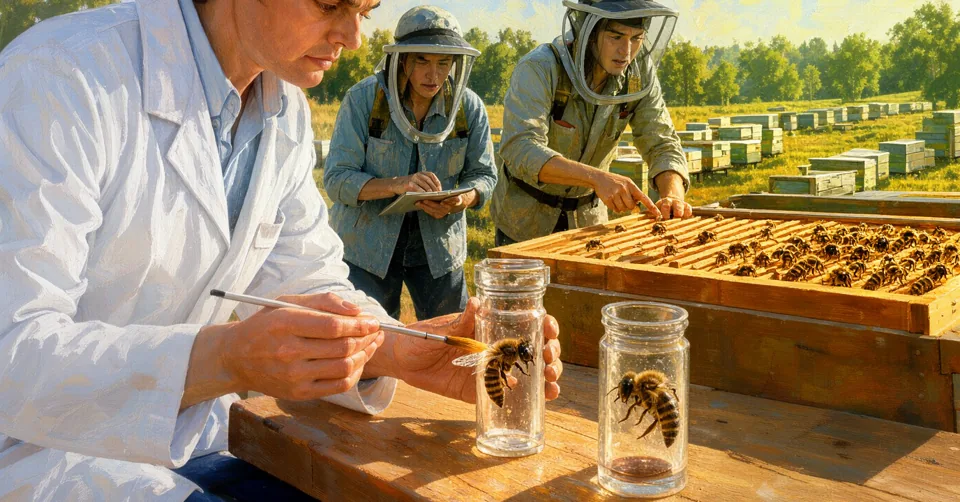
Washington State University researchers found that a sudden heat shock changed honey bee physiology and gut microbiome and caused higher mortality, while a sustained heat wave was less damaging as bees adapted. The study, published in Scientific Reports, may help scientists understand how bees respond to heat extremes from changing weather patterns. The finding was surprising because gut microbiome shifts can affect digestion and immune response.
Eagles killed baboons in Chad, including one over 26 kg
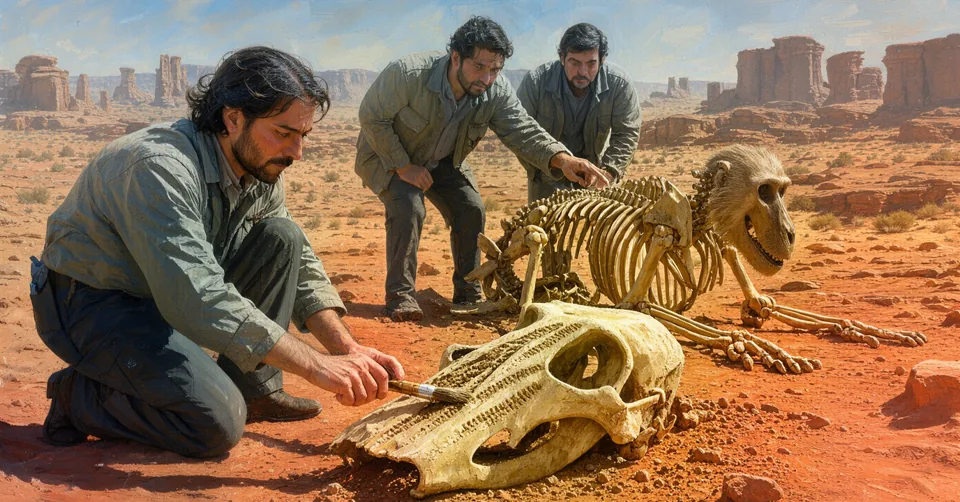
St Andrews researchers reported that Verreaux's eagles killed adult baboons on Chad's Ennedi plateau, including one over 26 kilograms. The team found talon marks on the skulls and shoulder bones of at least nine baboons, eight of them male, and said the injuries indicate lethal attacks rather than scavenging. The finding challenges the idea that early human ancestors were too large for eagle predation.
Continental rise and sinking may explain Earth's missing rock record
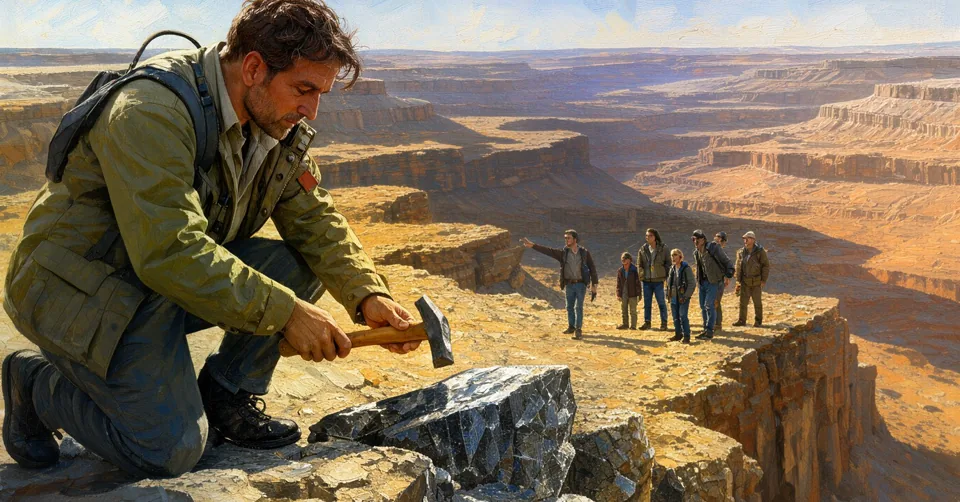
A study led by a University of Wollongong PhD candidate published in Nature proposes that the Great Unconformity may have been caused by continents rising and sinking over hundreds of millions of years. Changing elevations may have allowed erosion to remove huge amounts of rock, erasing vast stretches of Earth's history. In some places, Cambrian rocks from about 540 million years ago rest on crystalline rocks more than a billion years old.

 Illustration