Daily Summary of Health · Live edition, updated continuouslyThursday 12 November 2026 · UTC
Latest Health News Today: 12 November 2026
U.S. measles elimination at risk as Afghan women face male doctor ban
The Pan American Health Organization is reviewing U.S. measles elimination status as falling vaccination rates raise the risk of losing it. In Afghanistan, an unofficial ban on male doctors treating women is disrupting dental and medical care. The American Cancer Society also urged routine PSA screening for men aged 50 to 69.
TREM2 macrophages identified as potential target for endometriosis
Researchers identified macrophages expressing TREM2 as a potential future target for endometriosis therapies. In patient samples, these macrophages were more abundant and were linked to exhausted CD8 T cells and natural killer cells with reduced killing ability. In mice, removing TREM2 increased the cytotoxic behavior of those immune cells and protected against endometrium growth.
American Cancer Society urges routine PSA screening for American men 50 to 69
The American Cancer Society said Thursday that average risk American men aged 50 to 69 should have a PSA blood test every two years. It urged yearly PSA screening from age 45 for Black men and men with a strong family history, with decisions individualized after 70. The change follows evidence that PSA testing reduced disease specific mortality for some men.
Papua New Guinean tree compound shows promise for motor neuron disease
University of Wollongong researchers tested more than 500 compounds on motor neurons grown from stem cells donated by people with motor neuron disease. Two compounds from the rainforest tree Anisoptera thurifera stood out, with hopeaphenol protecting neurons and preserving their branching fibers. Hopeaphenol activated SIRT1, and SRT2104, a SIRT1 activator, protected neurons at about a third of the concentration needed for hopeaphenol.
New parents with intellectual disability face higher mental health hospitalizations
UNSW Sydney researchers found people with intellectual disability were nine times more likely to be hospitalized for mental health reasons during pregnancy and up to one year after birth. Those who gave birth were seven times more likely to seek emergency mental health care, with the greatest gaps in the first weeks and months after birth. The team called for better coordination between maternity and mental health services.
Regeneron RNAi therapy reduces liver fat in first-in-human MASLD trial
Richmond Pharmacology announced encouraging first-in-human results for CIDEB siRNA, an investigational RNAi therapy from Regeneron, in adults with MASLD. In a randomized, double-blind, placebo-controlled trial, 30 of 40 participants received a single subcutaneous dose of 15 to 600 mg. The team reported reductions in liver fat and ALT that were sustained through Week 36, with a substantial proportion reaching normal liver fat levels by Week 12.
Afghan women told to go home after de facto ban on male doctors
An unofficial Taliban restriction appears to have spread across Afghanistan, with male doctors and dentists told not to treat or examine female patients. In Herat, a woman's dental treatment was halted after a clinic said a ministry order barred male dentists from treating her, leaving her unable to eat or drink properly. Dentists reported enforcement by Taliban security forces through raids and warnings of imprisonment.
Type 2 diabetes linked to higher Alzheimer's risk in meta analysis
A Curtin University led review of 40 studies found that type 2 diabetes is associated with a 53% higher adjusted relative risk of Alzheimer's disease. The review estimated that among 1,000 people living with type 2 diabetes followed for a year, an average of 4.7 would develop Alzheimer's. The findings were published in Alzheimer's Research & Therapy.
Uppsala method tracks individual glioblastoma cells in brain tissue
Uppsala University researchers developed GlioTrace, a method combining live imaging of brain tissue with artificial intelligence to follow thousands of glioblastoma cells. Using tumor cells from six patients grown in mouse brains, they found some tumors spread mainly along blood vessels while others moved more diffusely, and cells could switch movement patterns over days. The team says the method may guide therapies.
Irregular sleep schedules linked to worse anxiety, depression and loneliness
A study led by UC San Francisco and UC San Diego found that irregular sleep schedules were associated with more severe anxiety, depression and loneliness. Researchers analyzed about 23,000 participants' wearable sleep data, averaging 154 days each, and found less regular sleep timing correlated with greater depression and anxiety. The study examined sleep regularity rather than only duration or quality.
Diabetes study finds PTH agents restore jawbone in mice
Indiana University School of Medicine and University of Arkansas for Medical Sciences researchers found parathyroid hormone and abaloparatide increased alveolar bone volume and restored alveolar bone height in mice with established type 2 diabetes. In non-diabetic mice, the agents stimulated formation and resorption without net gain. The team said the drugs suppressed sclerostin and Dkk-1 in osteocytes, activating Wnt signaling.
A BMJ Medicine study of 262 processed and 1,636 ultra-processed UK products found official definitions varied widely in what they classed as unhealthy. The Eatwell Guide marked over 98% of ultra-processed items unhealthy, while traffic light labels caught only 48.2% and the FSA HFSS model 57.6%. Researchers say the gaps may let consumers take in excess saturated fat, salt and sugar.
Weekly park visits linked to better child mental health and social skills
A University of Exeter study found children taken to parks at least once a week from birth to age 11 scored 16.5% better on mental health assessments than those visited less often. The analysis of 4,219 children in the Children of the 90s study controlled for socioeconomic status and family adversity. Researchers said regular park use may support emotional wellbeing and social development.
Nigeria's malaria vaccine rollout sees child deaths fall in some villages
Nigeria is slowly rolling out the world's first malaria vaccines, with 1.8 million jabs administered and almost a quarter-million children fully vaccinated. In Bayelsa state, PATH reported an 18% drop in the rate of children under 5 who have malaria at any given time, even as bed net and preventive drug distributions lagged. The four-part regimen is given over the first 15 months of life to protect children while they are most vulnerable.
Blood test may identify prostate cancer patients likely to benefit from radiotherapy
A blood test measuring circulating tumor DNA may help identify men with advanced prostate cancer who are more likely to have longer disease control after targeted radiotherapy. In the TRAP trial, 77 men were monitored for more than two years, and those with no detectable ctDNA before stereotactic body radiotherapy had significantly longer time without disease progression than those with detectable ctDNA.
Environmental experiences trigger widespread changes in brain cell connections
A University of Edinburgh-led team used synaptome mapping to study mouse brains exposed to enriched environments during development and adulthood. They found changes in different synapse populations across many brain regions, while overall synapse density did not increase. The researchers say the findings suggest experience changes the quality and type of brain cell connections rather than simply adding more.
BNP hormone may actively promote blood clot formation
Researchers at Texas A&M University Irma Lerma Rangel College of Pharmacy found that high levels of B-type natriuretic peptide, or BNP, can drive platelets to clump together and accelerate clot formation. BNP is commonly tested as a marker of heart muscle stress, but the study says it may also contribute to cardiovascular disease progression. The team found BNP binds to a platelet receptor called NPRA, previously unknown to be on platelets.
Skipping blood pressure medicine on surgery day may reduce low blood pressure
A trial published by The BMJ found that skipping the morning dose of ACE inhibitors or angiotensin receptor blockers reduced the rate of treated hypotension during non-cardiac surgery in older adults. Among 2,012 patients aged 60 to 80, hypotension occurred in 31.2% of the placebo group and 45.5% of those who continued it. The no antihypertensive group also had shorter hypotension and a lower need for vasopressors.
Declining thermogenic fat activity may explain age-related cold sensitivity
City of Hope researchers reported in Nature that thermogenic fat, which burns calories to produce heat, becomes less responsive with age. In mice, nerve and immune signals still shifted fat cells toward heat production, but the response was slower, making older animals less able to maintain body temperature in the cold. Blocking part of the pathway restored some heat production, though the drug used affects many body systems.
New molecular approach shows promise against treatment-resistant prostate cancer
University of Michigan Health Rogel Cancer Center researchers developed a bifunctional small molecule that glues together the androgen receptor and p300, two proteins that activate genes driving prostate cancer. In preclinical studies, the DALTAC approach showed greater antitumor activity than separate inhibitors while sparing normal cells. It uses chemically induced proximity to trap the proteins in an inactive state.
Rare APOE mutation may protect against Parkinson's and Lewy body dementia
Oregon Health and Science University researchers reported in Cell Reports that a rare Christchurch mutation of the APOE gene may protect against Parkinson's disease and Lewy body dementia. In mouse models, the mutation prevented accumulation of tau and alpha-synuclein proteins linked to Alzheimer's and Parkinson's. The authors said it may support gene-therapy approaches, describing it as more protective than APOE-2 in the model.
Vaping frequency linked to lower lung function in young adults
Preliminary findings in Tobacco Control suggest long term vaping in young people may cause persistent changes in lung function. Researchers tested 22 current primarily e-cigarette users aged 21 to 35 at the start and again an average of 12 months later. They found a significant reduction in FEV1, with larger falls as daily vaping frequency increased, though the trend was not statistically significant after adjustments.
Proton therapy radiation patterns may increase breast implant complications
A Mayo Clinic study found that higher proton beam doses and elevated linear energy transfer around breast implants were associated with capsular contracture. The retrospective study reviewed 145 patients who received pencil beam scanning proton therapy, comparing eight who developed the complication with 16 matched patients who did not. Researchers said dose and energy transfer should be considered together when planning treatment.
Chronic stress may promote oral cancer through brain immune pathway
Researchers at West China Hospital of Stomatology, Sichuan University, reported that chronic stress can accelerate oral squamous cell carcinoma. They found stress activates a hypothalamic, pituitary and bone marrow axis, raising alpha melanocyte stimulating hormone. It expands suppressive immune cells in bone marrow, suppresses CD8+ T cells and promotes tumor growth, while blocking the melanocortin 1 receptor restored antitumor immunity.
Gut microbial metabolites may reshape fat tissue via Wnt pathways
A review in The Innovation Nutrition argues that Wnt signaling links gut microbial metabolites to how fat tissue grows or changes. Bile acids show the clearest route, with Lactobacillus intestinalis converting CDCA to UDCA to relieve FXR repression of Wnt in mice. Propionate and kynurenine also intersect with these pathways, but the human propionate trial did not test whether Wnt was required.
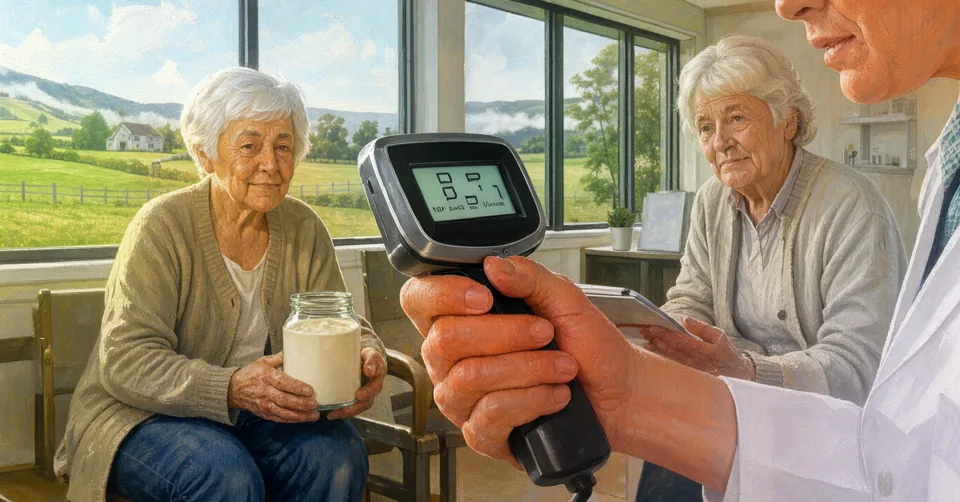
Irish study examines fermented dairy and muscle strength in older adults
Researchers examined whether fermented dairy intake is associated with grip strength and frailty among nearly 6,800 older adults in two Irish cohorts. The analysis used data from NICOLA and TILDA, with participants completing food frequency questionnaires. It focused on muscle loss in later life as a driver of frailty and loss of independence.
PFAS linked to slightly lower muscle mass in women in midlife
Researchers linked PFAS exposure to slightly lower muscle mass in women in midlife in a study published in Environmental Epidemiology. The analysis used Project Viva data to compare blood PFAS levels with midlife muscle mass and function. The study focused on a group with sparse data, as postmenopausal women have higher rates of sarcopenia and falls.
Genetic review finds mixed evidence linking exercise to brain health
A systematic review of 61 Mendelian Randomization studies found limited and mixed causal evidence that general physical activity improves brain health. The review said evidence was more consistent for structured aerobic exercise and lower depression risk, and for muscular strength and muscle mass with favorable mental health and cognitive outcomes. It noted these findings do not establish that exercise interventions produce those effects.
Mouthfeel may shape appetite and food choices, review finds
A review in npj Science of Food says mouthfeel, the way food feels in the mouth, can influence preferences, eating rate, satiety and nutritional intake. The researchers said texture, temperature and sensations such as tingling shape flavour perception and may affect health. They highlighted relevance for older adults and people with swallowing difficulties or dry mouth.
UK watchdog warns sunbed firms not to downplay cancer risk
The Committee for Advertising Practice issued an enforcement notice across the UK telling tanning firms not to claim sunbeds are safe or can treat medical conditions. It said misleading ads can downplay risks, including skin cancer, and discourage people from seeking medical advice. The Sunbed Association supported action against misleading adverts but said businesses should be able to show responsible operation.
US survey: most adults more alert to foodborne illness in 2026
A national Orlando Health survey found nearly 60% of US adults are more concerned about foodborne illnesses in 2026 than in previous years, after a year described as unusually severe for outbreaks and recalls. The report says foodborne diseases sicken 48 million Americans annually, with 128,000 hospitalizations and 3,000 deaths. The report says heightened awareness may prompt safer preparation and handling, especially during holiday cooking.


 Illustration