Daily Summary of Climate & Energy · Final editionMonday 16 November 2026 · UTC
Climate & Energy News: 16 November 2026
COP31 draft urges fossil fuel exit as US Democrats signal return to talks
A first COP31 draft called for an immediate transition away from fossil fuels as leaders backed electrification. US House Democrats said midterm gains could help the United States rejoin formal climate talks after President Trump pulled it out of the Paris agreement twice. A Michigan coal plant was ordered to stay open despite a court finding no emergency.
US House Democrats signal return to global climate talks
A delegation of Democratic US House members appeared at COP31 in Antalya on Monday, pledging to rejoin global climate talks after big midterm gains. Rep. Jared Huffman said the results could help the United States reestablish a formal presence after President Trump pulled it out of the Paris agreement twice. The move matters because the United States has had no formal government presence at the talks since 2025, though legal questions remain.
COP31 draft urges immediate fossil fuel exit as leaders back electrification
A first draft of the COP31 cover decision was released with more than four days of talks left, including 144 items and a call to immediately transition away from fossil fuels. Australia's climate minister Chris Bowen said it is meant to draw out parties on agreement and disagreement. At a leaders' summit, countries endorsed the presidency's 35x35 electrification pledge and philanthropies pledged to the Tropical Forest Forever Facility.
US DoE orders Michigan coal plant to stay open despite court ruling
The US Department of Energy issued a seventh 90-day emergency order forcing the J.H. Campbell coal plant in Michigan to remain open until mid-February, 534 days after its planned retirement. A federal appeals court had unanimously found no emergency justifying the plant's operation, and the orders have cost ratepayers $303 million and counting.
Global solar additions face first annual decline since 2018
GlobalData expects annual global solar PV additions to fall in 2026 for the first time since 2018, after a 17.5% rise to a record in 2025. It cites market reforms in China, policy changes in the United States and a slowdown in Pakistan. It expects cumulative capacity to grow at a 12.5% compound annual rate to 2035, more than doubling solar's share of global electricity.
US hyperscaler datacenters emit as much as Denmark, study finds
A Nature Sustainability study found 403 US hyperscaler datacenters emitted about 25.7 million metric tons of CO2 in the year to April 2025, roughly Denmark's annual total. The facilities used 68 to 99 terawatt-hours, about 1.8% of US electricity, with more than half from fossil fuels. Researchers called the figure a lower bound as datacenter buildout accelerates, with new gas-fired power sometimes favored over solar and wind.
Al Gore calls US Baaja energy bill a serious mistake
Former US vice president Al Gore said at Cop31 in Antalya that passing the bipartisan Baaja bill would be a serious mistake. The bill, which passed a procedural Senate vote last week, would speed approvals for pipelines, datacenters, solar, wind and transmission while scaling back environmental protections. Gore said it has split Democrats and green groups and would lock in new pipelines and fossil fuel facilities.
Solar and batteries could cut global electricity system costs by up to 40% in 2030s
A Schneider Electric Research Institute study says solar and battery storage could cut total global electricity system costs by up to 40% in the 2030s if installation costs fall and demand grows. It modeled 40,500 scenarios and found projected 2030s costs could reach $0.094/kWh, about 40% below a $0.160/kWh baseline. Savings could add up to 0.8% to global GDP, but results vary by market.
Philippines approves $1.46 billion solar cell factory north of Manila
The Philippines' Bases Conversion and Development Authority approved a proposed PHP 93.69 billion ($1.46 billion) solar cell factory in New Clark City, Tarlac, without naming the investor or disclosing capacity, technology or timeline. It was the largest of the agency's PHP 145.46 billion in approvals in the first nine months, up 142.5% from a year earlier.
It follows recent investment and comes as the government plans to auction 25 GW of renewables by 2035.
Denmark allocates $41.5 million to heat pump subsidies for 2027
Denmark has agreed with Enhedslisten and Alternativet to extend its heat pump subsidy scheme through 2027, allocating DKK 267.5 million for next year. The grants help homeowners replace oil and gas boilers, electric heating and biomass boilers with heat pumps, especially where district heating is unavailable. The deal also extends gas disconnection support and a district heating electrification pilot, without fixing the 2027 grant level.
Ember says solar, wind and batteries can deliver firm power at $0.086/kWh
UK think tank Ember says adding wind to solar and battery systems can cut the median cost of meeting 90 percent of electricity demand from $0.105/kWh to $0.086/kWh, mainly by reducing storage needs. The analysis, based on 10 years of hourly weather data, finds three-quarters of global demand could be met at 90 percent coverage for under $0.10/kWh when wind is included. It estimates wind potential is at least 19 times global electricity demand.
Silver finds $50 floor as solar industry accelerates copper shift
Silver prices have steadied around $50 per ounce after a volatile year, and Metals Focus says a return to the much lower prices of previous decades seems unlikely. The Silver Institute and Metals Focus expect a sixth consecutive annual deficit in 2026, with demand exceeding supply by 35 million ounces. Solar makers are accelerating cuts to silver use and substitution with copper as prices remain far above the 2025 average.
Sri Lanka blackout traced to coal plant failure, not solar PV
A preliminary report by Sri Lanka's National System Operator says the October 17 nationwide blackout began when Lakvijaya Coal Power Plant Unit 1 lost 187 MW of output, not because of high solar penetration. The unit, part of the 900 MW Norochcholai Power Station, fell from 187 MW to 5 MW within 450 milliseconds, and grid frequency dropped to 48.75 Hz within two seconds. The report does not fully explain why the coal unit lost output.
South Korea opens storage subsidy call for community solar villages
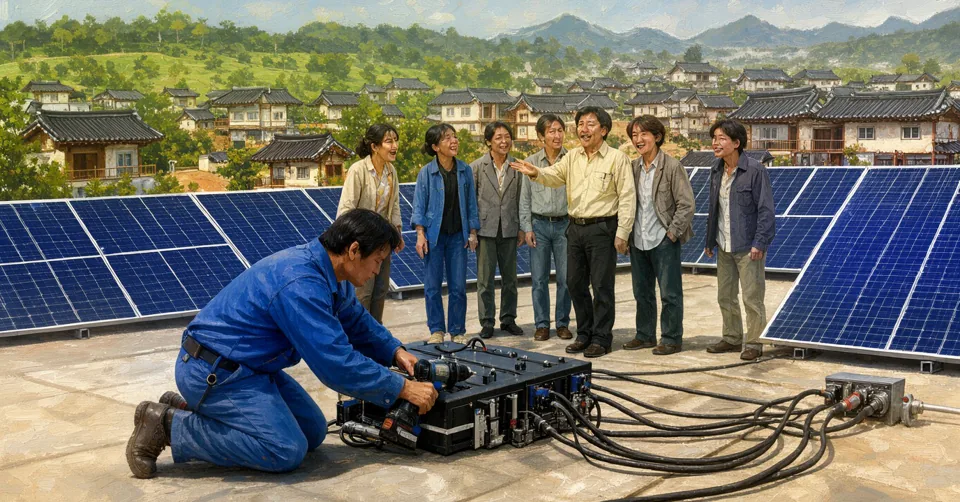
The Korea Energy Agency has launched a 2026 Community Solar program that supports storage systems run by VPP operators in grid-saturated areas. The call runs to 11 December and is part of a push to create sunlight income villages, with the ministry targeting 700 villages in 2026 and 2,500 by 2030. The notice does not state the budget, subsidy rate or project size limits.
Japan's corporate solar PPAs rise around 30% in first ten months
Global Infrastructure Sherpa logged around 30% more corporate solar power purchase agreements in Japan in the first ten months of this year than in the same period of 2025. The market is moving beyond hyperscalers to manufacturers, logistics firms and railways, with virtual PPAs making deals easier to sign. Climate targets and data centre demand are driving growth, and the trend is expected to continue.
Dutch watchdog urges solar owners to check contracts
The Dutch consumer watchdog ACM is urging solar households to check contracts before net metering ends on 1 January 2027. They will then pay full retail rates for grid power and receive a separate, generally lower feed-in payment. The change may make home batteries more attractive, with installed capacity reaching 1.1 GW by October.
Jackdaw gas field starts flowing after UK approval
Gas has begun flowing from the Jackdaw field, 150 miles east of Aberdeen, after UK ministers approved production last month. Operator Adura, which runs the field in a Shell and Equinor joint venture, says it will provide about 6% of UK gas production and power 1.4 million homes. The energy secretary says the gas will help heat millions of homes and businesses this winter and reduce reliance on higher emission imports.
Mitsubishi Electric unveils The Little One UK heat pump
Mitsubishi Electric unveiled The Little One, a smaller air-to-water heat pump for new UK homes, available in 2027. The R290 system comes in 4 kW and 6 kW versions with A+++ ratings and is 47% smaller and 40% lighter than a comparable model. The company says its odorant technology removes the need for a protective zone around the outdoor unit, adding installation flexibility for housebuilders preparing for the Future Homes Standard.
Australian regulator finds 61.19% of battery installs substandard
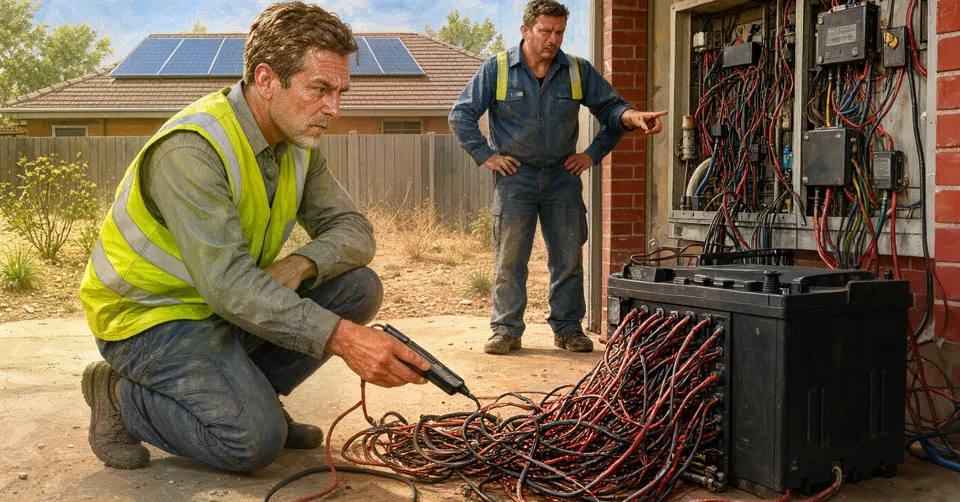
In a record 6,554 inspections, Australia's Clean Energy Regulator found 61.19% of batteries and 23.11% of solar systems were substandard in 2025-26, while under 1% of each were unsafe. The report says poor workmanship, not faulty products, caused most non-compliance, including bad wiring, labelling, bonding and protection. The regulator is using the findings to target installers, having contacted more than 830 since 1 July 2025.
Barbados PM urges global citizens to demand methane cuts at Cop31
Barbados prime minister Mia Mottley has launched a global petition urging people to demand cuts in methane emissions as the Cop31 climate summit enters its second week. She hopes to gather 1.5 billion responses, an echo of the 1.5C limit, and said controlling methane could reduce temperature rises by 0.3C to 0.5C and buy time to continue decarbonising. Mottley said silence on the climate crisis is pushing the world closer to disaster.
The Wadden Sea, a UNESCO World Heritage site spanning the Netherlands, Germany and Denmark, is a step closer to UNESCO's World Heritage in danger list. UNESCO is expected to send a joint inspection mission with the IUCN in 2027 to assess conservation, citing cumulative pressures and signs of ecosystem stress. Extraction, fishing, tourism and military exercises are among the pressures, and a danger listing would hit island communities.
NAED unveils vertical tandem solar deposition platform
NAED Energy Holding Inc. unveiled PV-1 PECVD-V, a U.S.-engineered vertical deposition platform designed to process 96,000 solar wafers per hour, double the throughput of its previous platform. The system keeps wafers upright on a shared carrier that is turned 180 degrees, reducing handling while producing perovskite/HJT tandem cells that target 30% efficiency. NAED plans to bring T2X cells and modules to terrestrial and space markets.


 Illustration