Daily Summary of AI · Final editionTuesday 17 November 2026 · UTC
AI News: 17 November 2026
Nvidia exits China H200 sales as Anthropic IPO nears and OpenAI cuts Astra prices
Nvidia reported record profit and said it will stop selling H200 chips in China, while U.S. agencies confirmed a 2024 probe into Megaspeed. Anthropic is likely to price its IPO above the $70 to $78 range before listing on Nov. 19, and OpenAI released GPT-6.2 Astra and Sol with a 20 percent cheaper Astra API. Google made its Gemini Tasks agent free, and Nvidia previewed Rubin HPC for scientific computing.
Nvidia stops selling H200 chips in China after Huang ouster
Nvidia will no longer sell H200 chips in China, acting CEO Colette Kress said, ending a U.S. export-control loophole that required shipments through the United States and a 25 percent tariff. Nvidia also created a board-level committee for national security, export controls and trade risks. New rules barring advanced U.S. chips from foreign data centers may trim $44 billion to $62 billion from Nvidia's data center revenue next year.
Nvidia reports $115.84 billion quarter and record profit after Huang's resignation
Interim Nvidia CEO Colette Kress reported third-quarter revenue of $115.84 billion, up 103 percent and above expectations, and a record $65.3 billion profit. Data center revenue was $107.6 billion, up 110 percent, while edge computing revenue was $8.2 billion, up 42 percent. Nvidia expects fourth-quarter revenue of $130 billion, with Kress saying the roadmap is on track after Jensen Huang's resignation.
Microsoft launches Decision-1.1 and upgrades Foundry agents
Microsoft made Decision-1.1 generally available, a fast, cost-effective model for routing, classification, prioritization, verification and workflow control, with calibrated confidence scores. The model is built on Google's Gemma 4 26B A4 and adds multimodal support for images in instructions. Microsoft also updated Foundry with an enterprise knowledge graph, human annotations and reinforcement-learning tools for continuous agent improvement.
OpenAI launches GPT-6.2 Astra and Sol with lower Astra API prices
OpenAI released GPT-6.2 Astra for professional work and GPT-6.2 Sol for everyday use, available in ChatGPT Work, Codex and the API. Astra is priced 20 percent below its predecessor at $8 per million input tokens and $40 per million output tokens, while Sol keeps GPT-6.1 Sol pricing. OpenAI says both outperform prior models on benchmarks, with Astra leading Claude Fable 5.2 on some tests at a fraction of the cost.
Google separates Gemini chat history from AI training controls
Google is adding separate toggles for Gemini chat history and AI model training, letting users keep past conversations while opting out of training for future chats. The change will roll out in coming weeks, and users who had Keep Activity on will have both new settings enabled. Google will also keep temporary chats with history off for about two months, up from 72 hours.
Jensen Huang says he is willing to return as Nvidia CEO
Jensen Huang stated he would be honored to return as Nvidia CEO if the board decides it is in the company's best interest, marking his first public remarks since resigning last week. Huang acknowledged making serious personal mistakes and said he is cooperating with the board's independent investigation.
While more than 193,000 people have signed a petition urging his return, reports indicate the board is not currently considering reinstating him.
Anthropic likely to price IPO above $70 to $78 range before Nov. 19
Anthropic is likely to price its IPO above the current range of $70 to $78, according to sources, before listing on Nasdaq under the ticker ANT on Nov. 19. The company plans to close its order books and lock in total demand at 4 p.m. ET on Tuesday. For the nine months ended Sept. 30, it reported $33.24 billion in revenue, up roughly 1,200% from a year earlier, and a $104 billion net loss.
Spotify launches Artist Profile Protection to curb deepfakes
Spotify is rolling out Artist Profile Protection to all artists, letting them review and remove music that appears under their name. The tool sends alerts when new releases are submitted and can require manual approval before they appear, addressing impersonation, metadata errors and shared names. The launch follows a report that Sony Music asked platforms to remove more than 260,000 deepfake songs, nearly double the number disclosed in March.
Isomorphic Labs raises $5 billion Series C for AI drug discovery
Isomorphic Labs, the AI drug discovery startup founded by Demis Hassabis, raised a $5 billion Series C led jointly by Greenoaks and Sequoia Capital, with participation from Andreessen Horowitz and Alphabet. The round comes three and a half months after Hassabis stepped back as CEO of Google DeepMind. The company says the funds will support medicines designed with AI and push its first therapeutic programs toward clinical trials.
Nvidia releases open-source NVKE and NVKR for managed Kubernetes on GPU infrastructure
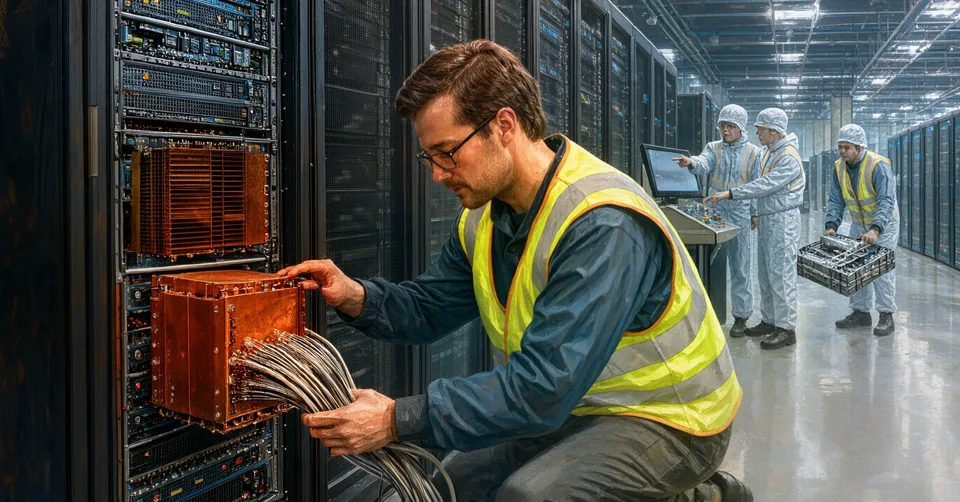
Nvidia released NVKE and NVKR, two open-source projects for running managed Kubernetes on GPU infrastructure as part of its DSX AI Factory Platform. NVKE provides the control plane for a managed Kubernetes service, while NVKR builds the OS images, container images and packages that clusters depend on. Both ship under Apache 2.0 in public preview, with partners including Firmus, SK Telecom and Mirantis adopting components.
Sarvam opens India-hosted Token Factory for eight models
Sarvam has opened Sarvam Token Factory, an inference platform that serves its own models and open-weight models from GPU clusters in India through one OpenAI-compatible API, giving India-based teams low-latency tokens without sending traffic to overseas clouds. Sarvam says the platform lists eight models, including Sarvam 105B, GLM 5.3 and DeepSeek V4.1 Flash 1017, while its docs also name additional provisioned models such as Qwen 3.8 27B.
Liquid AI releases d1.2 and d1.2-ultra decision models
Liquid AI released d1.2 and d1.2-ultra, decision models that accept text, images and audio and return calibrated probabilities over fixed answer sets. The models add five typed answer types, and d1.2-ultra scores 75 on the Artificial Analysis Decision Index v2.1, the top score among decision models on that index. The calibrated probabilities let teams route low-confidence cases to humans.
UK actors gain rights over digital replicas in new AI deal
UK actors are to receive more rights over digital replicas under a new AI protections deal between Equity and TV and film producers. The agreement gives performers payment and consent rights, requires approval for substantive changes to scenes involving agreed levels of nudity or simulated sexual activity, and limits blanket consent to specific projects.
The three-year deal, which raises pay rates, will be put to a vote among 8,000 Equity members.
Anthropic IPO expected to make more than 4,000 staff millionaires
Anthropic, the developer of Claude, is set to hold an IPO on Thursday expected to value the company at $1.4 trillion. The listing is likely to make more than 4,000 staff millionaires as stock options vest, expanding a group of tech buyers with budgets from £2m to £40m. The new wealth could breathe life into London's ailing high-end property market.
Geneva conference offers chance to regulate autonomous weapons
Militaries are increasingly using AI to find, track and strike targets, sometimes within seconds when systems meet a human-set confidence threshold. An upcoming Geneva conference offers a chance to confront the risks of AI-enabled warfare and push for a treaty on autonomous weapons. Examples include U.S. strikes in Iran, Russia-Ukraine drones and Israel's Lavender system in Gaza.
Some GTA 6 fans book time off and use New Zealand tricks
GTA 6 has generated $1.18bn from 12 million preorders, according to Sensor Tower, though Rockstar has not confirmed the estimate. In the UK, GTA was mentioned in 4.6% of time-off requests, and an estimated 83,000 days were booked off in November and December. Some fans are using New Zealand tricks for early access, while the US Army's 3rd Infantry Division offered some soldiers a four-day pass tied to reenlistment.

 Illustration