Daily Summary of Health · Live edition, updated continuouslyThursday 5 November 2026 · UTC
Latest Health News Today: 5 November 2026
British Ebola patient reaches London as Wisconsin infant dies of measles
A British health worker infected with Ebola in the Democratic Republic of Congo arrived in London for specialist isolation, the first UK national case in the current outbreak. An infant in Wisconsin died of measles, the state's first such death in 36 years, as US vaccination rates fall below the 95 percent coverage needed to prevent outbreaks.
England recorded more than 373,000 cancer diagnoses in 2024, an average above 1,000 a day, while diagnosis and treatment targets were missed.
Wisconsin infant dies of measles, first state death since 1990
An infant in southwestern Wisconsin died after contracting measles, the first state death in 36 years, state officials said. The coroner listed measles as the cause of death, and officials gave no further details to protect family privacy. Wisconsin has reported 431 cases, all but three in unvaccinated people, while US vaccination rates have fallen below the 95 percent coverage needed to prevent outbreaks.
Novartis cites possible tumors in children treated with SMA gene therapy
Novartis acknowledged seven previously unknown reports of tumors in children treated with its spinal muscular atrophy therapy, Zolgensma, after an advocacy group publicized the cases. The company said it has received nine tumor reports since approval in 2019, with two showing evidence of a possible link to the treatment. Regulators are examining the cases, which families and physicians are treating as a potential safety signal.
England cancer diagnoses hit record high of more than 1,000 a day
More than 373,000 people were diagnosed with cancer in England in 2024, an average of 1,021 per day and the highest figure on record, NHS figures show. Prostate, breast, lung and bowel cancers accounted for half of new diagnoses, and 56.7 percent of first new cancers were diagnosed at stage 1 or 2. Experts said the NHS is identifying more cases but still missing targets for diagnosis within 28 days and treatment within 62 days.
AI designed bird flu vaccine gives full protection in animal trials
A University of Cambridge team developed a broad spectrum bird flu vaccine that gave complete protection against diverse circulating variants in animal trials. The team said current government stockpiled vaccines protected only around 50 percent of animals exposed to multiple variants, while the new vaccine was designed to anticipate viral evolution. The work supports a plug and play approach to vaccines for rapidly mutating RNA viruses.
British Ebola patient arrives at London hospital after DR Congo infection
A British health worker who tested positive for Ebola in the Democratic Republic of Congo has been flown to London and taken to a specialist isolation unit at the Royal Free Hospital. It is the first confirmed UK national case in the current DR Congo outbreak, which has passed 10,000 cases and 5,000 deaths. UK officials said established infection control procedures keep the public risk low, while the outbreak is driven by the Bundibugyo variant.
Text reminders and phone support triple bowel cancer screening in London
A randomized trial in eight London boroughs found that automated text reminders and personalized telephone support both tripled bowel cancer screening uptake among people who did not respond to their first invitation. Text messages raised uptake from 2.0 to 6.5 percent and cost £1.82 per additional person screened, while telephone support raised it to 7.5 percent. The researchers said neither approach widened existing inequalities.
CMS finalizes 2027 Medicare fees, Pennsylvania confirms measles death
CMS finalized its 2027 Physician Fee Schedule, aiming to strengthen primary care, expand preventive services, reduce duplicate billing and cut waste in Medicare. Pennsylvania confirmed a sixth measles related death as cumulative cases reached 1,467. More than 20,000 NHS patients in the UK will trial blood tests to detect early stage cancers.
Mobile HIV and opioid care cut deaths by 71 percent in US trial
A trial funded by NIH in five US cities found that mobile medical units delivering integrated HIV and opioid care cut deaths from all causes by 71 percent among people who inject drugs. The study enrolled 409 adults without HIV and opioid use disorder and compared 26 weeks of peer navigation in mobile units with peer navigation to community services. PrEP and opioid medication use did not differ, but mortality fell significantly.
Trial of evolocumab and ezetimibe finds one lowers heart attack risk by 20%
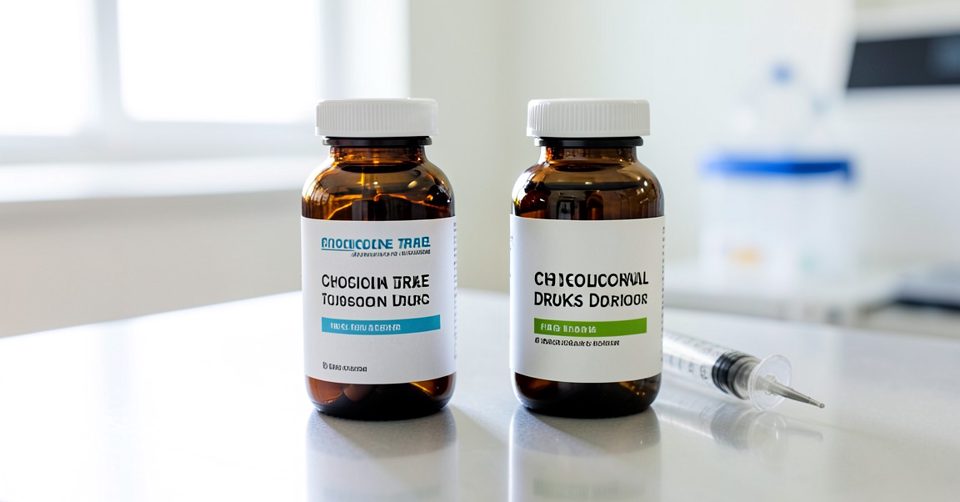
Cardiologists sometimes consider the injectable PCSK9 inhibitor evolocumab or the oral cholesterol absorption inhibitor ezetimibe when statins are not enough to lower LDL cholesterol. A new trial pitted the two approved drugs against each other and reported that one of them lowered heart attack risk by 20 percent.
Medicare delayed a controversial RPM rule update. The delay is part of shifting political winds affecting health AI policy questions on deck for next year.
Democrats' midterm win boosts single-payer and medical professionals
Democrats' landslide US midterm win is expected to reshape health care, with Democrats planning to reverse Medicaid cuts and challenge the anti-vaccine agenda. More than 500 Democratic medical and public health professionals ran for office, including Michigan Senator Abdul El-Sayed and Ohio Governor Amy Acton. The result also dealt a setback to the Make America Healthy Again movement, whose Iowa candidate lost by more than 10 points.
HIV antibody VRC01 shows breakthrough infections after treatment ends
An analysis of two clinical trials found that the broadly neutralizing antibody VRC01 initially protected against HIV, but some more resistant strains caused breakthrough infections after treatment ended. VRC01 had 66.3 percent prevention efficacy against highly sensitive strains during treatment, while later diagnoses were higher than placebo. The study says future antibody trials should test far after infusions and combine multiple antibodies.
US task force recommends colorectal cancer screening from age 45
The US Preventive Services Task Force and doctors now recommend that average-risk adults begin colorectal cancer screening at age 45, as rates rise in people under 50. The Cancer Research Institute says one in five colorectal cancers is diagnosed in patients under 55. Screening options include stool-based tests for hidden blood or abnormal DNA and colonoscopy.
US public health experts in BMJ call for tighter global fireworks restrictions
US public health experts writing in The BMJ say fireworks cause avoidable vision and limb loss and need stronger global regulation and education. They cite rising injuries in the UK and US, including a 142% increase at a Los Angeles trauma center from 2015 to 2021. The authors urge data collection, consumer restrictions, public displays and graphic warning labels.
NRDC report says Trump took over 500 actions weakening cancer protections
A Natural Resources Defense Council report alleges the Trump administration has taken more than 500 actions across federal agencies to weaken protections against carcinogens. The changes include rule delays, scientific process changes, funding cuts and staff reductions, which the report calls a pro-cancer agenda. It comes as officials estimate more than 2 million US cancer diagnoses this year and early onset cancers are rising.
China's controversial fast-track trial route slows after deaths and new rules
China's investigator-initiated trial route, which let researchers start studies without central regulator sign-off, has slowed after deaths, news reports and new government rules. The pathway had allowed genetic treatments to be tested faster and cheaper, prompting US companies to come to China or push the FDA to adopt a similar approach.
Johns Hopkins reports temporary ultrasonic sensor for spinal cord injury
A Johns Hopkins Medicine team reported in Science Advances that a temporary ultrasonic device called MUSIC can be implanted at a spinal cord injury site to give continuous feedback. Funded by a $13.48 million defense department award, the proof-of-concept study found the device feasible and safe. It can image blood flow, spinal fluids and fluid accumulation without moving immobile patients, helping care teams personalize treatment.
Midwives warn possible closures of two Norfolk maternity units
The Royal College of Midwives was concerned by reports that two consultant-led maternity units in Norfolk could close, at Gorleston or King's Lynn, or both. The hospital group said no decisions had been made, while NHS leaders argued concentrating services could provide safer care. The union warned closures could leave women in rural and isolated communities travelling unacceptable distances and also close neonatal units and children's wards.
New ACMI tool flags older adults at risk of delirium and falls
Researchers funded by Health Data Research UK developed the Anticholinergic Medication Index to score older patients' anticholinergic burden and predict delirium or serious falls. Published in BMJ Medicine, the tool is designed for electronic patient records and was piloted in Bradford GP surgeries to list patients aged 65 and over with their score and one-year risk. About half of older UK adults are prescribed one anticholinergic annually.
Stanford study links brain firing patterns to Alzheimer's risk
Stanford Medicine-led research in Science Advances found that brain firing patterns can predict Alzheimer's risk years before memory loss. A score built from adults 75 and older with Alzheimer's or super-ager memory could place adults aged 55 to 70 with no cognitive signs. More Alzheimer-like activity predicted decline and diagnosis within 12 years, outperforming demographics, amyloid-beta and tau biomarkers and genetics.
UCLA advances CRISPR therapy for sickle cell disease to clinical scale
A UCLA-led team has advanced an experimental CRISPR-Cas9 therapy for sickle cell disease to a blood stem cell process that can be manufactured at the scale and quality needed for a clinical trial. The approach directly corrects the beta-globin mutation in a patient's own stem cells using a nonviral DNA template, rather than adding a gene or boosting fetal hemoglobin. In mice, corrected copies remained stable for 16 weeks.
FDA approves first drug offering a functional cure for chronic hepatitis B
The US FDA approved GSK's bepirovirsen, branded Hibsago, for chronic hepatitis B after two phase 3 trials found a six-month course achieved a functional cure response in 19 percent of participants, compared with none on placebo. The weekly injection is given with existing pills, and treatment can be stopped when the virus remains undetectable, offering a potential functional cure for a disease that causes liver damage and cancer.
Workplace petroleum lubricants linked to higher MS risk
A Swedish study in Neurology found that workplace exposure to petroleum-derived lubricants was associated with 38% higher odds of multiple sclerosis after adjusting for age, sex, area, smoking and other factors. The study included 2,872 people with newly diagnosed MS and 6,122 without, and found odds rose modestly with longer and heavier exposure. It did not prove causation.
Longer estrogen exposure linked to less brain vessel damage in women
A study of 352 Swedish women found that a longer reproductive lifespan and use of birth control pills or menopausal hormone therapy were associated with fewer signs of cerebral small vessel disease in the brain. For each extra year of reproductive life, the odds of having two or more MRI signs at age 70 fell by about 8 percent, with later menopause driving the link. The researchers say the association does not prove causation.
UK trial says dialysis need not be default for frail older kidney patients
A randomized trial led by the University of Bristol found that dialysis should not necessarily be the default for older people with kidney failure and frailty or multiple conditions. Over an average follow up of 4.5 years, a structured approach without dialysis and preparation for dialysis gave similar length and quality of life. Only 28 percent of those preparing for dialysis started it, and both groups were more likely to die from other causes.
Prenatal cannabis and tobacco linked to lower child thinking scores
A study in Addiction found that children exposed to both cannabis and tobacco before birth scored lower on thinking tests. Researchers analyzed data from 8,706 children aged 9 to 11 in the US Adolescent Brain Cognitive Development study. The work examines whether prenatal co-exposure is associated with differences in reasoning and knowledge, as cannabis use during pregnancy rises.
Portugal releases sterile mosquitoes as Europe races to stop tiger mosquito disease
Portugal released 30,000 sterile male mosquitoes in September in a second attempt to curb tiger mosquitoes, which spread from Italy in the 1990s to several European countries. The insects carry dengue, chikungunya and Zika, and by the end of October 2026 Italy had reported 76 locally acquired dengue cases and France eight, roughly twice the 2025 total. Health authorities are working to prevent the diseases from becoming endemic.
Study suggests quantum computer could crack RSA-2048 encryption in 3 days
A preprint study by researchers from Alice & Bob estimates that a quantum computer using superconducting cat qubits could run Shor's algorithm to factor RSA-2048 in about three days. The team's resource estimate is under 23,000 qubits, down from 350,000 in 2023, suggesting internet encryption may be at risk sooner than expected. The study has not yet undergone peer review.
US-funded Guinea-Bissau hepatitis B vaccine trial for newborns cancelled
A proposed trial of a hepatitis B vaccine on newborns in Guinea-Bissau was cancelled after critics called it unethical and neocolonial. The US-funded study at the Bandim Health Project would have involved 14,000 babies, with half not receiving a vaccine recommended by the World Health Organization. Police seized a batch of vaccines from the research centre, and the WHO said withholding a proven intervention raised ethical concerns.


 Illustration